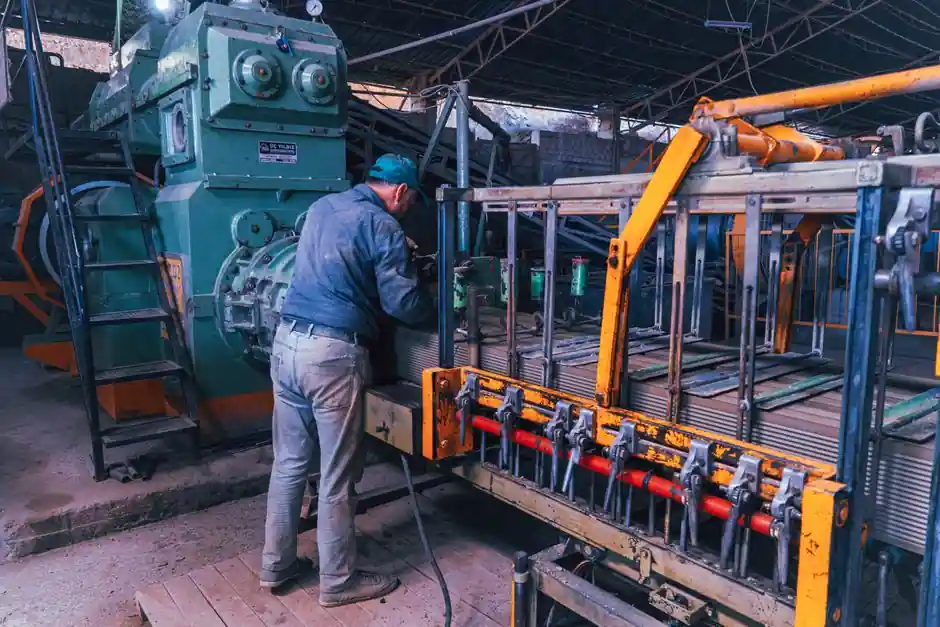
Hot box core shooters heat tooling to 250–350°C and require controlled binder curing.
Cold box systems harden two-component resin at room temperature, while hot box systems cure resin-bonded sand in a preheated core box; the appropriate machine therefore depends on core geometry, output, dimensional tolerance, and utility costs [S1][S2].
Why Hot Box Core Shooters Carry a Price Premium
Hot box core machines can be configured with heated core boxes, tooling, temperature control, and automated core handling.
Cold box machinery avoids that thermal package. Cold-box or no-bake mold materials harden at room temperature. Cold core shooters are energy-efficient because they do not require heating.
Purchase Price Is Only One Line in the Comparison
Public equipment data do not support a defensible universal hot box versus cold box price range because capacity, automation, tooling, condition, and integration dominate the quote. The only explicit sale figure in the research is INR 100,000 per unit for a mini cold box core shooter, a configuration that should not be compared directly with an industrial heated machine [S7].
Capacity should be matched before price. A used 2008 Laempe LFB25 automatic cold-box core shooting machine has a capacity of 25 L. ATD offers vertical-parted and horizontal-parted hot box core machine configurations.
Used equipment can narrow the price gap because sellers offer ready-to-run machines without a long manufacturing lead time. A 2008 Laempe LFB25 has a 25 L shooting volume and listed partition dimensions of 400 × 790 mm or 800–1000 mm. Used offers, however, require inspection of heaters, controls, seals, hydraulics, and tooling condition.
Operating Cost and Total Cost of Ownership
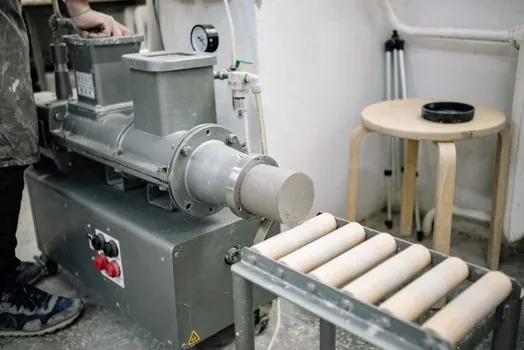
A hot box shooter imposes continuous heating demand, while a cold box shooter avoids heating the core box and is therefore described as more energy-efficient [S1]. The operating-cost difference grows with long production campaigns, large heated boxes, frequent changeovers, and cores that require the dimensional accuracy and surface quality associated with thermal curing [S1].
Electric or proportional gas heating can alter the utility profile. The economics depend on local electricity and gas prices, duty cycle, insulation quality, and the number of heated machines.
Cold box equipment shifts costs to resin, hardener, gas or curing chemistry, compressed air, tooling, and maintenance. Hot box equipment adds heater service, temperature calibration, box maintenance, and energy consumption, but can avoid some room-temperature gassing infrastructure. The detailed energy mechanisms are examined in Hot Box vs Cold Box Core Making Energy Cost.
Quality and Output Criteria Drive the Decision
Hot box shooters are the stronger choice when intricate cores, tight dimensional accuracy, controlled curing, and high-production automotive applications justify the thermal system [S1][S2]. Core shooting machines are categorized for flowable dry shell mold materials, for damp and dry mold materials, and for mainly dry mold materials.
Cold box shooters suit room-temperature curing, simpler sand-resin systems, and foundries that do not need heated-tooling dimensional control. Cold core shooters do not require heating and use mold materials that harden chemically and physically at room temperature.
Cycle time alone does not settle the comparison. Automated PLC and hydraulic core shooters can operate with cycle times below one minute for both cold and hot box processes [S6]. The meaningful comparison is good cores per hour, including heating, curing, ejection, cooling or separation, inspection, and rejects.
Hot Box, Cold Box, and Shell Core Options
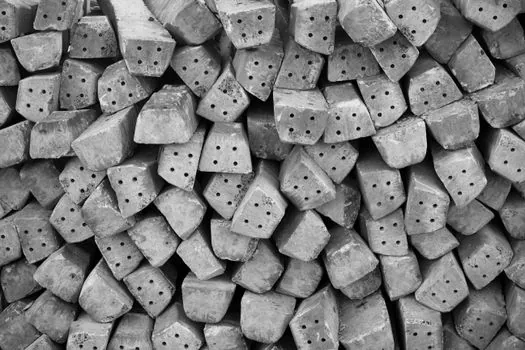
Hot box shoots resin-bonded sand into a heated core box and cures the binder throughout the core. Shell core equipment shoots resin-coated sand into a heated box, where heat activates the resin and forms a bonded shell around the cavity before ejection [S1][S2].
The three routes differ on cure temperature, tooling, output, and cost. Hot box systems use core boxes commonly held at 250–350°C [S4]. Cold box systems cure at room temperature and avoid heated tooling [S1]. Shell mold materials harden at higher temperatures.
Shell machines are not automatically cheaper substitutes. ATD lists HS-16, HS-22, and HS-26 as dual-purpose machines capable of producing either hot box or shell cores, while HC-16, HC-22, and HC-26 are horizontal-parted hot box configurations [S2]. A dual-purpose machine can reduce tooling duplication, but process qualification, temperature control, and automation scope must be priced separately.
Specifications to Put on the Same Quotation Basis
A valid price comparison should list core volume in liters, maximum core weight, box dimensions, parting orientation, and rated box weight. For the HP-43, published core capacity is up to 15 lb, sand-hopper capacity is 100 lb, and maximum core-box weight is 200 lb; the HS-16 raises those figures to 40 lb, 200 lb, and 400 lb respectively [S2].
Utilities also need normalization. Compare 120 V, 60 Hz, 10 A electrical requirements with 80–120 PSI air and 10-inch water column gas demand where applicable, then add hydraulic requirements, core-handling equipment, quick-change tooling, scrapers, core wash, and conveyor integration [S2].
For used machines, include commissioning rather than assuming immediate production. One cold box installation combines an H80 shooter, a roller conveyor for the core box, and a modernized electrical panel with Siemens S7 controls and a visual Lüber display; its maximum horizontal box dimensions are 1,000 × 720 × 800 mm [S3].
Who Should Buy Which Machine

Buy a cold box core shooter when room-temperature curing is acceptable, core geometry is not dependent on heated-tooling precision, and the plant wants the lowest thermal-equipment burden. The cold-box core machine route is technically appropriate for chemically and physically hardened sand cores formed without a heated core box [S1][S4].
Buy a hot box machine when resin-bonded cores require controlled thermal curing, tighter dimensions, or high output in an automated production cell. The hot-box core machine is the more complex capital purchase because it combines shooting, heating, proportional control, ejection, and optional handling automation [S2].
Do not buy either machine on machine price alone. A low-cost cold box unit with inadequate resin dosing, gassing capacity, clamping force, or core handling can have a higher unit cost of production than a properly sized hot box cell. Model the core qualification cycle, scrap rate, energy use, tooling changes, preventive maintenance, and operator intervention alongside acquisition cost.
Specification Checklist Before Purchase
Request a vendor quote with the core-volume basis, finished-core weight, box dimensions, production rate, cure temperature, cycle-time definition, and expected tooling life. For a hot box system, include heater load, fuel or electric connection, insulation specification, temperature-control method, and hot-face materials rated for the stated service. [S2]
For a cold box system, include resin and hardener consumption, mixer output, gassing method, compressed-air demand, hydraulic pressure, clamping area, and tooling-change time. Automations should be specified as functional requirements: automatic unloader, scraper, tilt-and-eject mechanism, conveyor interface, quick-change tooling puck, and automated core wash are distinct options [S2].
The decisive metric is cost per qualified core, not cost per machine. The follow-up work should compare supplier quotations on one capacity class, calculate annual utility consumption from measured cycle data, and track scrap and maintenance labor through a representative production trial.