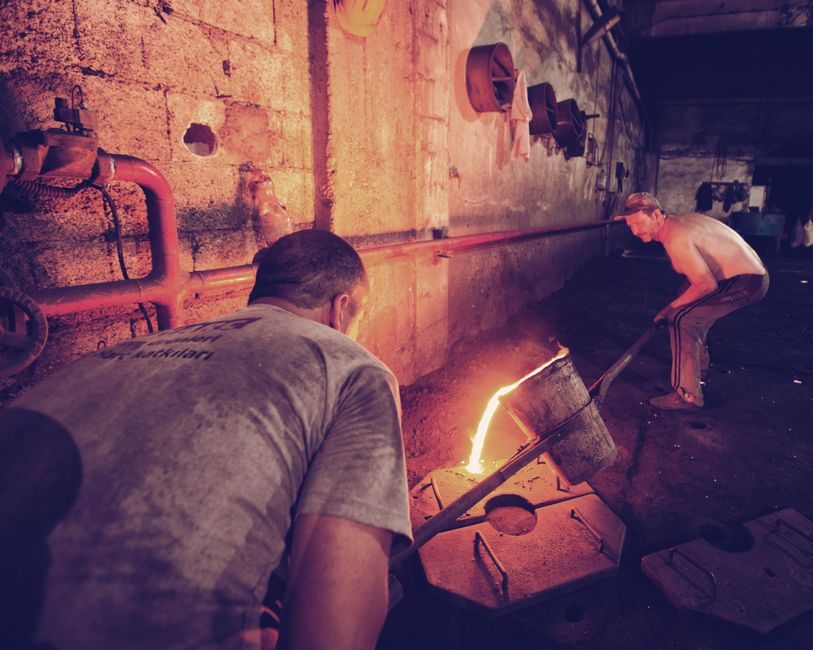
Buyers sourcing a hot-chamber die casting machine in mid-2026 should anchor the spec on three numbers: clamping force in tons (commonly 16 t to 180 t on the hot-chamber side), shot weight in grams, and the alloy melt in the gooseneck — almost always zinc or zinc-rich Zamak, with magnesium-capable variants in the upper tonnage bracket [S7].
One supplier-tier reality frames every quotation: Alibaba lists 1,246 active hot-chamber die casting machine suppliers, with the top three export markets sitting at 13% Africa, 10% East Asia, and 10% South America, which means competitive RFQs come back within days rather than weeks [S3]. New hot-chamber lines from audited Diamond-tier Chinese builders price between US$25,800 and US$64,500 per set on Made-in-China.com, with Jiangmen Zhenli Machinery being a representative tier-1 vendor in that band [S8]. The 2026 spec sheet, alloy decision, and supplier-qualification checklist are what separates a good buy from a stranded asset.
Tonnage Bands and What They Buy You in 2026
Hot-chamber clamping-force coverage from a single Chinese-OEM catalogue runs from 16 tons (160 kN) at the bench-top end to 180 tons (1,800 kN) at the top of the hot-chamber line, with cold-chamber siblings extending the platform out to 2,500 tons for buyers who step up to aluminium work [S7]. The 16 t bracket covers micro-zinc hardware (zipper sliders, costume-jewellery findings, electronic shielding clips), the 25-50 t bracket covers plumbing fittings and lock hardware, and 80-180 t machines target Zamak 3/5/8 structural parts such as door handles, gearboxes and instrument housings [S9]. A representative 25-ton hot-chamber zinc unit (model SH-25) is openly listed by CENS-member Taiwanese suppliers, with a published product code that maps directly to the low-tonnage 16-30 t class [S9].
Cycle-time economics change sharply across these bands: a 25 t hot-chamber unit typically shoots 2-4 shots/min on thin-wall zinc hardware, while a 160 t machine on a 0.5 kg Zamak gear housing settles around 1.5-2.5 shots/min, so the buyer's payback math is not tonnage alone but tonnage × shots-per-shift × alloy yield. Used and refurbished hot-chamber lines are openly advertised as a distinct category on specialist dealer sites, and the price gap between a used 2010s-vintage 90 t unit and a new 2026 build can be 40-60% on a like-for-like tonnage basis [S4].
Alloy Fit: Zinc, Zamak and Where Magnesium Enters
Hot-chamber design fundamentally means the melt is held inside an integrated furnace-and-injection (gooseneck) submerged in the molten bath, which limits the process to low-melting-point alloys — primarily zinc (Zn), zinc-aluminium (Zamak 3, 5, 8, ZA-8, ZA-12 with the latter two edging up to higher Al content), and tin-lead, with magnesium variants requiring modified gooseneck materials and inert cover-gas practice [S7]. Buyers running Zamak 3 (ASTM B240, ~4% Al, ~0.04% Mg) can use a standard iron or cast-iron gooseneck; Zamak 5 and 8 are also fine on stock equipment because their melt temperatures stay under 430 °C.
Magnesium (AZ91D, ~9% Al, ~1% Zn) melts at ~595 °C and is at the upper edge of what a stock hot-chamber gooseneck can survive, which is why dedicated magnesium die casting machines are catalogued as a separate machine class with specialised shot sleeves, protective SF6/CO2 cover-gas systems, and higher platen closing force [S7]. If a buyer's part is aluminium (A380, A383, ADC12 — melt ~580-620 °C) the process must step out of hot-chamber into a cold-chamber die casting machine, where a ladle doses the shot sleeve externally and the gooseneck never contacts the melt.
For zinc hardware and Zamak 3/5/8, the hot-chamber route is the lower-cost, faster-cycle option: melt sits at ~420 °C, shot velocities are gentler than cold-chamber aluminium, and die life extends 2-3× over equivalent aluminium tooling because thermal shock is smaller.
Selection Criteria: Clamp Force, Shot Weight, Platen Size, and Tie-Bar Clearance
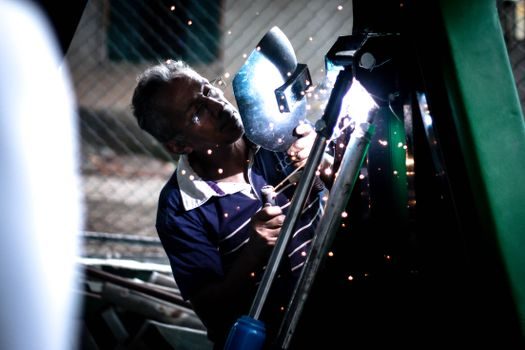
Four spec numbers drive the RFQ shortlist once the alloy is fixed: (1) clamping force in tons, (2) projected shot weight in grams, (3) tie-bar spacing in mm, and (4) die-height / daylight stroke in mm. A 90 t hot-chamber unit typically clears 1.0-1.5 kg zinc shot weight with 380-450 mm tie-bar clearance, and a 160 t unit moves that to 2.0-3.0 kg shot and 460-560 mm clearance, while a 25 t bench-top clears 0.2-0.4 kg with ~250 mm tie bars [S7][S9].
Beyond those four, the engineering checklist should also pin down: injection pressure (typical 25-35 MPa for hot-chamber zinc), intensification ratio (1:8 to 1:14 is common), hydraulic vs. servo-hydraulic energy source (servo-hydraulic units cut idle power ~30-50%), platen parallelism tolerance (≤ 0.05 mm/m on quality builds), and shot-speed profiling (a multi-stage slow-fast-slow profile is standard on 2026 machines). Buyers pulling from the Used / refurbished channel should request platen-parallelism, shot-velocity, and intensification-ratio test reports — a worn hydraulic intensifier on a 90 t machine can drop 15-20% of its rated pressure, which quietly halves shot weight capability [S4].
Supplier Channel: Factory-Direct vs. Trading Companies
Three sourcing tiers are visible in 2026: (1) OEM factory-direct from Chinese builders (HYBERS, Jiangmen Zhenli, Bengbu Long Hua Die Casting Machine), (2) audited Diamond-tier trading platforms on Made-in-China.com and Alibaba, and (3) used / refurbished dealers outside the OEM warranty path [S5][S7][S8]. Bengbu Long Hua Die Casting Machine Co., Ltd. (Anhui) ships cold and hot chamber lines globally, with an average lead time of one month in peak season and within 15 workdays off-season under FOB/CIF Incoterms and LC/T/T/D/P payment terms [S5].
Price benchmarks across these channels: Jiangmen Zhenli posts a hot-chamber die casting machine at US$25,800-29,500/set for an entry-tier configuration and US$52,150-64,500/set for an upper-tier configuration, with 1 set MOQ and Diamond/audited status on Made-in-China.com [S8]. On the micro/bench-top side, Okorder lists small hot-chamber die casting machines marketed at "30 years experience" sellers focused on lead and zinc alloy, sold as commodity lines to hardware traders [S2].
For buyers running a CNC shop floor and considering allied equipment, our CNC machine supply chain 2026 coverage has the comparable tonnage-and-pricing map for machining centres, and our thrust bearing buying guide 2026 covers the bearing-and-lubricant stack that supports hot-chamber platen kinematics.
Standards, Compliance and Import Considerations
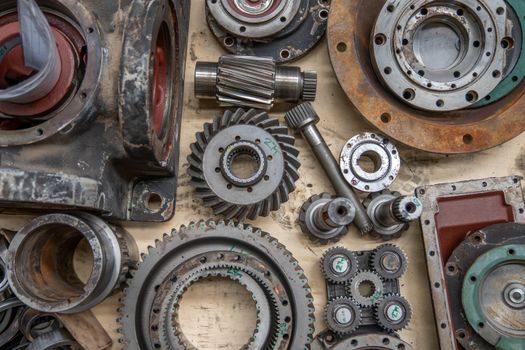
Chinese-built hot-chamber die casting machines exported in 2026 generally carry CE marking (per the EU Machinery Directive 2006/42/EC where applicable) and CCC where the equipment falls in scope; buyers should request the CE/CCC certificate, factory test report, and shot-velocity trace as part of the FAT (factory acceptance test) pack [S3]. Customs classification: hot-chamber die casting machines are typically declared under HS 8453 2000 00 (machinery for making or repairing footwear is a separate code that sometimes appears adjacent in tariff lookups), with MFN, general, and FTA duty rates varying by destination country [S1].
For buyers shipping into the EU, ATEX 2014/34/EU zone classification becomes relevant when the gooseneck area is rated for magnesium (Zone 1 or Zone 2) — a standard zinc-only machine is not in scope. For US-bound lines, NFPA 484 (combustible metals) governs magnesium-capable equipment. NACE MR0175 / ISO 15156 applies only when the cast part will see sour-service hydrocarbon exposure — the machine itself is generally not in scope, but downstream part applications can be.
Comparison: Hot-Chamber vs Cold-Chamber vs Gravity Die Casting
On four decision criteria — alloy range, cycle time, die life, and capital cost — the three processes line up as follows. Hot-chamber is restricted to low-melt alloys (zinc, Zamak, lead, tin) but delivers the fastest cycles (often 2-4 shots/min on small zinc parts) with the longest die life (because thermal shock is small) and the lowest capital cost at a given tonnage [S7].
Gravity die casting (permanent-mould, non-injection) is the simplest and lowest-cost route for non-ferrous parts that do not need the thin-wall complexity of die casting, with cycle times in the 1-2 shots/min band and the longest die life of the three, but with poorer dimensional control and thinner-wall limits than either injection route.
Buyers who need to step up from zinc to aluminium without re-tooling the entire shop floor should consider a dual-platform approach: a 16-180 t hot-chamber for zinc/Zamak work and a 130-2,500 t cold-chamber sibling for aluminium — both platforms share the same control architecture on OEM lines such as HYBERS, which simplifies training and spare-parts holding [S7]. The encyclopedia entry on die casting machines covers the platform-level overview, while the aluminum die casting machine page covers the cold-chamber branch in detail.
Failure Modes and Specification Pitfalls to Avoid
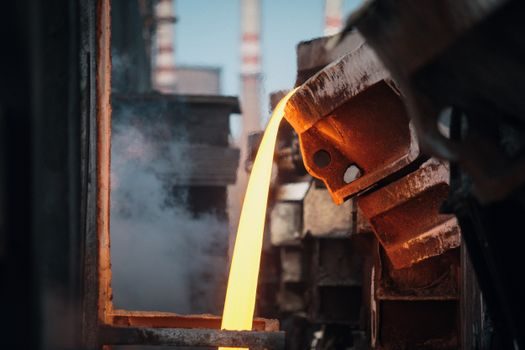
Three spec pitfalls trip up 2026 buyers: (1) buying a hot-chamber machine and trying to run Zamak 12 or ZA-27 (12-27% Al) at 500-580 °C — the gooseneck steel is not rated for sustained exposure at that temperature and will creep, leading to shot-sleeve failure inside 10,000 cycles; (2) undersizing clamping force by ignoring the projected area × injection pressure term (clamp force in tons ≥ projected area in cm² × injection pressure in bar ÷ 1,000, with a 1.2-1.4× safety factor), and (3) specifying a hot-chamber unit for a part that is technically feasible on the alloy side but whose die-height exceeds the machine's daylight — a problem only caught at die-set trial. [S1]
For the magnesium edge case, the magnesium die casting machine page lays out the cover-gas and gooseneck-material requirements, and the vacuum die casting machine page is the reference when porosity on thin-wall aluminium or magnesium parts is the gating quality issue. Gravity-only buyers should review gravity die casting machine before ruling out injection entirely.
Lead Time, Spare Parts and Total Cost of Ownership
New-machine lead time in 2026 from audited Chinese OEMs sits at 15-30 workdays for standard tonnage (16-180 t hot-chamber) and 30-60 days for non-standard configurations, with FOB/CIF terms and LC/T/T payment as the default [S5]. Spare-parts holding should cover the gooseneck and shot sleeve (consumable, 50,000-150,000 cycle life on zinc), the intensification piston and seals, hydraulic valve packs, and heating elements for the melt furnace — a stocked kit of these five items is roughly 4-7% of new-machine purchase price.
For buyers evaluating non-ferrous casting-material costs alongside machine cost, our additive manufacturing material buying guide 2026 is a useful cross-reference on zinc and aluminium powder pricing bands, even though the production route differs. Two trackable signals for the next quarter: (1) the China Customs tariff schedule under HS 8453 2000 00 — duty deltas between MFN, FTA and any anti-dumping actions will move landed cost; (2) aluminium-vs-zinc alloy pricing spread, since a widening LME premium for zinc narrows the operating-cost advantage of cold-chamber aluminium and pushes work back into hot-chamber zinc.