AM feedstock selection in 2026 is governed by four binding constraints — printer process family, certified material grade, particle-size distribution, and post-processing route — and the cheapest powder that violates any one of them fails qualification [S2][S7].
The buyer-side landscape includes metal powders such as Inconel 718 used in powder-bed fusion and conductive nanomaterial inks for printed electronics [S5][S7]. Process families diverge sharply: powder-bed fusion (PBF-LB/M for metals, PBF-LB/P for polymers), directed energy deposition (DED), binder jetting, material extrusion (FDM/FFF), and vat photopolymerisation each accept a different feedstock envelope [S2].
Process-Family Lock: Which Powder Form Goes With Which Printer
PBF-LB/M metal printers accept gas-atomised spherical powder in the 15–45 µm or 20–63 µm band depending on layer thickness and laser spot size; DED systems tolerate 45–105 µm for coaxial nozzles and 50–150 µm for powder-blown heads [S2].
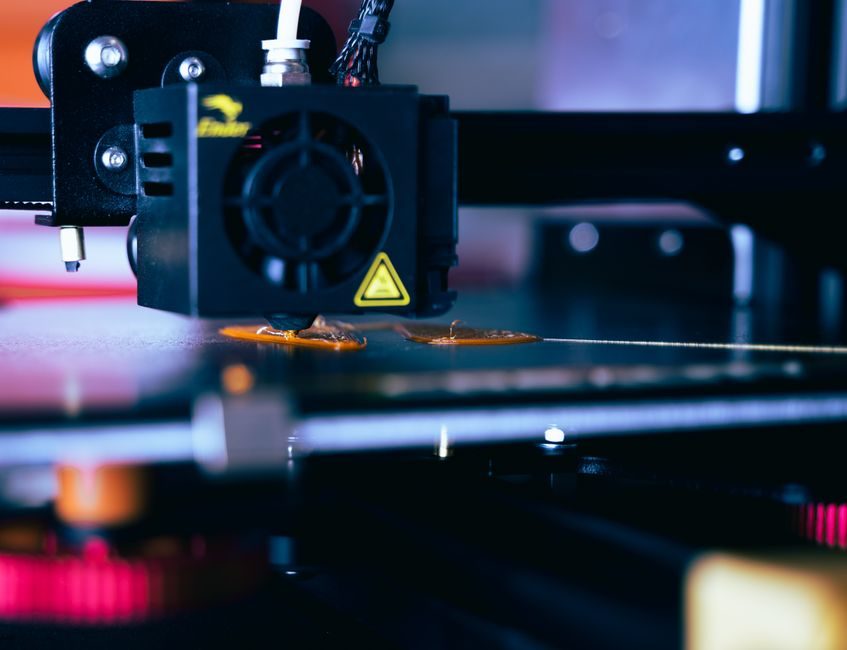
Polymer PBF (SLS) consumes PA12/PA11 in the 20–80 µm range; FFF/FDM uses 1.75 mm or 2.85 mm filament with diameter tolerance typically ±0.05 mm, while pellets (3–5 mm) are gaining ground for large-format extrusion [S4]. Binder jetting is the only AM process that handles a broader PSD envelope (often 22–63 µm for metals) and is the dominant route for metals that do not tolerate the laser melt-pool thermal cycle, including copper, where the pure-metal laser absorption problem is bypassed by sintering after binder burnout [S2]. For conductive nanomaterial printing, aerosol jet, inkjet, and screen-printing inks sit in the 1 nm–100 µm feature band, distinct from any powder process [S5].
Metal Powder Grade Cuts: Inconel 718, Ti-6Al-4V, 316L, AlSi10Mg, Copper
Inconel 718 (UNS N07718) in laser powder bed fusion has been demonstrated to reach strength-ductility synergy through thermomechanical treatment of the as-deposited fine multi-scale microstructure, with twin-boundary engineering delivering a balanced UTS/elongation envelope published in the journal Additive Manufacturing (2023) [S7].
Ti-6Al-4V (UNS R56400) PBF-LB/M parts default to ASTM F3001 or F136 grade 5 chemistry; 316L runs to ASTM F3184 or ISO/ASTM 52900 category 5 (metal PBF); AlSi10Mg to ASTM F3318; maraging steel 18Ni-300 to ASTM F3187. For copper, AM-grade powders now include CuCr1Zr (UNS C18150) for laser-compatible alloys and pure Cu (UNS C11000) for binder-jetted routes — the latter trades the laser-absorption problem for a sintering-and-infiltration step. A buyer comparing copper material feedstock against wrought stock must factor in the 60–70 % post-sintering density window that binder jetting leaves behind, which dictates downstream HIP or infiltration. Comparison of the common metal powder grades on buyer-relevant axes:
- Inconel 718: 700–980 MPa UTS as-built (with TM treatment), service to 650 °C, expensive Ni-base, AM-suitable per ISO/ASTM 52900 category 5 [S7].
- Ti-6Al-4V: 900–1100 MPa UTS as-built, density ≥99.5 % after HIP, biocompatible (ASTM F136 grade 23ELI variant), reactive powder Class 1 storage.
- 316L: 480–550 MPa UTS as-built, austenitic, NACE MR0175 compliance possible for oilfield, low cost per kg relative to Ni/Ti.
- AlSi10Mg: 320–360 MPa UTS as-built, near-eutectic, easy to print, T6 heat-treatable, density limited by H2 porosity above 0.1 wt %.
Polymer and Photopolymer Cuts: PA12, PEEK, Ultem, TPU, Resin
PA12 (Vestamid, EOS PA2200, HP PA12) is the workhorse SLS polymer with melting point 178 °C, tensile strength ~45 MPa XY, and is the only polymer qualified for serial production of end-use parts in many safety-relevant programmes [S4].
PA11 (bio-based, lower moisture uptake) is preferred when PA12's ~1.0 % moisture pickup shifts dimensional accuracy. PEEK (Victrex 450G) and Ultem 1010/9085 filaments for FFF deliver 90–100 MPa UTS and continuous service temperatures of 250 °C and 180 °C respectively, with the mandatory 110–120 °C build-chamber and 350–400 °C nozzle envelope. TPU 85A–95A filaments handle drop-test elastomeric parts at 200 % elongation. For vat polymerisation, the buyer should pin resin by exposure dose (mJ/cm²) and tensile modulus, not brand name — clear ABS-like resins at 50–70 MPa UTS sit in a different band from tough engineering resins (polypropylene-like, 30–40 MPa at 100 %+ elongation).
What AM Material Buying Is NOT For — When to Walk Away
AM feedstock is the wrong choice for high-volume commodity parts under 50 cm³ where injection moulding cycle time is <30 s; the per-part cost crossover sits roughly at 100–1,000 parts depending on geometry and material [S4].
AM is also the wrong choice when qualified-weld-procedure specifications (ASME IX, AWS D1.x) are not yet extended to PBF-LB/M deposits — a buyer sourcing pressure-retaining parts for ASME B31.3 service must confirm the AM vendor holds the relevant ASME BPVC Section IX qualification. Forged wrought bar remains the safe default where design codes still mandate forging stock, and a specifier who reads the AM brochure without the code check will over-spec material and under-spec the regulatory path.
Quality Verification: Powder Certificate, Build-Plate Coupon, and Standards Anchor
Each AM powder lot should ship with a certificate conforming to ASTM B215 (sampling), ISO/ASTM 52900 (terminology), and the relevant material standard (ASTM F3001 for Ti-6Al-4V, F3184 for 316L, F3318 for AlSi10Mg, F3187 for maraging 300) [S2][S7].
For structural-integrity-critical service, the workflow published in 2024 (Bo Chen, University of Southampton) links high-temperature powder-bed fusion component integrity to powder reuse strategy — reused powder shows drifting PSD and oxygen pick-up, which drops fatigue life more sharply than static UTS [S2]. A buyer who accepts unlimited powder reuse on the same lot has accepted an undocumented fatigue penalty. The referenced standard line — "Mechanical properties of additively manufactured 316L stainless steel shall be evaluated on a per-build coupon basis" — captures the buyer's verification duty in one sentence [S2].
Standards, Data Protection, and the Software Layer
The Chinese national standard "Additive manufacturing — Technical requirements for product data protection of cloud service platform" (plan number 20220074-T-604, drafted by TC562) covers AM cloud-platform data security and is in the draft stage as of 2026-05-30, scheduled for 22 months from 2022-04-22 issue [S8].
On the software side, Magics (Materialise) and the 2026 additive-manufacturing software stack handle CAD import, slicing, build-preparation, and material-selection logic — useful when the buyer needs a per-part cost and lead-time envelope from STL upload, but the material grade is still the buyer's call, not the software's [S4]. For reference on cross-process powder specification logic, the metal powder vs sputtering target comparison lays out the same purity/PSD discipline in a different process context. Where AM service temperatures exceed 250 °C — for example PEEK/Ultem parts near high-temp metal builds — the linear guide and crossed-roller guide sizing inside the same machine tool must be checked against the AM workholding thermal drift envelope. For binder-jetted copper stators and induction coils, the copper material selection page covers the conductivity bands that drive downstream performance after the sintering step.
Three signals worth tracking through 2026: (1) ASTM F42 / ISO/TC 261 joint committee output on in-process monitoring standards, which will tighten the per-build coupon requirement; (2) the TC562 cloud-platform data standard (plan 20220074-T-604) reaching publication; (3) the powder-reuse revision in the 2024 Southampton structural-integrity work, which is likely to flow into buyer-facing certificate language by 2027 [S2][S8].