
Posted CNC machined components on Made-in-China cluster in the US$16-20 and US$50-54 per-piece bands at MOQ 1 in May 2026, with material menus covering nylon, brass, copper, aluminum, alloy and iron under GB, EN, JIS, TEMA and ASME conformance [S1].
That two-tier listing is the cheapest observable entry point for buyers comparing Asian CNC capacity, while Chinese 5-axis shops such as RALLY quote aluminum machined parts on a US$5-50/kg envelope with 3-day prototype and 10-day production turnarounds from ISO 9001:2015 audited facilities [S4].
Two-Tier Price Structure on China B2B Platforms
The Made-in-China "new CNC machine shop products" feed of 2026-05-13 splits cleanly into a fastener/hardware tier at US$16-20/piece (polished surface, GB/EN/JIS/TEMA/ASME standards, nylon-to-iron material set) and a higher-spec fastener/accessory tier at US$50-54/piece, both at MOQ 1 and mass-production mode [S1].
For a sourcing engineer the practical read is: anything landing in the US$16-20 band is almost certainly a turned brass, aluminum or nylon commodity part on a small sliding-head lathe, while the US$50-54 band typically signals a milled multi-feature part, tighter tolerance or a corrosion-resistant alloy such as 304/316 stainless [S1]. Buyers chasing stainless steel price benchmarks will see the same grade premium echoed in CNC finished-part quotes.
Material Bands and Tolerance Envelope
China CNC shops quote across nylon, steel, plastic, brass, alloy, copper, aluminum and iron on a single RFQ, with surface treatment defaults of polishing, anodising or powder-coat added as line items rather than absorbed into the piece price [S1].
Aluminum-specific suppliers narrow that envelope to 6061-T6 (the general-purpose default), 7075 (aerospace and high-stress structural), and 2xxx/7xxx series for defence and aerospace brackets, machined on 3, 4 and 5-axis milling and turning centers with typical ±0.05 mm tolerance on milled features and ±0.025 mm on turned bores above Ø10 mm [S4]. Material choice is the single largest cost lever; on the alloy steel sourcing map the same 4140 vs 4340 decision routinely moves finished-part price 15-30% before any machining minute is added.
Lead Time, MOQ and Capacity Reality
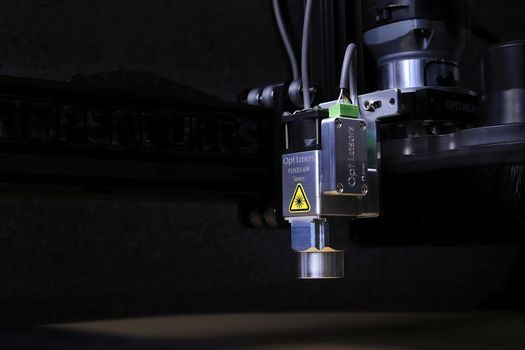
Prototype runs from audited Chinese CNC shops now quote 3 working days for lots under 50 pieces and 10 working days for production batches in the low thousands, with global DDP/DAP shipping built into the supplier's commercial terms rather than invoiced separately [S4].
MOQ 1 listings remain the public face of the marketplace, but the binding constraint is rarely piece-count — it is machine-hour availability during peak export windows (March-May and September-November) when 5-axis capacity in Guangdong, Jiangsu and Shandong fills first [S1][S4]. The practical floor for an outsourced CNC run sits around 50-100 pieces for a 5-axis job; below that the per-piece premium for setup absorption can be 3-5x.
Standards, Certification and Audit Trail
ISO 9001:2015 is the baseline quality management system cited by audited Chinese CNC suppliers, with material traceability normally backed by mill test certificates (EN 10204 3.1) on aluminum, brass and stainless heats [S4].
For buyers in regulated end-uses — food contact, medical, oil & gas, aerospace — the same supplier base layers on PPAP, CMM inspection reports and, where required, NACE MR0175 / ISO 15156 compliance for sour-service components, with the standard designation flowing into the part drawing rather than being negotiated per RFQ. The list of "GB, EN, China GB Code, JIS, TEMA, ASME" stamped into a 2026 supplier RFQ is a convenience menu, not a free pass: each standard still has to be invoked on the drawing with the correct revision year [S1].
Decision Criteria: When China CNC Wins, When It Loses
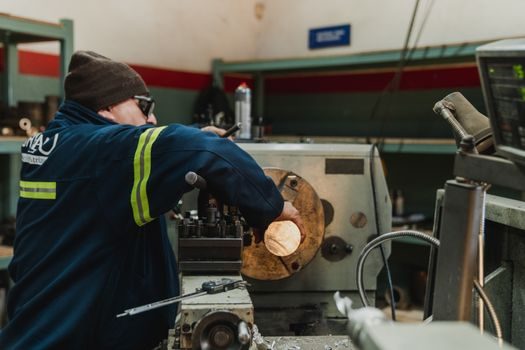
China CNC sourcing wins on three vectors: 5-axis aluminum brackets at US$5-50/kg with 3-day prototype turnarounds, commodity turned parts at US$16-20/piece MOQ 1, and high-mix low-volume runs where setup absorption is shared across many part numbers [S1][S4].
The internal comparison a buyer should run: 5-axis aluminum in China vs Mexico vs Germany on cost per kg, lead time in days, and tariff-adjusted landed cost. Cost typically ranks China < Mexico < Germany; lead time inverts to China > Mexico > Germany.
Adjacent Supply Chains a CNC Buyer Should Map
CNC finished parts do not exist in isolation — they sit on top of POM resin pricing for plastic inserts, cast iron and steel bar stock for machined housings, and synthetic resin binders for composite fixtures used in low-volume jigs. [S1]
For buyers building a private-label hardware line, the same Guangdong/Shandong cluster that supplies CNC parts also feeds into the circular saw and TCT blade supply chain, and — for solvent-intensive cleaning, degreasing and post-machining surface prep steps — the industrial solvent price bands sit on the same monthly procurement cycle.
Trackable Signals for the Next 90 Days
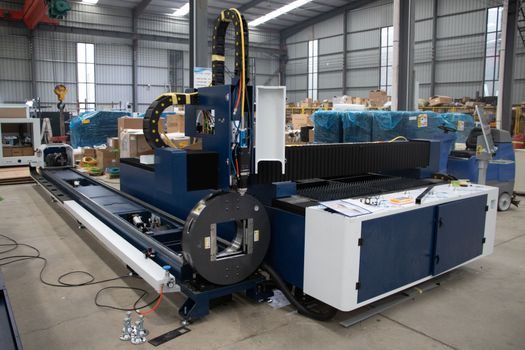
Three nodes are worth watching through Q3 2026: (1) any change in the 145% Section 301 tariff band that has reshuffled CNC RFQ routing between China, Mexico and Vietnam since 2024, (2) the spread between LME aluminum and SHFE aluminum as a leading indicator for 6061-T6 and 7075 bar-stock surcharges on finished-part quotes, and (3) 5-axis machine-hour utilisation in Guangdong and Jiangsu — published by regional machine-tool associations — as the tightest forward signal on lead times [S1][S4].
For component-level specifications, see dc power supply, switching power supply, and chain conveyor.