For zinc-alloy and Zamak lighting fixture housings, a hot chamber die casting machine sized 16-180 ton clamping force covers the bulk of commercial and architectural component runs, with 25-90 ton units dominating sub-1 kg shot-weight programs.
Hot chamber systems integrate the melt bath and injection plunger inside one heated pressure vessel, a geometry that drives cycle times of 40-90 seconds for thin-wall lighting parts and keeps zinc melt temperature inside the 410-440 °C process window [S3][S6].
Tonnage Range and Locking Force Mapping for Lighting Parts
Hot chamber clamping force brackets published by HYBERS run from 16 ton (160 kN) to 180 ton (1800 kN), in 16/25/63/90/130/180 ton steps, with cold chamber siblings extending to 2500 ton [S3]. A practical starting point for a small downlight bezel, MR16 body, or track-light knuckle is 25-63 ton, while a 6-inch commercial recessed housing moves the spec toward 90-130 ton.
Projected area is the lever: rule of thumb for Zamak 3 and Zamak 5 is 40-60 MPa cavity pressure, so a 130 cm² projected part at 50 MPa needs roughly 65 ton clamping force, a calculation that should always be checked against the OEM's own tonnage-projection chart. Locking-force undersizing on thin-wall LED bodies is the dominant cause of flash and burr, both of which destroy lighting-grade cosmetic surfaces.
Shot Weight, Plunger Diameter, and the 1 kg Line
Most lighting fixtures — bezels, junction shells, gear trays, heat-sink caps, decorative finials, track-rail couplers — finish below 1 kg finished weight, which keeps the part inside the comfort zone of a 40-70 mm plunger with 0.5-2.5 kg nominal shot. HYBERS publishes 16-180 ton across that plunger range, with the smaller-tonnage units aimed at the 0.1-0.5 kg niche that dominates residential lighting [S3].
Above ~2.5 kg finished part the equation flips: you either move to a larger hot chamber unit at 130-180 ton, or you step out to a cold chamber die casting machine — and for aluminum heat sinks and LED housings, cold chamber is the only honest answer because aluminum melt attacks the iron plunger of a hot chamber machine.
Zinc, Zamak, and the Material Boundary Lighting Buyers Must Respect
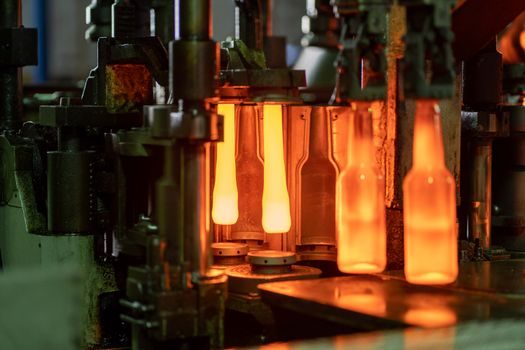
Hot chamber machines are engineered for low-melting-point alloys — zinc, Zamak 3, Zamak 5, Zamak 7, and magnesium — with the gooseneck and plunger running immersed in molten metal at 380-440 °C. Aluminum's 660 °C liquidus destroys the ferrous gooseneck, so any aluminum die casting machine referenced for LED heat-sink production must be a cold chamber design, never a hot chamber one [S6].
For a lighting OEM, the practical material split is: zinc/Zamak for cosmetic trim, junction boxes, conduit entries, MR16 and GU10 bodies, gear-tray brackets, and decorative finials; aluminum for heat sinks, reflector shells, and outdoor IP65 housings. Mixing the two behind a single hot chamber is a procurement mistake that surfaces in the first 1,000 shots as gooseneck pitting.
Cycle Time, Vacuum Assist, and Surface Quality for Lighting Trims
Published hot chamber cycle times for thin-wall zinc lighting trims sit in the 40-90 second window depending on wall thickness (1.0-2.5 mm) and die cooling. A 1.2 mm bezel with proper die-cooling channels typically lands at 45-55 seconds, against 70-90 seconds for a 2.5 mm gear tray [S3].
For chrome-plated or PVD-finished lighting trims — common in hospitality and high-end residential — porosity below the surface is the killer defect. A vacuum die casting machine retrofit or a hot chamber equipped with a vacuum valve on the die cavity drops cavity pressure by 80-90 % before injection, eliminating the gas entrapment that lifts after plating. Lighting buyers specifying mirror-finish or satin chrome should make vacuum-assisted hot chamber a line item, not an option.
Comparison: Hot Chamber vs Cold Chamber vs Gravity vs Magnesium-Specific
For lighting fixture sourcing the four machine families line up against four decision criteria: alloy, shot weight, cycle time, and surface finish. Hot chamber wins zinc/Zamak under 2.5 kg at 40-90 s cycle; cold chamber is mandatory for aluminum and magnesium over 2.5 kg at 60-180 s cycle; gravity die casting machine units are reserved for low-volume decorative housings and prototype runs where tooling cost dominates; magnesium die casting machine platforms are the niche answer for ultra-light LED heat sinks where every gram matters and the buyer accepts a higher melt-temperature safety burden [S3][S6].
A typical lighting OEM running both cosmetic trims and functional heat sinks keeps two cells: a 25-90 ton hot chamber for the zinc cosmetics and a 250-550 ton cold chamber for the aluminum heat-sink line. The two do not share a single consumable.
Selection Checklist Before Quoting a Lighting Cell
Five numbers must be on the RFQ before a hot chamber quote is meaningful: (1) projected area in cm², (2) finished part weight in grams, (3) alloy grade (Zamak 3 / 5 / 7 or magnesium AZ91D), (4) wall thickness range, and (5) cosmetic class — as-cast, polished, painted, plated, or PVD. A vendor that quotes tonnage before seeing these five is selling catalog horsepower, not a process. [S2]
A real-shot sample on the production die is non-negotiable: a 50-shot trial run at the vendor's floor reveals flash, cold shuts, porosity, and die-cooling behavior, and it costs a tiny fraction of a 100,000-piece production run that fails. Buyers who accept a paper quote skip this step and pay for it in scrap.
Standards, Safety, and Sourcing Signal
Lighting die-casting cells that ship to the EU should carry CE machinery compliance, and lighting end-products must still pass IEC 60598 (luminaires) and, for outdoor IP-rated housings, IEC 60529. The die-casting machine itself is not IEC-certified — that audit belongs to the finished luminaire — but a CE-marked machine shortens the luminaire approval path [S3].
Two verifiable signals worth tracking on sourcing: HYBERS' hot chamber line covers 16-180 ton in nine standard tonnage steps, an unusually granular ladder for lighting-tier parts [S3]; and the price floor on a 700 ton cold chamber reference unit from a Chinese vendor sits near US$ 126,560-156,000 FOB, a benchmark that helps size hot chamber quotes by linear interpolation of tonnage and shot weight [S5]. Buyers running a parallel sourcing program can use the ratio of clamping force to FOB price to sanity-check offers across vendors.
For agricultural-equipment buyers who face a similar tonnage-vs-shot-weight decision on Zamak housings, the 2026 spec map on hot chamber selection walks the same five-number RFQ logic with different part examples. Lighting differs mainly in cosmetic class and finish route, not in the underlying machine-selection arithmetic.