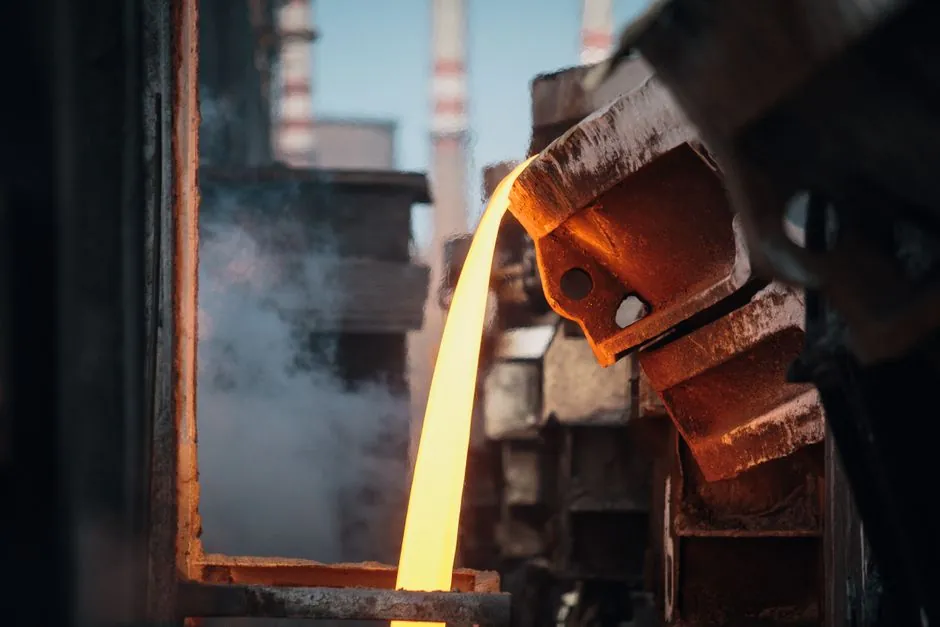
Automotive foundries and CNC part makers matched their melting furnace choice to alloy family in 2026: vacuum and medium-frequency induction for steel and superalloy blanks, gas- or diesel-fired crucible furnaces for aluminum, and electric resistance or SCR-series medium-frequency units for copper and brass [S1][S6][S8].
Vacuum induction melting furnaces are listed on Chinese B2B catalogs in 2026 with one-to-two inverter topology, where a single power cabinet drives two furnace bodies simultaneously to lower per-ton kWh [S8]. Volmac Group, an ISO 9001:2015 CNC machining supplier in India, sourced castings and bar stock for automotive, hydraulics, and textile machinery components, illustrating the typical downstream user of such melt shops [S5].
Furnace Families and the Automotive Alloys They Match
Medium-frequency induction furnaces are the workhorse for ferrous automotive blanks because they melt 0.5-3.0 ton steel batches in 45-70 minutes, with one power supply capable of feeding two furnaces (a 'one-to-two' SCR parallel inverter arrangement) per current Chinese OEM offerings [S8]. Yinda markets a full induction melting and heating equipment line for steel mills, foundries, and forging shops, and lists induction furnace accessories, coils, and control circuits as standard SKUs [S4].
For aluminum pistons, cylinder heads, and transmission housings, gas- or diesel-fired aluminum melting furnaces with hydraulic tilting bodies and reversing regenerative burner systems are the dominant pattern on Made-in-China listings, in round, rectangle, fixed, and tilting configurations [S3]. A separate vertical aluminum melting/holding furnace (model BLM2021068) is sold at US$103,000-108,000 per set with a 5-set-per-month production capacity and CE plus ISO certification, with regenerative burner systems as the standard heat-recovery option [S7].
Vacuum induction melting furnaces serve the high-end of the automotive supply chain: superalloy turbocharger wheels, high-Ni valve seat inserts, and high-purity electrical steel where dissolved nitrogen and hydrogen must stay below 2 ppm [S1]. Transverse (axial) electron beam melting furnaces exist as a niche alternative for refractory and reactive metals, with cathode life 'up to several hundred hours' and a chamber pressure 1-2 orders of magnitude higher than the gun chamber to broaden the meltable material range [S9].
Selection Criteria: Energy Source, Capacity, Atmosphere, and Tilt
Energy source is the first gate: induction wins on melt rate, electric efficiency (typically 55-65% at the furnace coil for medium-frequency units), and atmosphere control; gas/diesel wins on capital cost and on aluminum where induction stirring raises dross. The Made-in-China aluminum furnace spec sheet lists natural gas or diesel as the standard fuel and offers a hydraulic tilting device for tapping [S3].
Capacity and tilt are the next two gates. Tilting furnaces are mandatory where molten metal is poured into a ladle or launder for transfer to a die casting cell; fixed furnaces feed directly into a holding furnace or casting line. Holding furnaces and homogenizing furnaces are bundled by Chinese suppliers alongside melting furnaces and hot-top billet casting tables, indicating a typical tilter-to-holder casting line layout [S7].
Atmosphere control separates the induction and vacuum families from open-atmosphere gas furnaces. A vacuum induction melting furnace is the only practical route when the specification calls for low-N, low-O, low-S steel, or for Ni- and Co-based superalloys used in turbocharger and exhaust valve components [S1]. For non-ferrous automotive parts where atmosphere is not critical, gas-fired crucible furnaces remain the lowest-capex option.
Main Options Compared Against Four Decision Criteria
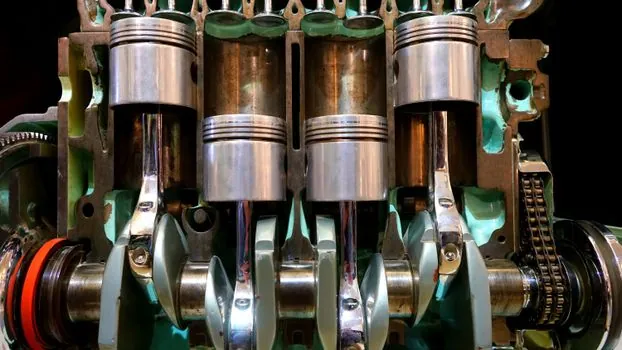
Across the 2026 catalog offerings, four furnace types cover the bulk of automotive melt-shop demand: medium-frequency induction, vacuum induction melting, gas-fired aluminum crucible, and SCR-series intermediate-frequency with one-to-two inverter drive. On melt rate per kWh, induction leads because the coil couples directly into the charge. On atmosphere control, only vacuum induction meets low-N, low-H spec lines. On alloy flexibility, gas-fired crucible furnaces accept a wide range of aluminum and zinc alloys with minimal changeover, while induction coils are typically dedicated to a narrower resistivity window. [S2]
For a comparison anchor, a single 1-ton medium-frequency induction furnace for steel typically draws 800-1,200 kW at 500-1,000 Hz and is matched to a 1,500-2,000 kVA power supply, while a 1-ton gas-fired aluminum crucible furnace burns 70-110 Nm3 of natural gas per hour. Sourcing platforms list these as distinct product categories, with the induction furnace and crucible furnace reference pages covering the design and operating details behind the two architectures.
Use Cases by Automotive Component
Steel crankshafts, forged connecting rods, and transmission gears typically start in a medium-frequency induction furnace matched to a forging line, with melt size matched to forging press capacity. Spare-parts suppliers such as Thermafield Power Components in Ahmedabad serve this segment with induction coils, coil turn and restraint kits, refractory top and bottom blocks, and hydraulic cylinders, and report a 750+ customer base since 2009 [S2].
Aluminum cylinder heads, engine blocks, and transmission housings route through gas- or diesel-fired crucible furnaces paired with holding furnaces and homogenizing furnaces, a configuration that Chinese suppliers such as the BLM2021068 manufacturer ship as a packaged line [S7]. For automotive tier-1 die casters serving the hardware and agriculture machinery segments, the same furnace family feeds zinc and aluminum die casting cells, and the selection trade-offs for that downstream equipment are covered separately in a zinc die casting spec guide for hardware.
Superalloy turbocharger wheels, exhaust valves, and high-strength fasteners that require vacuum-purity steel use vacuum induction melting furnaces, where the vacuum induction melting furnace reference page documents the typical pressure, leakage, and refractory-life constraints. A subset of high-refractory parts may route through transverse electron beam melting for secondary refining, although the 2018-vintage spec note for that family is dated and the technology remains niche outside of titanium and niobium [S9].
Limitations, Failure Modes, and Sourcing Constraints
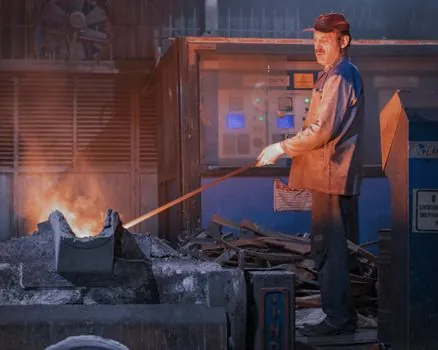
Induction furnaces fail most often at the coil: refractory cracking lets molten metal contact the copper coil, and the resulting water-into-steam event is the single highest-consequence failure mode. Spare-parts inventories at induction furnace users therefore stock coils, magnetic yokes, snubber diodes, capacitors, IGBT transistors, hydraulic cylinders, and seal kits, which is the standard spares basket published by induction furnace spare-parts suppliers [S2].
Gas-fired crucible furnaces fail most often at the burner and the stack: reversing regenerative burner systems require periodic media bed replacement, and creosote and unburned hydrocarbon carryover forces exhaust treatment. The Made-in-China spec sheet calls out the reversing regenerative burner as the newest type and the electrical heating capacitor bank as an option, both of which are common wear items [S3].
Vacuum induction melting furnaces carry the longest lead time and the highest capex, and are sensitive to charge cleanliness: any oil or moisture on the scrap charge contaminates the melt and the refractory. The transverse electron beam furnace variant uses a far-focus electron gun with cathode life of 'several hundred hours', but the gun chamber must be pumped independently of the melt chamber to maintain the 1-2 order-of-magnitude pressure differential that broadens the meltable alloy range [S9].
Sourcing-side constraint: Chinese OEM catalogs in 2026 list a 5-set-per-month production capacity for a representative 1-3 ton aluminum melting furnace, and pricing has been stable in the US$103,000-108,000 per set band for that model, indicating that lead times for the standard tonnage class remain in the 6-10 week range rather than tightening [S7]. For a quick refresher on the operating principles behind the gas- and diesel-fired family, the gas aluminum melting furnace reference page documents typical flue-gas heat recovery and refractory lining practice.
Standards, Documentation, and Vendor Audit Cues
For automotive tier-1 sourcing, ask the furnace supplier for the CE certificate, ISO 9001 quality system reference, and a documented hydraulic tilting device test report where tilting is in scope. The BLM2021068 spec sheet carries CE and ISO certifications as standard, which is a useful baseline for European and ASEAN export [S7]. Indian automotive CNC machining suppliers, such as the ISO 9001:2015-certified Volmac Group, demand equivalent documentation upstream because the casting and bar stock they machine must be traceable to a controlled melt source [S5].
For vacuum-purity steel, require a documented leak-up rate (typically below 5 Pa/h after pump-down), a melt log with chamber pressure, and a refractory life record. The transverse electron beam furnace spec note also calls out a 'far-focus' gun design and cathode life in the hundreds of hours, which serves as one verifiable spec line when auditing EB furnace suppliers [S9].
For medium-frequency induction, require the inverter topology (SCR parallel vs IGBT series), the one-to-two drive capability if shared furnaces are planned, and a copper coil cross-section drawing. The 2026 Chinese OEM offering of a 'new energy-saving series' intermediate-frequency electric furnace with one-to-two capability is the current reference design on this topology [S8]. Holding furnace pairing and homogenizing furnace sizing are downstream decisions once the melter is fixed, and the holding furnace reference page walks through tap-temperature stability and refractory practice. The broader operating comparison between melter families is consolidated in the cupola furnace reference, which documents why induction has displaced cupola iron-melting in most new automotive iron foundry builds in Europe and North America.
For automotive part plants that need broader material context, the zinc die casting machine selection guide for agriculture machinery and the titanium alloy selection guide for mold and die tooling cover the downstream die and tooling decisions that share the same furnace-supplier audit trail.