
Cold chamber die casting is generally slower because each shot requires molten metal to be transferred into a separate shot sleeve.
The choice depends on alloy compatibility, part size, tooling design, and required output: hot chamber suits zinc and selected magnesium alloys, while cold chamber is the normal route for aluminum and copper [S5].
How Melting Arrangement Sets the Cycle-Time Gap
A hot chamber machine holds the injection system in an integrated melt reservoir, so the next shot does not require a separate transfer step. This configuration supports shorter cycles and continuous metal flow for automated production [S2][S3].
A cold chamber machine keeps the holding furnace separate from the injection unit. For each cycle, a measured shot is ladled or dosed into the shot sleeve before the plunger accelerates it through the runner system and into the die [S3]. That transfer operation adds handling time and introduces variability associated with melt temperature, oxide formation, and shot consistency [S3].
Cycle time therefore means more than plunger movement. It includes mold closing, filling, pressure holding through solidification, die opening, ejection, trimming, and any downstream handling [S3]. Hot chamber has the structural advantage because molten metal is already available at the injection system, but a specific part can still be limited by cooling time, cavity volume, venting, and tool construction [S5].
Decision Matrix for Speed, Alloy, and Part Size
Hot chamber die casting is generally faster and is well suited to small, detailed parts made from compatible alloys. Cold chamber is generally slower, but the available comparison does not establish a universal cycles-per-minute figure because machine size, transfer system, alloy, and part geometry materially affect the result [S1][S3].
Cost per part cannot be ranked from cycle speed alone. Hot chamber may produce more parts per hour for a small zinc component, but the aluminum component may require a larger cold chamber machine, higher clamp force, a more expensive die, and additional melt-handling equipment [S1]. The valid comparison is cost per accepted part after accounting for alloy price, shot weight, scrap, cycle time, machine rate, and tooling amortization.
Where Hot Chamber Produces the Best Cycle Economics
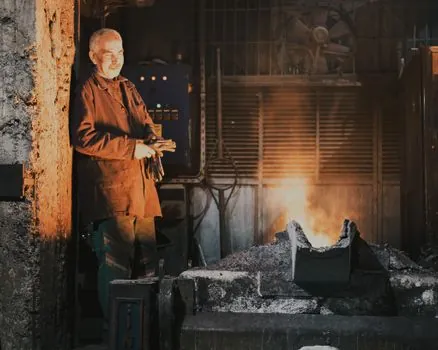
Hot chamber is the appropriate choice when the casting is small, the alloy is compatible, and annual demand is high enough to justify automating an integrated system. Zinc and selected magnesium alloys are typical candidates, while lead and tin can also be used where their material properties and application requirements permit [S1][S2].
The process removes a separate ladling step and allows the injection unit to remain supplied by the machine-integrated melt system [S1][S3]. Published process guidance also lists reduced porosity, longer die life, tight tolerances, thin-wall capability, and no minimum shot weight as hot chamber advantages [S2]. These benefits depend on correct alloy selection, clean melt handling, adequate venting, stable metal temperature, and effective tool design.
A hot chamber die casting machine is not the right default for an aluminum part with a large projected area. Molten aluminum attacks and dissolves iron, so a submerged steel gooseneck would be rapidly damaged; this chemical incompatibility is stronger evidence than a generic cycle-time estimate [S1].
The up-to-10-cycles-per-minute figure applies specifically to a proprietary multi-slide hot chamber aluminum process rather than every machine in the category [S2].
Where Cold Chamber Earns Its Extra Cycle Step
Cold chamber is the correct configuration when the alloy has a high melting temperature, attacks conventional hot-chamber components, or when the casting exceeds the practical size and tonnage range of a hot chamber machine. Aluminum is the principal example because its melt chemistry is incompatible with an iron gooseneck and plunger [S1].
The separate furnace gives the process broader alloy capability, while the shot sleeve limits continuous exposure of injection components to the melt and supports repeatable maintenance intervals [S1][S3]. Each shot must still be transferred, so cycle time includes the additional ladling or dosing operation and the risks of temperature loss and oxide pickup [S3][S4].
For a large aluminum casting, the slower transfer cycle can still produce the lowest total cost if hot chamber would require a non-compatible machine, an impractically large integrated furnace, or a different alloy specification. The relevant comparison is not seconds per cycle alone; it is accepted output per machine-hour against die life, melt loss, scrap rate, and downstream machining.
A cold chamber die casting machine also permits slow-shot control, fast-shot injection, and pressure intensification during solidification, all of which are relevant to filling and defect control in aluminum castings [S3].
Cycle-Time Failure Modes and Process Controls
Hot chamber cycle time can be eroded by excessive gooseneck immersion, unstable crucible temperature, poor venting, or a tool whose cooling design does not match the alloy and wall thickness. These are process-specific design variables, so a machine supplier's headline cycles-per-minute rating is not enough to predict a part's accepted output. The related hot chamber die casting injection pressure guide is useful when converting machine capability into filling and solidification settings. [S3]
Cold chamber performance is sensitive to ladle temperature, oxide formation, transfer consistency, shot volume, slow-shot velocity, fast-shot velocity, and intensification pressure [S3]. A measured charge must reach the sleeve without excessive temperature loss or entrainment of oxide, because either effect can create fill defects, inclusions, or porosity [S3][S4].
Porosity and dimensional performance cannot be assigned automatically to machine type. These outcomes depend on metal handling, venting, process control, and tooling, and neither configuration guarantees superior mechanical properties or lower porosity [S5]. For production acceptance, measure actual cycle time over a stable run, record hot-shot weight, track reject rate, and include downstream trimming and inspection rather than quoting only the injection portion of the cycle.
How to Select the Process for Production
Start with the alloy. Use hot chamber for compatible zinc and selected magnesium applications; use cold chamber for aluminum, copper, many magnesium alloys, and certain high-aluminum zinc alloys [S3][S5]. Next, check part size against machine capability: hot chamber is strongest for small, detailed parts, while cold chamber covers larger components and a broader tonnage range [S1][S2].
Quantify the required output with the cycle-time spread, not one marketing figure. A published hot chamber average of 15 cycles per minute corresponds to 4 seconds per cycle only if that machine and part continuously achieve the stated rate [S4]. Cold chamber has no equivalent universal rate in the cited material, so use a production trial or supplier cycle-time guarantee based on the actual alloy, projected area, shot weight, cooling time, and automation level [S1][S3].
Use hot chamber when small-part volume and continuous melt availability dominate the business case. Use cold chamber when alloy chemistry, component size, or structural casting requirements dictate it. For an already released tool, confirm the machine layout and injection parameters with a shot sleeve review before changing the cycle concept, because sleeve design and transfer consistency directly affect cold chamber repeatability [S3].