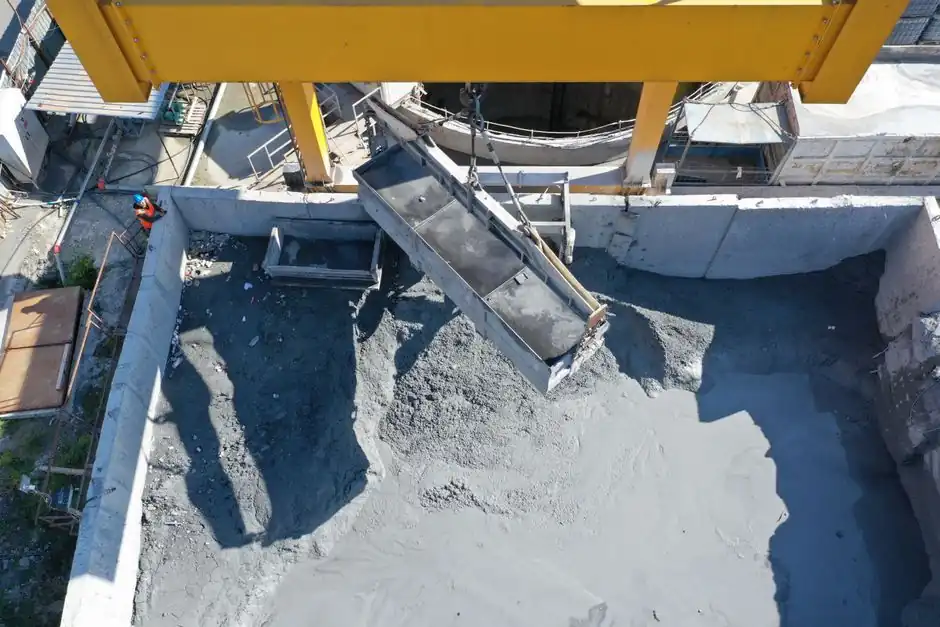
A die casting machine must satisfy two independent limits: calculated clamping force and maximum shot weight, with a 20–40% clamp margin over the minimum [S1].
The capacity question applies mainly to cold-chamber high-pressure die casting of aluminum, where projected area determines tonnage while shot capacity determines the maximum metal charge delivered per cycle [S1][S2][S3].
Clamp Tonnage and Shot Capacity Govern Independently
Clamping force is calculated from projected area and cavity pressure, not from casting mass: F_lock in kilonewtons equals projected area in square millimetres multiplied by specific pressure in megapascals and divided by 1,000 [S1]. Shot capacity is the mass of metal the machine can deliver into the die in one cycle [S1][S2].
The distinction matters because a broad, thin casting can require high clamping force despite a modest shot weight, while a compact, heavy casting can demand a large shot system while requiring less clamp force [S2]. A machine selected only by tonnage may therefore lack injection capacity, and one selected only by shot weight may open the die or flash during filling.
Calculate the Two Machine Constraints
The minimum clamping-force equation is F_lock in tonnes equals projected area in cm² multiplied by specific pressure in kgf/cm² and divided by 1,000 [S1]. Projected area includes every cavity, sprue, runner, overflow, and other pressure-loaded region viewed along the clamp axis; it is not the finished part's total surface area [S1][S2].
Use usable clamping force rather than the nameplate rating because tie-bar stretch, platen deflection, and die-height limits can reduce the available force.
For shot size, calculate the required charge as casting weight plus gate weight plus scrap weight [S3]. Include the biscuit and account for the cold-chamber injection stroke. These values illustrate that shot capacity and pressure rating must be checked together rather than treated as interchangeable size indicators.
Compare Candidate Machines Criterion by Criterion

Clamp-force ranking, shot-capacity ranking, and cost ranking can point to different machines.
Shot capacity should be assessed against the total charge, not the finished part alone.
Projected-area selection also captures tool complexity. A four-cavity tool requires the projected area of all four cavities plus the shared runner and overflow system, and its increased charge must still fit within shot capacity [S2]. Tool fit, tie-bar clearance, platen size, and maximum die dimensions then determine whether the candidate machine is physically eligible [S2].
Margin, Wear, and Capacity Utilization
A practical selection should preserve 20–40% clamp margin, compare the full charge against rated shot capacity, and check usable force at the installed die height [S1]. A 210-tonne calculated minimum therefore points to a 252–294-tonne usable-clamp target under the stated 1.2–1.4 multiplier [S1].
Machine oversizing is not free. Excess tonnage can increase capital cost, die dimensions, tie-bar requirements, and energy demand, while excess shot size can leave the machine unsuitable for smaller parts [S1][S2]. The economic choice is the smallest machine that clears every constraint, not simply the machine with the largest clamp or shot rating.
Injection performance must also be reconciled with tonnage. For a thin structural part, insufficient fill speed can create incomplete filling even when clamping force and shot mass are adequate.
Use Cases and Machine Types
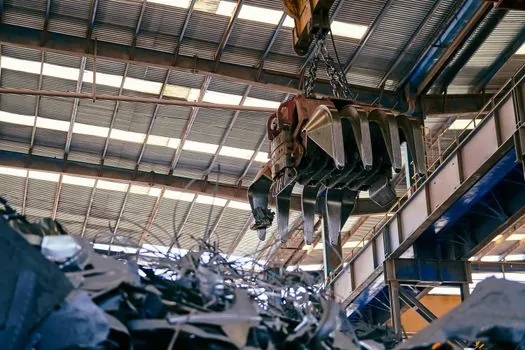
Cold-chamber die casting is the appropriate family for aluminum because the metal is melted separately and introduced into a cold injection sleeve, and the machine can apply high injection pressure for detailed castings [S3]. A cold-chamber machine is therefore the relevant configuration for an aluminum shot-weight-versus-tonnage study.
Wide projected-area housings favor clamp-force-led selection. Compact but heavy parts favor shot-capacity-led selection, provided the projected area remains comfortably within the machine's usable clamp.
Hot-chamber machines are not a direct substitute for aluminum because the injection system contains the molten metal. This architecture is more relevant to zinc and other low-melting-point alloys, while aluminum normally uses the separate-furnace cold-chamber arrangement [S3].
Limits That Can Override Capacity
Flash is a primary clamp-capacity failure mode: insufficient force lets the die halves separate slightly under injection pressure, producing flash, dimensional variation, unstable filling, safety exposure, and accelerated die or machine wear [S2]. Missing capacity in the opposite direction produces incomplete filling or poor shot repeatability, so a high tonnage rating cannot compensate for an undersized injection system.
Die dimensions, tie-bar clearance, platen space, shot weight, and injection performance remain separate acceptance checks even after the force and mass calculations agree [S2]. For production planning, also verify actual die height, stroke, minimum shot weight, maximum shot weight, and available platen area against the proposed tool rather than quoting from the machine badge.
Process trials remain necessary because local gate pressure can exceed the average cavity-pressure basis and die temperature changes parting-line behavior [S1]. For multi-cavity tools, confirm that the largest cavity and the complete projected layout remain within the machine's usable envelope.
Decision Rule for Purchasing

Select the machine only after calculating four values: total projected area, minimum clamp force, full-cycle shot charge, and actual usable clamp at the proposed die height. Apply the 1.2–1.4 clamp multiplier, then reject any candidate that cannot deliver the full charge with operating reserve or cannot accept the die geometry [S1][S2][S3].
For additional implications of large projected-area aluminum work, the analysis of aluminum die casting machine tonnage for large structural parts extends the same projected-area and margin logic to higher-tonnage equipment. The next trackable checks are the supplier's usable-force curve at the specified die height and the cold-shot capacity table for the selected material and machine class.