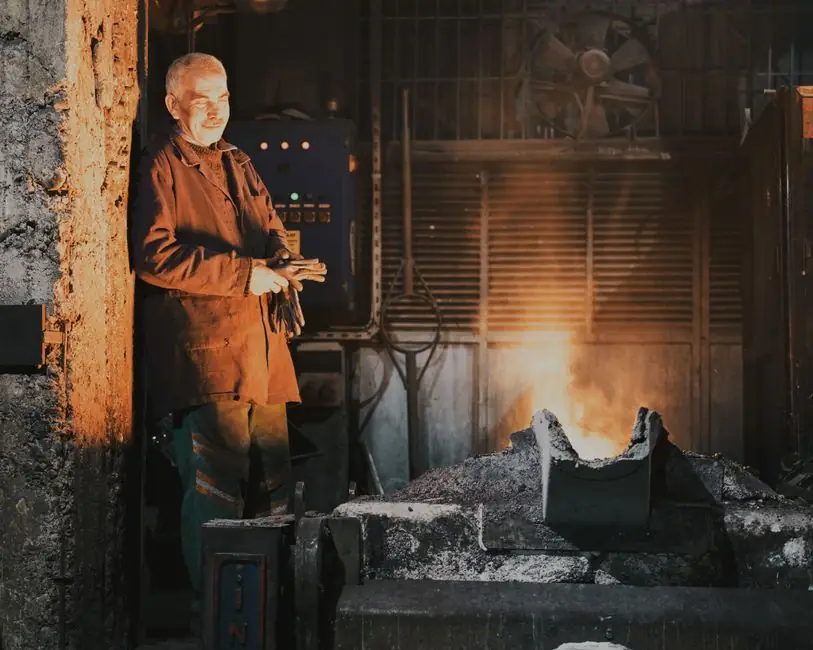
An aging workforce can constrain foundry and forging capacity through retirement-related knowledge loss, reduced tolerance for repetitive or load-bearing work, and longer recovery from fatigue or injury.
In 2021, nearly one in four American workers was age 55 or older [S1].
Where capacity loss begins in metal production
Capacity is lost before a furnace, press, or forging line goes idle when critical process knowledge leaves with experienced employees. A maintenance team illustrated the scale of the issue with 10 employees nearing retirement who collectively held 350 years of expertise, highlighting why structured mentoring is needed before that knowledge becomes unavailable [S3].
Older workers can remain productive when tasks, schedules, and accommodations match their abilities, but the effect of aging varies across individuals and jobs [S1]. In foundries and forging shops, the highest exposure points are physically demanding, repetitive, hot, time-pressured, or safety-critical tasks rather than age by itself.
These conditions matter operationally because recurring discomfort and fatigue can reduce shift availability while also increasing the probability of errors in ladle handling, die adjustment, forging extraction, inspection, and maintenance.
Physical demand converts retirement into an output constraint
Manufacturing work must adapt to the physical and cognitive characteristics of an ageing workforce, including the potential for physical decline and increased mechanisation and automation that can place greater loads and demands on older workers [S2]. That makes heavy handling, repetitive casting, manual forging support, and long-duration furnace-floor work more vulnerable to fatigue and injury than self-paced or appropriately automated tasks.
Worker age does not justify treating experienced employees as unable to perform demanding work. The stronger approach is to redesign the task: use lifting devices, carts, and cranes; test loads before lifting; request assistance when needed; introduce frequent microbreaks; rotate workers between stations; and reduce repetitive assignments [S3]. These controls protect capacity without assuming that every older employee has the same limitations.
Mechanization helps, but automation transfers demands
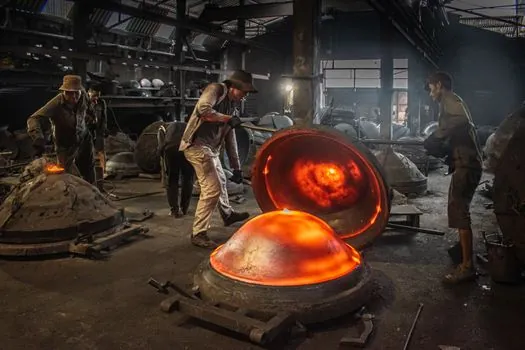
Mechanization and automation can support physical decline in manufacturing, but they are not a complete substitute for job redesign because automation can increase mental workload and system demands [S2]. Robotic ladling, automated manipulation, press assistance, and material handling can reduce physical strain, yet operators still need training, troubleshooting capability, and safe interaction with the equipment.
The relevant comparison is not simply automated versus manual. Manual work places greater demands on muscle endurance, joint mobility, and recovery. Mechanized work can reduce those loads but may require more vigilance, programming, fault diagnosis, and attention to changing process conditions. Ergonomic assessment must therefore cover physical effort, cognitive load, workstation layout, repetitive motion, breaks, and task rotation rather than equipment cost alone.
Knowledge transfer determines whether skilled labor remains productive
Retirement creates a capacity gap when process knowledge is undocumented and is not transferred before experienced workers leave. One estimate placed the annual cost of poor knowledge transfer to large businesses at $47 million, including time waste, missed opportunities, frustration, and delayed projects [S5].
Succession planning in a foundry or forging plant must cover more than top management. It should capture furnace recipes, charge preparation, die and tooling setup, defect diagnosis, dimensional correction, maintenance history, and machine-specific quirks. A documented process library should be paired with demonstrations, shadowing, supervised troubleshooting, and competency checks before the incumbent leaves.
Knowledge transfer should also connect production and maintenance teams. A melting operator may understand temperature response that is not captured in a work instruction, while a die technician may know why a forging develops laps or distortion. Capturing those interventions converts tacit experience into usable shop-floor capability, but only if trainees operate the equipment and receive feedback rather than receiving documents alone.
Absence, retention, and hiring must be planned together
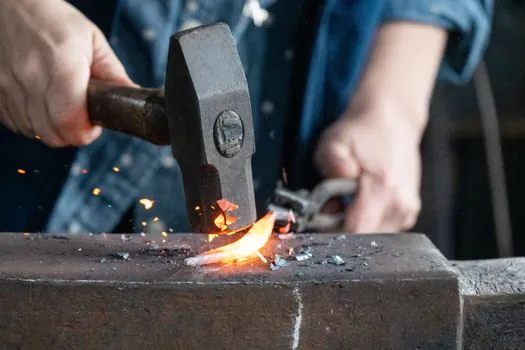
An age-friendly workplace benefits all employees, but it is particularly relevant where one experienced worker may represent several decades of furnace, tooling, inspection, or maintenance knowledge [S1]. Matching tasks to abilities, allowing workers some control over schedules, providing self-paced work and rest breaks, and avoiding prolonged sedentary activity can protect output while reducing avoidable departure from the role.
Managers should calculate capacity by role, shift, and skill, not only by headcount. NIOSH identifies the nature and structure of work, workplace relationships, career progression, retirement, and ageist beliefs as factors shaping productive aging [S1]. For planning purposes, each critical position should have at least a named successor, a training lead time, and a list of tasks that can be covered by a qualified temporary worker.
Retention is not automatically cheaper than replacement. A vacant furnace, forging press, inspection station, or maintenance role can delay an entire job, while recruiting and qualifying a new hire adds time before full productivity. A capacity model should compare the remaining service time of critical staff with recruitment lead time, training duration, safety qualification, and the production value delayed by an internal vacancy.
Which adjustment fits the capacity problem?
The correct intervention depends on whether the constraint is physical demand, retirement risk, knowledge concentration, or temporary absence. No single program solves all four, and a wage increase does not compensate for undocumented process knowledge or unsafe manual handling. [S1]
For physical load, lifting aids, powered handling, workstation redesign, microbreaks, and job rotation reduce strain. For retirement risk, succession planning, mentoring, documentation, and phased handover protect critical knowledge. For temporary absence, cross-training and flexible staffing add coverage. For recruitment, structured onboarding and competency-based qualification shorten the path from vacancy to independent operation. These measures are more dependable than relying on a larger pool of inexperienced hires alone.
Foundries and forging operations should track the percentage of critical roles with a documented successor, planned retirement exposure by role, lost workdays, injury recovery time, ergonomic interventions completed, and hours of supervised handover. The strongest signal is not a workforce-age percentage, but the share of bottleneck knowledge that remains demonstrably transferable after one experienced operator leaves.
Capacity planning should also use the same rigor applied to procurement: identify single points of failure, model each vacancy against furnace and press output, and establish a minimum overlap period for knowledge transfer. A phased retirement plan can preserve experienced judgement while training replacements before experienced operators leave, reducing the risk that a nominal headcount increase fails to restore production.