
Buyers should rank scarce parts by the damage one missing item can cause, the time needed to recover, and how deeply the shortage reaches into the bill of materials [S2][S3].
The method applies across product lines because a low-cost connector can stop an entire build, while a high-value component with a qualified substitute may deserve a lower allocation priority [S3][S5].
Build a risk-ranked scarcity map
Start with line-stop exposure rather than purchase price or the length of a quoted lead time. Scarcity arises when demand exceeds available supply, and one delayed link can interrupt every downstream assembly in an electronics or industrial supply chain [S3].
Monitor supply continuity and hold escalation meetings with suppliers when a missing component could delay delivery of the end product.
The prioritization logic should separate 3 questions: Is the part actually constrained? Which line loses the most output or service if it is absent? How long does it take to obtain a technically acceptable replacement? Without those fields, “scarce” becomes an unsupported purchasing label rather than an executable allocation decision [S4].
Trace each scarce part to its upstream constraint
A finished component can be scarce because its own material, tooling, process, or inspection route is constrained, so buyers should examine the parts beneath the visible shortage rather than treating every visible component equally [S2].
For example, a compact electromechanical component may spend extended periods in tooling validation, process tuning, upstream subcomponent availability, and final inspection with a reliability window. One missing switch or connector can therefore stop an entire bill of materials even when the purchased item appears inexpensive [S5].
This approach distinguishes a factory-capacity bottleneck from a material shortage and identifies the point where supplier escalation, redesign, or alternate sourcing can have an effect [S2].
Compare the response options against four criteria

The main response options are not interchangeable. Each should be compared by line-stop risk, technical acceptability, recovery time, and inventory or cost impact before procurement commits scarce capacity [S2][S4][S5].
Use alternatives without treating them as drop-in equivalents
Approved alternates can shorten recovery time, but engineering must confirm suitability against the controlled specification before a buyer changes the order.
That case also exposes the failure mode: substitution without engineering ownership can create functional, interface, or qualification risk. Buyers should provide the shortage list and supply constraints to engineering, then track the status of each proposed alternate as open, under review, rejected, approved, or released for use. This creates accountability beyond merely transmitting data [S4].
For reinforced and structural components, material and geometry must be checked rather than accepted on a generic description. Rebar alternatives can affect grade, diameter, length, bend geometry, and connection details. Steel mesh alternatives can change aperture, wire diameter, edge configuration, and panel dimensions. A catalogue match is therefore not a valid equivalence decision.
Segment part families and factory routes

Do not assign one buffer rule to an entire component family. Standard routes may be steady while tight-tolerance or custom-feel variants face longer tooling, tuning, inspection, or reliability paths, creating over-buffer risk when categories are pooled and line-stop risk when they are split too narrowly [S5].
Use a 2-level classification for scarce items: first, group parts by shared production route; second, rank each route by scarcity severity and affected output. For instance, a standard switch route and a tight-tolerance switch route should not receive the same forecast buffer simply because both appear on the same bill of materials [S5].
That discipline also supports better supplier selection. A specialist supplier may suit accurate, complex work, while a series-focused supplier may deliver simpler processing with a more appropriate balance of price and delivery time. The correct route depends on the component specification, not simply on the supplier's general capability [S2].
Protect the constraint with a 24-hour escalation loop
Scarce parts need named ownership, dated commitments, and explicit escalation. Buyers need to distinguish an issue requiring action from one already resolved, because execution depends on accountability rather than data transmission [S4].
For each constrained part, assign 1 buyer, 1 engineering contact, and 1 supplier contact. Record the earliest confirmed delivery date, quantity available, unconfirmed quantity, recovery action, and next review date. Escalate at the supplier level when the customer must receive a finished product that supports another supplier's production, because continuity monitoring becomes more important at that interface [S2].
Set a 24-hour review cycle for critical parts and a weekly cycle for lower-risk shortages. This preserves responsiveness without turning every exception into an expediting event. Track the 5 execution signals that distinguish an active constraint from administrative noise: late parts, wrong dates, wrong pricing, unacknowledged purchase orders, and excess inventory [S4].
Set explicit allocation limits across lines
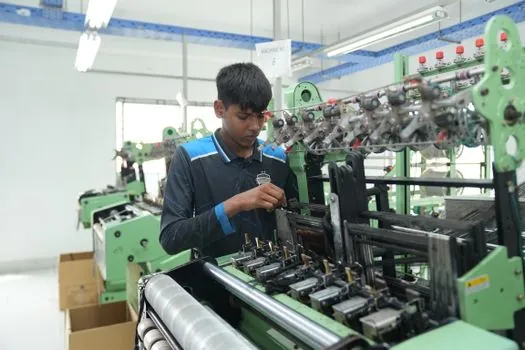
When available supply is lower than total demand, allocation rules must be written before purchasing discretion is exercised. A defensible policy ranks customer commitments, line-stop severity, work-center criticality, and recovery alternatives before considering revenue alone [S3][S4].
Set at least 3 controls: reserve a minimum quantity for safety-critical or highest-throughput lines, require approval before moving a constrained allocation, and require engineering confirmation before releasing an alternate. If stock is diverted from one line to protect another, record the new shortage so the transfer does not disappear from the plan.
Do not use scarcity pricing as the allocation signal. Scarcity can raise prices, disrupt production, and create customer dissatisfaction, but a high price does not prove that another line can run without the part [S3]. Inventory optimization can reduce stockouts while also concealing unreliable supplier commitments, so buffer stock must be paired with corrective sourcing actions rather than treated as the sole solution [S4].
Know which parts deserve buffer stock
Buffer stock should protect specific, verified constraints rather than create a universal inventory layer. Priority belongs to parts with long or unpredictable recovery, no approved alternate, high line-stop impact, and a final assembly that cannot be resequenced around the shortage [S5].
A practical trigger combines 3 indicators: confirmed recovery exceeds the production window, the item has no usable alternate, and more than 1 downstream operation depends on it. This approach aligns the buffer with the mechanism that creates the risk. It also avoids treating every switch, connector, or structural component alike [S5].
Where the part contains high-strength or prestressing reinforcement, buffer decisions should account for certified capacity and product-specific controls rather than treating the item as a generic consumable. Prestressing strand and steel fiber should be managed around approved material specifications, testing, and production sequencing. Where a part is embedded within another assembly, its scarcity should be mapped to the embedded part route and the customer drawings or bills of material that depend on it.
A useful next control is a 30-day scarcity review: compare allocations, confirmed dates, engineering substitutions, stock transfers, and actual line stops by product line, then move the next constrained item into the queue only after its owner and recovery date are documented [S4].