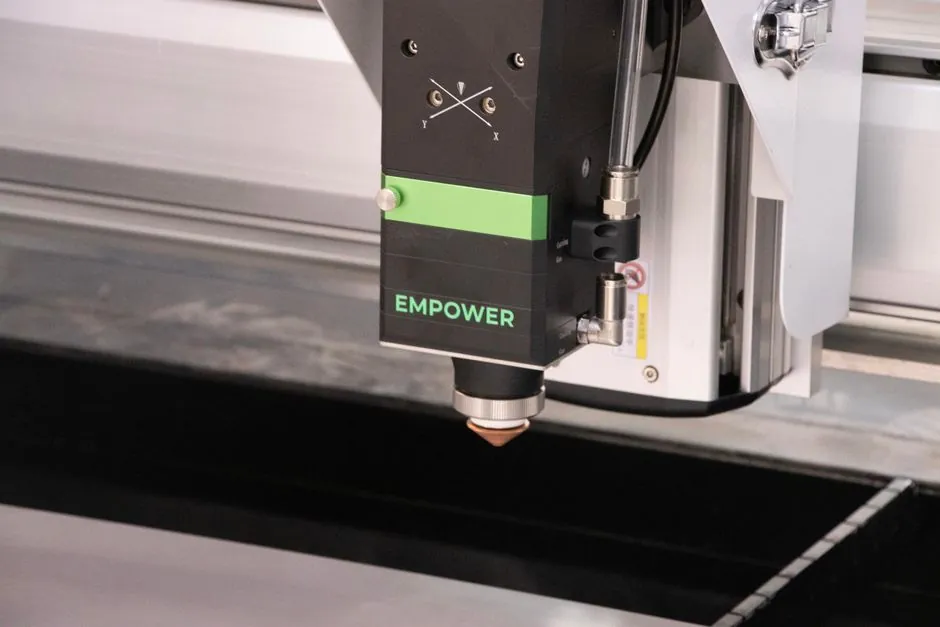
A 60 A plasma cutter handles mild steel up to about 1/2 inch cleanly and up to about 3/4 inch for severance, while shops cutting 3/4-inch plate or thicker all day need 80 A or more with a CNC table.
The selection depends on whether the plate must be cut quickly and smoothly or only penetrated, plus the torch consumables, gas pressure, travel speed, and machine duty cycle [S1][S2].
80–100 A gives the right production balance
A practical sizing rule is approximately 1 A of plasma output for every 0.001 in, or 1 mil, of mild steel intended for a clean cut in one pass [S1]. Applied to 1-inch material, that points to an output near 100 A. An 80 A system can still perform well in production, but it has less thermal reserve than a 100 A machine.
This is why a headline “1-inch capacity” does not settle the question. A cutter may pass through 1-inch steel while delivering a wider kerf, heavy dross, or a bevel that needs secondary grinding. Production work close to a weld joint should be sized from clean-cut performance, not merely the maximum penetration figure [S1].
Compare clean cut and severance ratings
A clean-cut rating describes material that can be cut with a smooth edge, limited dross, and a bevel suitable for welding or finishing with minimal grinding. A severance rating describes the thickest material the torch can physically punch through, usually with a rough edge, heavy dross, and a wider kerf [S1].
For 1-inch mild steel, the relevant comparison is 60 A versus 80 A or more, because a 60 A unit is rated for a clean cut up to about 1/2 inch and severance up to about 3/4 inch.
Handheld work, CNC tables, and production lines therefore have different requirements. Cut quality depends on a combination of speed, height, and amperage, with the amperage value set by installing the correct tip in the torch head and setting the matching amperage on the plasma cutter.
60 A can sever 1-inch steel, but is not the preferred choice
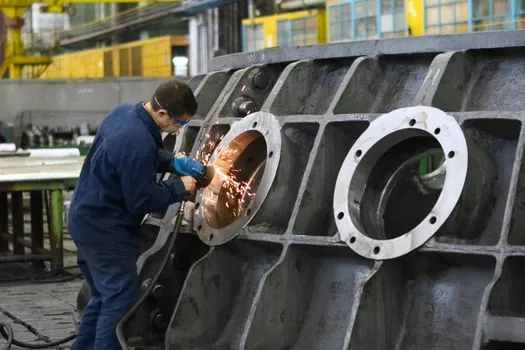
The 60 A class is centered on clean cutting up to 1/2 in mild steel and severing up to 3/4 in [S1].
For occasional demolition work, that distinction may be acceptable.
Consumable fit is equally important. A documented 60 A setup used a 1.1 mm tip with a 0.044 in orifice and 60 psi shop air; the first acceptable cut in that example was made at 4 in/min, while an initial 45 A, 20 in/min attempt produced a poor result [S2].
Match amperage with torch height and travel speed
For material at 0.100 in and thicker, a practical baseline is at least 40 A, but that is a floor for productive cutting rather than a recommendation for 1-inch plate [S5]. For these amperages, the recommended CNC cutting height is approximately 0.125–0.1875 inches, and the amperage is set by installing the correct tip in the torch head and selecting the corresponding value on the plasma cutter.
Travel speed changes the result more than many buyers expect. If the torch moves too quickly, the cut tends to widen at the top and narrow at the bottom, leaving small dross beads that are difficult to remove. If it moves too slowly, the kerf widens, consumables wear faster, cutting time rises, and the plate is more exposed to distortion [S5].
For 1-inch steel, the defensible starting point is therefore 80–100 A with the manufacturer’s matched consumables, an air pressure appropriate to the plasma system, and a travel speed set by coupon testing. A CNC procedure using 100 A on 0.125 in material is not a transferable recipe for 1-in plate, because excessive current can create heavy dross or a poor kerf unless speed is increased [S5].
Use a duty-cycle check before buying
That value can be as important as nominal amperage when 1-inch plate is cut continuously rather than in isolated repair jobs.
Shops running 3/4-inch mild-steel plate or thicker all day need 80 A or more with a CNC table behind it.
Air capacity matters as well. In one 60 A test at 60 psi, a 4 ipm cut was identified as the first good cut, while 2 ipm was considered too slow. For a 100 A class machine, shop air pressure must match the plasma system’s requirements, not an arbitrary value carried over from a smaller cutter.
Confirm consumables and establish a cut test
For the line-speed test, set the cutting height to approximately 0.125–0.1875 inches, install the correct tip in the torch head, and set the corresponding amperage value on the plasma cutter. The line-speed test evaluates cut quality at a particular height and amperage, including bevel, dross, and kerf.
Use the resulting coupon to decide whether 80 A or 100 A delivers the required edge. If neither produces acceptable dross and bevel, inspect torch height, air delivery, consumable condition, travel speed, and plate support before increasing output further [S5]. For a new machine specification, the plasma cutter and steel plate references provide useful process context.
Track three signals before purchase: clean-cut rating at 1 in, rated output at 60–100 A, and duty cycle during continuous operation. A specification that states only “cuts 1-inch steel” is incomplete because it does not say whether the machine is intended to sever the plate or deliver a production-quality edge.