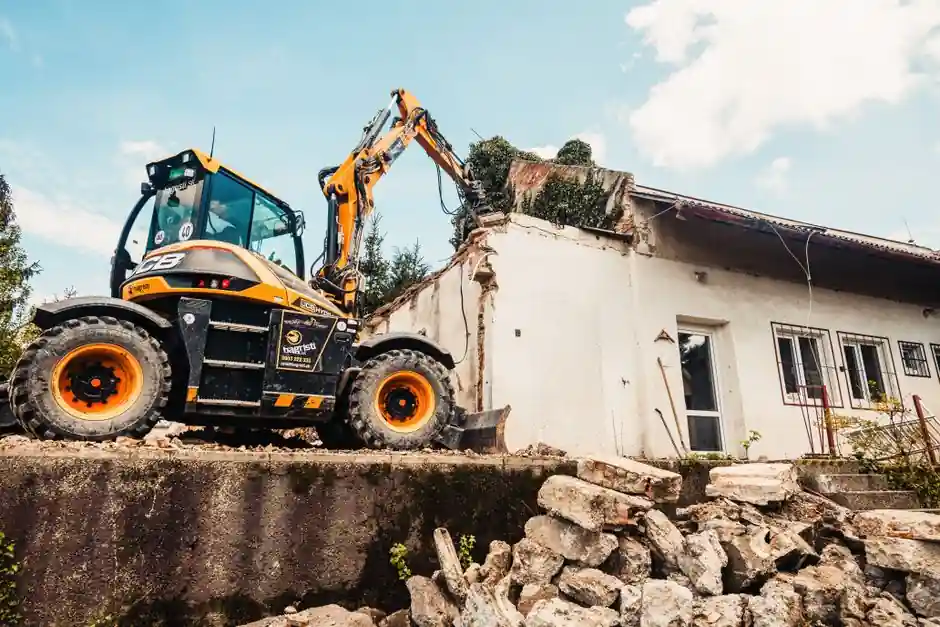
A 60-lb class pneumatic pavement breaker averages 59 CFM at 90 PSI, while a 90-lb class jack hammer requires at least 185 CFM [S5][S7].
Compressor selection must satisfy the tool’s required CFM at working pressure, plus 25–50% headroom for one continuously operating breaker or more capacity for simultaneous tools [S5].
Demolition Hammer Air Demand by Tool Class
Demolition air demand spans a wide range: a 2-inch-stroke chipping hammer averages 30.5 CFM, a 30-lb class clay digger consumes 49 CFM, and a 60-lb class pavement breaker averages 59 CFM at 90 PSI [S5]. These figures place the demolition hammer outside the air capacity of ordinary shop compressors.
A 90-lb class pneumatic jack hammer, including an EXPANDAG RB777 heavy-duty paving breaker, requires a minimum 185 CFM [S7].
The tool class, impact energy and operating pattern determine the required flow. Do not use a light-duty chipping-hammer figure for a paving breaker, and do not use a breaker figure for a DTH drilling hammer.
CFM and PSI Must Be Matched Together
A compressor rated for 90 PSI is adequate only if it can maintain that pressure while delivering the tool’s specified CFM [S6]. Pressure alone does not prove adequate flow, and a compressor that reaches 90 PSI from a full tank can still collapse when the breaker loads the system.
A 20-gallon reciprocating compressor rated at 7 CFM cannot operate a 50 CFM tool at full capacity [S1]. For reference, smaller pneumatic tools may consume 3–8 CFM at 90–100 PSI, but that range does not apply to heavy breakers [S4].
Use the manufacturer’s nameplate or published specification as the controlling requirement. Published averages are suitable for preliminary planning, but the purchased compressor must supply at least the specified CFM at the specified pressure for the exact hammer model.
Select Compressor Capacity With Headroom

For one 60-lb pavement breaker requiring 59 CFM at 90 PSI, add 25–50% headroom to obtain a target compressor capacity of approximately 74–89 CFM, so a 90-CFM unit is the practical match [S5]. A 20-gallon receiver cannot substitute for that continuous delivery capacity.
For a 90-lb jack hammer requiring 185 CFM, the minimum is already 185 CFM [S7]. Applying the same 25–50% planning margin produces approximately 231–278 CFM. If another pneumatic tool operates simultaneously, add its CFM to the breaker demand before calculating the combined margin.
Receiver capacity smooths short interruptions, but it does not create sustained airflow. Trow & Holden pneumatic tools require approximately 3–8 CFM at 90–100 PSI, depending on the size of the air tool. Heavy breakers still require a large compressor capable of sustaining the load.
Compare Common Compressor Sizing Decisions
A 90-CFM compressor is suitable for a 60-lb class pavement breaker requiring 59 CFM at 90 PSI, provided it delivers rated flow at pressure and permits 25–50% headroom [S5]. A 130-CFM compressor offers more recovery capacity but does not satisfy a 185-CFM jack hammer without sustained pressure loss.
A 185-CFM unit meets the stated minimum for a 90-lb jack hammer [S7]. A 230–280 CFM unit is the more defensible choice when applying the 25–50% margin, while simultaneous operation of a 59-CFM breaker and a 30.5-CFM chipping hammer creates a base combined demand of 89.5 CFM before headroom [S5].
Where Pneumatic Hammers Fit on the Job Site
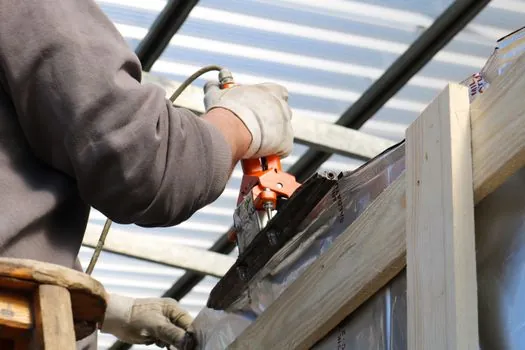
An undersized compressor that runs out of CFM or drops below the pressure required by the downstream tool prevents connected equipment from working at full capacity and immediately reduces production.
The compressor arrangement also depends on site constraints. Electrical capacity, ventilation, portability, noise and the need to operate grinders, drills or polishers affect the configuration [S4]. Trow & Holden’s lower-flow 3–8 CFM pneumatic hammer range is intended for a different duty class than the 30.5–185 CFM demolition-hammer range documented here [S4][S5][S7].
For pneumatic work around crews and occupied properties, the operator’s noise-control plan remains a separate requirement. The related guide on demolition hammer noise limits for urban work covers that selection issue without changing the compressor-flow calculation.
Air Supply, Receiver and Configuration Checks
Verify three procurement facts before ordering: rated free-air delivery in CFM, continuous operating pressure in PSI, and receiver volume in gallons. The compressor’s output and duty cycle must be sufficient for the pneumatic tool to operate at its full power.
The compressor must provide more capacity when several pneumatic tools run at once.
Confirm whether the supply is diesel, electric or portable. The published tool requirement remains the same, but power availability, duty duration and cooling conditions determine whether a tow-behind, stationary or portable unit is practical [S4][S5]. For continuous single-breaker work, the 90-CFM, 130-CFM and 185-CFM classes cited for this application reflect materially different margins [S5].
Common Sizing Errors and Operating Limits

Selecting by tank capacity, nominal horsepower or “90 PSI” alone causes airflow mismatch. A 50 CFM tool connected to a 7 CFM compressor is a direct mismatch [S1], while a 90-lb jack hammer connected to a 185-CFM compressor at the wrong operating pressure may still lose impact performance [S7].
Running the compressor continuously at its limiting duty point increases heat and slows pressure recovery between blows [S5]. The resulting symptom is fading or weak impact even though the receiver gauge may show pressure before the tool is applied.
Do not assume published average demand covers every condition. CFM varies with tool size and operating pressure, and the published figure for one model is not interchangeable with another [S4][S5]. Record the exact hammer model, its required CFM and PSI, the number of simultaneous tools, and the planned duty cycle before finalizing the compressor specification.
Use the exact breaker or jack-hammer nameplate as the controlling document, add the CFM of every simultaneous tool, and apply 25–50% headroom for compressor sizing. Track compressor model, rated CFM at the working pressure, receiver size, and measured pressure under breaker load as the four procurement and acceptance signals.