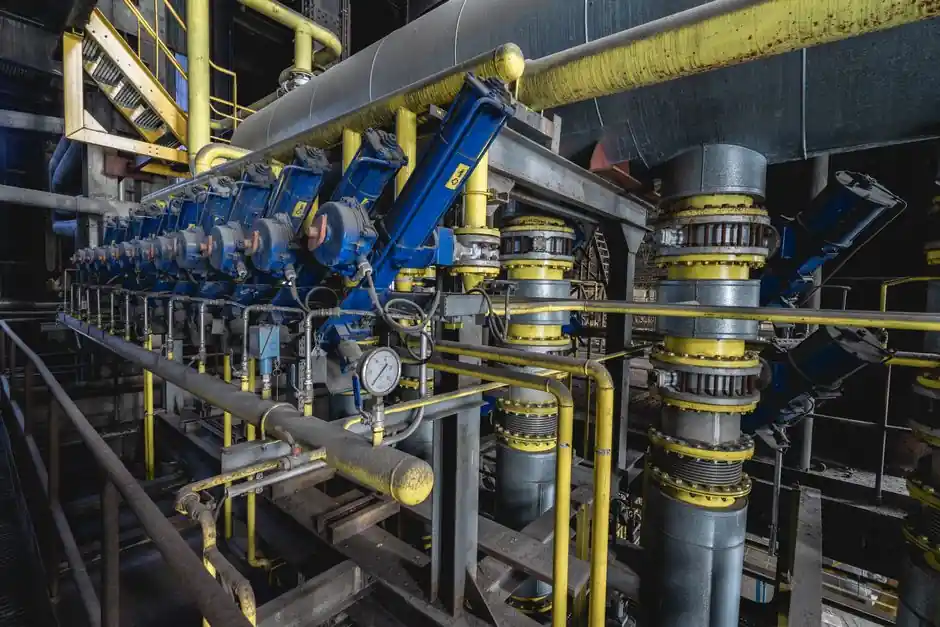
A 10-compressor building typically requires 10 to 15 fixed gas detectors, with one extra flame detector per compressor and one supervisory control system [S7].
The defensible count comes from credible releases, gas migration, ventilation, and coverage targets, not a square-metre rule, because a fixed sensor samples only the air reaching its location [S3].
Why Compressor Buildings Need Scenario-Based Detector Counts
The required quantity is not assigned by building area; equipment releases and airflow determine whether a detector can see the gas cloud [S3].
Count potential releases at flanges, gaskets, valve stems, packing, pump seals, compressor seals, loading connections, vents, relief paths, vessels, and fittings [S3].
A detector can be valid without being beside the compressor because it may cover a credible release location under the ventilation model, or it can be ineffective if the gas never reaches its sampling point [S3]. This is why equal-sized rooms can legitimately require different quantities [S3].
Building the Compressor-Release Inventory
Begin with one release scenario per credible equipment connection rather than one scenario per drawing sheet. Flanged joints are generally numerous, while valve packing and compressor or pump seals represent smaller but consequential release points [S3]. The detector layout should account for where gas can credibly leak, how its density and the room's ventilation and airflow affect its migration, and the coverage target for each area.
A design that only covers steady-state leakage can miss gas released during seal replacement, valve operation, or restart. The detector layout should identify potential release locations such as flanges, valves, pump seals, compressors, and loading connections.
For the detector technology, the multi-gas detector class can reduce separate instrument positions when several credible gases require continuous coverage, but it does not eliminate the need to prove that the target gas reaches the sensor [S6]. Calibration access and environmental suitability remain design requirements [S6].
Compare Coverage Methods Before Fixing the Quantity
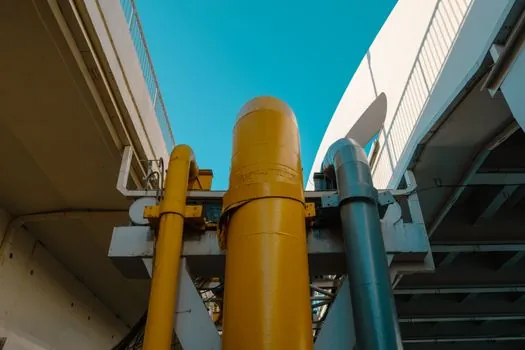
Grid spacing provides repeatable geometry, while scenario-based placement tests whether gas reaches the instrument. The comparison below frames the practical choice without assigning an unsupported minimum number to either method. [S3]
ISA TR84.00.07 provides a performance-based framework that evaluates geographic coverage and scenario coverage rather than using spacing alone [S3]. A facility needs as many gas detectors as it takes to cover its credible leak scenarios because gas detectors must be placed according to where gas can credibly leak, where it will migrate, and the coverage target for each area rather than by a uniform area rule.
Use Gas Density, Ventilation, and Mounting Height
Gas behavior changes the required position. Carbon dioxide, propane, and refrigerants heavier than air tend to accumulate near the floor, while lighter gases require elevated sampling locations [S4].
Room ventilation changes airflow patterns and therefore detector effectiveness [S2]. Mechanical ventilation can disperse a release, alter the accumulation zone, or draw gas away from a fixed point. The detector layout should account for the effects of gas density, ventilation, and airflow on gas migration and detector coverage.
Installation locations must also remain within the instrument's specified temperature, humidity, particulate, and ingress-protection limits, and away from damage during routine operations [S2]. Product dimensions, wiring limits, mounting guidance, visibility, audibility, and personnel access remain constraints on the final position [S2].
Fixed and Portable Instruments Serve Different Functions
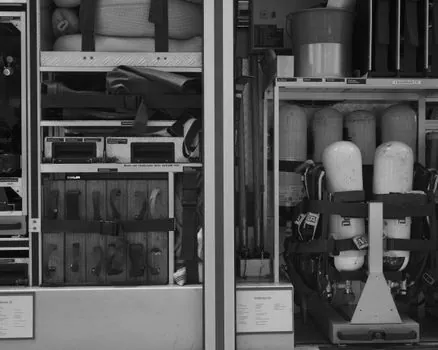
Fixed instruments provide continuous coverage in designated areas and can trigger ventilation, emergency shutdown, fire-alarm, or building-security outputs through relay interfaces [S4]. Portable instruments provide mobile coverage for maintenance, confined-space entry, and emergency response, but they alert the wearer only after entry and depend on battery condition, user procedure, and equipment availability [S4].
For a compressor building, fixed gas detectors provide continuous monitoring, while portable units should supplement rather than replace fixed coverage at compressor seals and other credible release points. A portable gas detector is also appropriate for transient maintenance tasks that do not justify another permanent sensing position.
The combustible gas detector class addresses flammable-gas concentration, while a toxic gas detector addresses worker exposure hazards. The design basis must identify which hazard requires measurement; these are different protection objectives and should not be treated as interchangeable.
Verify the Design Basis and Failure Actions
Detector quantity is only useful if the alarm chain works. The project basis should define the measured gas, alarm threshold, warning and danger stages, local annunciation, remote notification, and required automatic action [S4].
For a 10-compressor building, the reference arrangement of 20 flame detectors, 10 to 15 gas detectors, and one supervisory control system provides a useful benchmark for concept design [S7]. It is not a universal count, because the release inventory, compressor arrangement, ventilation, and target gases still govern the final quantity [S3].
The closing engineering check should reconcile every credible release scenario with at least one effective detection and alarm path. Fixed gas detector architecture: integral versus remote sensor becomes relevant when one instrument must serve a remotely located source or a high, low, or concealed sampling point.
Track two numbers through design review: installed fixed gas detector points and credible compressor-release scenarios with a documented detection path. Agreement between those datasets provides a reviewable basis for quantity, while any unmatched release scenario identifies the next design change.