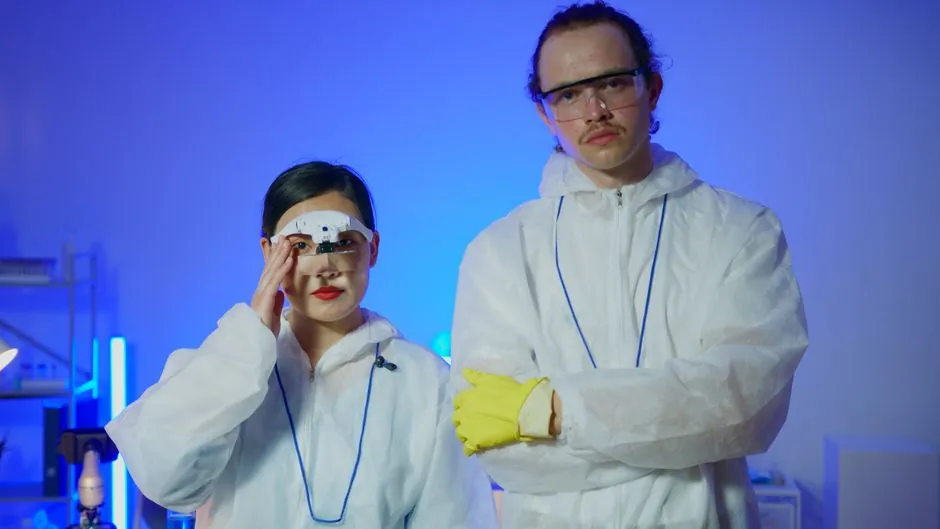
A laboratory needs suitable emergency irrigation equipment when a chemical release may expose the eyes or body, and eyewash stations are maintained using ANSI/ISEA Z358.1 and OSHA guidance.
The decision must reflect the particular workplace conditions and ensure that the selected eyewash or shower provides suitable protection, including consideration of water temperature.
Start with the exposure pathway
An eyewash station provides a continuous flow of water through two spouts to flush a person's eyes in an emergency. A drench hose may be used to spot-rinse an area when a full shower is not required or to assist a person who is unable to stand or is unconscious.
OSHA 29 CFR 1910.151(c) requires suitable facilities for quick drenching or flushing when the eyes or body may be exposed to injurious corrosive materials, but it leaves assessment of the particular workplace conditions to the employer [S4].
Compare the four equipment types
Emergency showers provide the broadest coverage, eyewashes target both eyes, facewashes cover the eyes and face, and drench hoses are compact adjuncts with restricted flow and coverage [S1][S2][S3].
A drench hose may be used to spot-rinse an area when a full shower is not required or to assist a person who is unable to stand or is unconscious.
Science laboratories and lecture rooms should use plumbed showers connected to a continuous source of drinking water instead of self-contained equipment.
Use flow and duration as hard gates
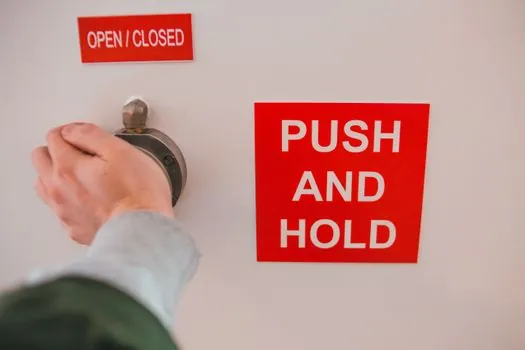
The College of American Pathologists accreditation criteria state that emergency eyewash stations should be located within 100 feet or a 10-second travel distance from every area of the laboratory.
Check access, installation, and water quality
Proximity is a functional requirement because the equipment must be available for immediate emergency use, not merely stored on the same floor [S4].
Rensselaer Polytechnic Institute uses weekly testing and inspection of eyewashes, drench hoses, and safety showers, with annual inspections and communication when equipment is out of order [S1]. RPI's program includes weekly and annual testing and inspection of eyewashes, drench hoses, and safety showers.
A bottle of eye saline is not by itself equivalent to a continuous-flow emergency shower.
Match the device to the laboratory operation
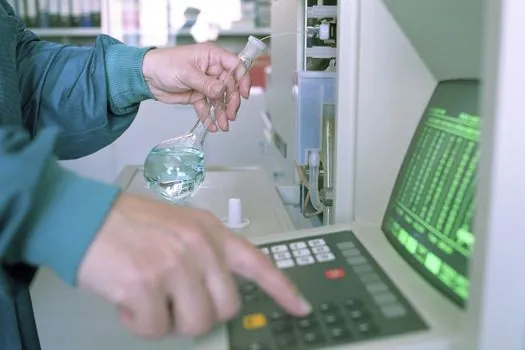
A full drench shower is appropriate for laboratories using corrosives where a splash or release may contaminate multiple body areas and where clothing may trap the chemical. It is also appropriate for operations where water must cascade over the whole body to remove contamination [S1][S2].
A drench hose can support spot rinsing or assist a person who cannot stand or is unconscious, but its lower flow makes it unsuitable as the sole provision for major skin contamination [S2].
The employer should assess conditions such as water temperature to ensure that the eyewash or shower provides suitable protection against the caustic chemicals or materials to which employees may be exposed. A drench hose may be used to spot-rinse an area when a full shower is not required, while the employer should assess conditions such as water temperature to ensure suitable protection.
Train and maintain the selected system
All individuals who could be exposed to hazardous chemicals or materials are expected to know the location and correct operation of safety showers and eyewash stations. The program at Rensselaer also includes a campus inventory, collaboration among laboratories, EHS, and Facilities, and notification of affected parties when equipment is out of service [S1].