
An MES handles rework by linking each failed unit to its serial number, defect, route, repair history, retest, and loop count, preventing repeated work from disappearing into normal production.
The system distinguishes rework that restores full specification from repair that accepts a deviation, then controls labour, materials, routing, nonconformance records, and release decisions across every iteration.
Rework, Repair, and the Controlled Route
A rework loop repeats one or more production steps to correct a defect, while a repair loop makes a nonconforming item fit for its intended use through a documented concession or deviation [S4][S5]. In an MES, the distinction is not cosmetic. Rework returns the unit to full conformity with the original specification, whereas repair may leave a recorded deviation that affects customer obligations and final release [S4].
SAP Digital Manufacturing supports test and repair actions within the main production routing, including in-routing rework loops that can operate without creating a separate nonconformance for every loop [S2]. This matters operationally because the unit remains attached to its production order, material history, and routing context. The MES can therefore retain the original genealogy while recording the additional route, labour, material consumption, test result, and loop count.
Some systems provide a simple rework flag rather than a complete routing engine. In Kinetic ERP, creating rework labour flags the labour record and requires a rework reason code, but the flag does not automatically change routing, inventory, or production behaviour [S3]. That is a meaningful implementation distinction: a rework transaction can provide analytical classification, while a true rework loop must also control disposition and re-entry.
The Data Model Behind Each Loop
A useful MES implementation records the unit, not merely a repair completion. The minimum trace consists of the serial or lot identifier, originating operation, failure code, rework reason, route version, work centre, operator, timestamps, materials consumed, test results, disposition, and cumulative iteration count [S1][S3]. The unit-level record is what allows a plant to identify how many times the same product has been reworked and which station generated the original defect [S1].
Rework rate is calculated as the number of reworked units divided by total units produced, multiplied by 100. In an example involving 10,000 units per day and 350 reworked units, the rework rate is 3.5% [S1]. That metric should sit beside first-pass yield, scrap rate, defect Pareto, repair-station loading, and retest workload. A single percentage does not reveal whether one station creates most defects or whether 350 units each required one pass.
The loop count is a control variable, not just a descriptive metric. Each iteration consumes repair labour, occupies repair capacity, and can further degrade the unit [S1]. Once a configurable threshold is exceeded, the MES should route the item to engineering review, quality disposition, or scrap assessment rather than allowing endless manual re-entry.
Rework and Repair Are Different Workflows
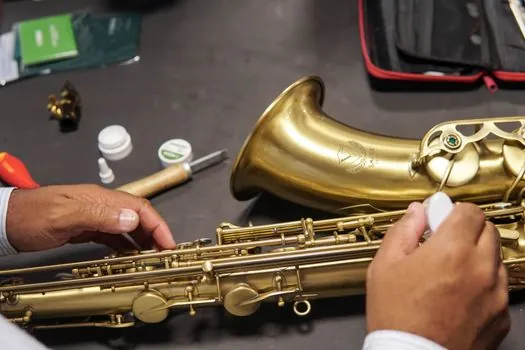
Rework and repair require different endpoints, records, and approvals. The comparison below sets out the decision criteria that determine which workflow an MES should apply. [S1]
For comparison, a machined housing with an undersize bore may be reworked by re-machining it to the drawing dimension, after which it can re-enter normal flow as conforming. If remachining is infeasible, repair may make the housing fit for use while requiring a concession that records the difference from the original requirement [S4]. Treating both paths as the same disposition would weaken traceability and could misstate customer conformance.
This distinction also explains why ISO 9001 treats rework and repair separately, as noted in the technical comparison published on 2026-06-27 [S4]. The MES configuration should not collapse the two into one generic failure code. It should expose the different endpoint, required approval, and resulting status.
How the MES Executes the Loop
A compliant workflow begins when an inspection records a failure against the relevant unit or lot. The MES can create or retrieve a nonconformance, attach the failed inspection, and assign a disposition. At that point, the item enters a controlled branch rather than being treated as a fresh production order. The branch identifies the repair operation, consumes replacement material, records labour, returns the unit to inspection, and updates the loop counter [S1][S2].
For a serial-numbered product, every step should remain attached to the same unit genealogy. For a batch process, the MES can preserve the batch, operation, material lot, inspection result, and disposition as the unit of traceability. The important engineering requirement is that a loop cannot silently create an orphan record between failure and release. The failed inspection, corrective action, retest, and acceptance decision must resolve to the same traceable object.
Material handling also needs explicit treatment. A rework labour flag by itself does not guarantee material consumption, issue, or return behaviour [S3]. A routing-based MES configuration can post replacement components to the order, prevent accidental duplicate issue, and preserve the relationship between the consumed material lot and the repaired unit. For controlled products, any required concession approval should be resolved before the unit receives a released status.
Testing, Retesting, and Acceptance
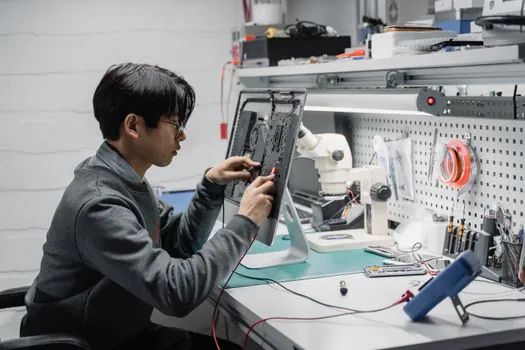
Rework is not complete when the technician finishes the repair. The affected requirement must be re-inspected, and the MES should retain the original failure and the retest as separate records. SAP Digital Manufacturing supports test and repair actions inside the main production routing, which allows the retest to remain part of the controlled sequence rather than becoming an informal manual check [S2].
Inspection capacity is a measurable part of the loop. Published rework-cost guidance places component-level repair labour at €5 to €50 per event and complex-assembly repair labour at €50 to €500 per event, while inspection and retest add €2 to €30 per event depending on test complexity [S1]. These figures show why route duration cannot be limited to wrench time. The MES should also record wait time, inspection time, and repeat-test time if the plant needs a credible cost model.
Where failures depend on electrical or calibration performance, the retest should use controlled test equipment. A loop tester can be used to verify the functional behavior of a repaired loop, while a loop calibrator provides process-side excitation and measurement for calibration work. Equipment identity, calibration status, test limits, measured values, and pass or fail results should be linked to the unit record, not retained only on a paper test sheet.
Cost, Capacity, and Quality Signals
The true cost of rework extends beyond direct repair labour. Published estimates assign €1 to €20 per event to repair materials and €2 to €10 per event to administrative documentation [S1]. Lost throughput can be larger: an €800 per hour bottleneck losing 5% of capacity to rework loses €40 per hour, or €640 per day across two shifts [S1]. These are scenario values rather than universal plant constants, but they give engineers a defensible structure for costing the loop.
The MES should separate at least four cost pools: direct labour, repair material, inspection and retest, and capacity or throughput loss. A fourth signal is field-risk exposure. Reworked products have a higher field-failure risk than first-pass-good products, and published guidance notes warranty claims can reach 10 to 100 times the internal repair cost [S1]. Warranty data should therefore be connected back to the originating defect, operation, and rework history where product and customer identifiers permit it.
Plant managers should also avoid treating a declining rework rate as automatically beneficial if the plant shifts failures into repair concessions. The quality outcome changed even if the named activity changed. A sound dashboard keeps rework, repair, concession, scrap, retest, and field failure in separate, comparable views.
Sourcing, Configuration, and Control
MES capability varies sharply. A lightweight implementation can flag rework labour and require a reason code, supporting later analysis of how many times a job was repeated [S3]. A routing-capable implementation can model re-entry for rework, re-inspection, test, and repair cycles, as described for Eyelit MES workflow and routing models [S7]. SAP Digital Manufacturing provides an explicit rework-loop capability within production execution, with routes for in-routing rework and nonconformance disposition [S2].
For selection, ask vendors to demonstrate a serial-number trace rather than a generic user-interface demonstration. Require proof that the system can show the originating station, defect code, reason code, route revision, material consumption, operator, retest, approval, and loop count on one unit history. The evaluation should also show what happens after the third, fifth, or configured maximum iteration.
No MES can make a defective process stable. The system can make recurrence visible, prevent undocumented disposition, and enforce a stop condition. For a smaller plant deciding where MES functionality begins, Small Plant MES vs ERP: When ERP Is Enough and When MES Pays provides a useful scope comparison, but the deciding evidence should be a live unit-level rework trace and controlled retest.
The first implementation checkpoint should be a 10-unit pilot with at least 1 forced rework, 1 retest, and 1 rejected second pass. Verify that the MES shows the original failure, increments the loop count, records repair labour and material, prevents release after a failed retest, and closes the history only after acceptance. Then track two signals in the 30 days after rollout: the percentage of rework events with complete defect and retest data, and the percentage of units exceeding the configured iteration threshold without documented quality review.