
Reinforcement learning optimizes process control by iteratively improving a policy that maps observed process states to actions, aiming to maximize long-term cumulative reward rather than a single immediate outcome [S1][S3].
Its process-control scope includes continuous and batch operations, with algorithms such as DDPG, actor-critic methods, model-based RL, and transfer-learning-assisted deep reinforcement learning [S1][S3][S5].
Control problem defined as state, action, reward, and policy
Reinforcement learning represents a control problem as a Markov Decision Process: the agent observes a state, selects an action, receives a numerical reward, and repeats this interaction while improving its policy [S3][S6]. In a chemical plant, the state can include process measurements such as temperature, pressure, flow, concentration, and equipment status, while actions can set valve positions, variable-frequency-drive commands, dosing rates, or other manipulated variables [S1][S6].
The immediate reward captures the result of one control action, while the value function estimates the cumulative reward expected from a state and all future decisions [S3]. That distinction matters in process control: an action that produces a small immediate benefit can still be poor if it drives the process toward higher energy use, product off-specification, or a constraint violation. The stated objective is to find a policy that maximizes average value across states [S3].
How training turns process experience into control
Training follows an iterative loop of state observation, action selection, environment response, reward evaluation, and policy improvement [S1][S3]. Model-free methods learn directly from sampled trajectories without constructing an explicit model of the process, whereas model-based methods learn expected rewards and future states so the agent can plan before acting [S3]. SARSA and Q-learning are representative value-based methods, while REINFORCE and deterministic policy gradient are policy-based examples [S3].
Actor-critic methods parameterize both the policy and value function, combining direct policy improvement with a learned estimate of expected return [S3]. For continuous process actions, deterministic policy-gradient and DDPG-type methods avoid the discrete-action restriction associated with Q-learning [S1][S3]. The review reports a batch-control experiment using DDPG modified with adversarial imitation learning, showing that demonstrations and numerical rewards can be combined rather than relying on random exploration alone [S1].
For high-dimensional states, deep reinforcement learning adds learned feature extraction to the decision system [S1]. Control-informed reinforcement learning further applies iterative population-based candidate generation and fitness evaluation, using process or control knowledge to guide candidate policies toward better solutions [S7].
What RL can optimize compared with PID, MPC, and RTO

RL differs from PID by learning a multi-variable policy from interaction and reward, while PID applies a fixed feedback law based on proportional, integral, and derivative error terms [S1]. RL can adapt its decisions as operating conditions and rewards change, but it requires meaningful exploration data and a carefully designed reward function [S1][S4].
MPC predicts future process behavior from a model and solves an optimization problem for each control decision, whereas RL can learn directly from experience or from model-generated rollouts [S1][S3][S6]. Model-based MPC is well established for decisions on a minutes-to-hours scale, while real-time optimization generally addresses economic objectives over a broader unit and depends on periodic model recalibration [S1].
RL offers a different tradeoff: it can discover nonlinear action patterns and adapt to model mismatch, but conventional training can be sample-inefficient, computationally demanding, and difficult to constrain during exploration [S1][S5]. MPC provides an explicit model and optimization mechanism, which is easier to audit, while RL can reduce reliance on an exact process model but needs stronger deployment safeguards [S5].
Selection criteria for continuous and batch control
Continuous processes are the better initial target when state, action, and reward relationships remain measurable, interactions are expensive, and safety constraints are strict. Batch processes are also well suited because their operating sequence creates a sequential decision problem, and the reviewed literature identifies batch operation as a major application area [S1].
For continuous control, compare the variables that determine practical suitability: observation coverage, continuous-action support, constraint handling, training-data demand, adaptation to model mismatch, and explainability of the resulting policy. For batch control, compare phase detection, policy transfer between recipes, handling of variable cycle times, reward design for yield and quality, and the need for safe exploration around multiple operating modes [S1][S5].
RL is for engineers who can define measurable outcomes, supply a safe training environment, and operate a supervised deployment pipeline. It is not a substitute for basic instrumentation, deterministic interlocks, process safeguarding, or a qualified control strategy where those layers must provide guaranteed protection [S4][S5].
Use cases in treatment, manufacturing, and batch operations
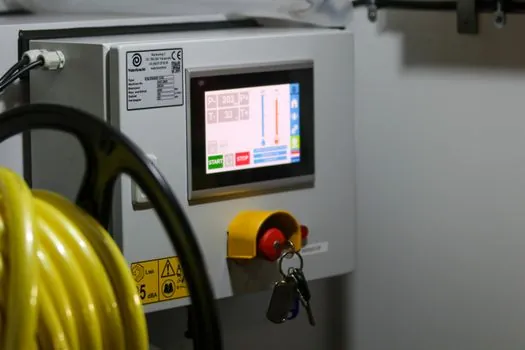
Wastewater treatment provides a practical setting for RL because treatment performance depends on sequential decisions under changing influent and operating conditions, and the literature identifies RL as an alternative to fundamental process-based optimization for this class of problem [S2]. A reward can combine treatment quality, chemical use, energy demand, and compliance with operating limits, provided each component is defined with an engineering basis rather than treated as an unbounded score [S2].
Manufacturing applications include daily optimization of machine parameters, automated controller tuning, and adaptation to changing conditions [S4]. In continuous process units, candidate applications are coordinated adjustment of heating, cooling, flow, pressure, residence time, and feed allocation. In batch operations, RL can sequence phases and manipulate setpoints as the material state changes, while imitation learning can supply demonstrations that reduce or guide exploration [S1].
The policy must be evaluated against a defined reference case, such as PID, MPC, RTO, or operator practice. Relevant trackable measures include product yield, off-specification time, energy per unit of product, chemical consumption, constraint violations, actuator movement, and performance after a process-model or operating-point change [S1][S2][S5].
Limitations that can invalidate an operating policy
Exploration is the central engineering failure mode because an exploratory action can push a plant outside its safe operating region, and the 2026 transfer-learning review identifies extremely low sample efficiency and safety concerns from exploration as barriers to industrial DRL [S5]. A reward that omits safety, product quality, equipment wear, or emissions can train a policy that improves a narrow objective while creating unacceptable operational risk [S4][S5].
Model mismatch also matters. An RL policy trained against a simulator can exploit simulator inaccuracies, producing poor behavior on the physical plant [S1]. Transfer learning can improve generalization and adaptability in multi-mode control scenarios, but the policy still needs validation against plant constraints and operating changes [S5].
Another failure mode is objective mismatch. Maximizing a scalar reward does not guarantee that every safety rule, quality limit, and economic objective has been optimized correctly [S3]. Control performance must therefore be checked after deployment, with a rollback path to the established controller if the learned policy degrades stability, product quality, or constraint compliance.
Safe deployment, transfer learning, and measurable acceptance
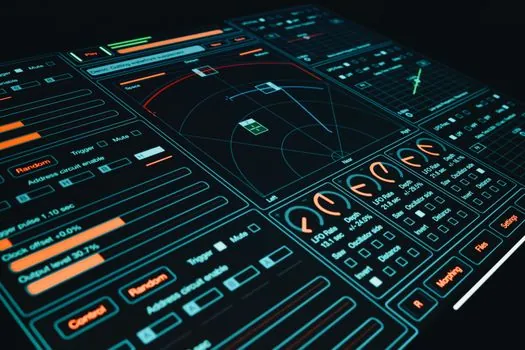
Industrial deployment should separate learning from unrestricted plant action. The agent can learn in simulation, historical trajectories, offline demonstrations, or a constrained digital environment, then be tested through shadow mode before it can affect actuator commands [S1][S4]. Bosch describes its safety objective as selecting actions that are both safe and informative while learning, and combines approximate process models with RL to reduce manual effort and real-system interactions [S4].
Transfer learning supports reuse across related operating modes, while imitation learning provides a route to learning from process demonstrations [S1][S5]. These methods can reduce the amount of new interaction required, but they do not remove the need for domain constraints, uncertainty handling, and plant-specific validation [S4][S5].
A practical acceptance record should compare the learned policy with a named baseline over defined operating conditions and report at least five items: constraint violations, product-quality performance, energy or reagent use, actuator activity, and recovery after a disturbance. A second review should test whether the policy depends on a single simulated operating point. The same figures should be retained after deployment, so a control improvement can be distinguished from normal process variation.
Trackable signals for deployment are repeated safe-policy interventions, reduced constraint violations relative to the baseline, and stable performance across multiple operating modes. For higher-fidelity process development, digital twins in process development can provide a structured comparison between simulation-based learning and physical commissioning, but twin fidelity must be validated before it is used as the training environment.