
Additive manufacturing (AM) replaces long multi-tier BOMs with a single digital file plus a spool, cartridge or powder bed, so the classic 3D printing supply chain compresses five to seven supplier tiers into roughly three: feedstock maker, printer OEM, and part producer or end user [S2].
Where a conventional metal bracket may travel stamping → machining → plating → assembly → warehouse → customer, a printed equivalent goes filament or powder mill → printer bed → depowder / cure / sinter → part, often inside one facility, with the CAD file acting as the inventory item [S1][S3].
Feedstock Tiers: Filament, Resin, Powder and Metal Grades
Polymer filament (PLA, PETG, ABS, PA12, TPU) and photopolymer resin (standard, tough, castable, dental-grade) are the highest-volume feedstock families, while metal powder (316L, 17-4PH, Ti-6Al-4V, Inconel 718) dominates the industrial end of the 3D printing raw material sourcing chain at much higher per-kilo cost [S3].
Powder specification matters more than polymer grade because laser-powder bed fusion (LPBF) and electron-beam melting (EBM) demand controlled particle size distribution (typically 15–63 µm for LPBF), high sphericity and low oxygen content; a 17-4PH powder batch above ~0.10 wt% oxygen typically fails aerospace qualification [S2][S3]. Sourcing patterns in 2026 show small and mid-batch buyers still going through regional distributors, while automotive and medical OEMs contract direct with gas-atomised powder producers for traceable lot certificates.
Resin and filament tolerate a more fragmented supply base; spool-level diameter tolerance of ±0.02 mm and moisture control under 0.02% are the practical gates, with most rejects downstream coming from wet filament, not from extruder hardware [S3].
Printers, Process Bands and Bill of Materials
Industrial 3D printer BOMs split into four process families — FFF/FDM (thermoplastic extrusion), SLA/DLP (vat photopolymerisation), SLS/MJF (powder bed polymer) and LPBF/DED (metal) — and the 3D printing key components and BoM for each differ sharply in laser diode count, build-chamber volume, recoater mechanism and inert-gas loop [S1][S3].
An LPBF system typically pairs a 200–500 W fibre or disc laser, a galvo scan head, a stainless build chamber with argon purge to oxygen below ~0.1%, and a powder-feed or recoater subsystem; SLA printers replace the laser stack with a UV-LED or laser projector and a PDMS-coated vat. BOM cost is dominated by the laser/optics module on metal systems and by the projector array on resin systems, which is why metal machine ASPs sit an order of magnitude above desktop FFF [S3].
Process bands buyers actually quote: build volume from 200×200×250 mm (desktop) to 600×600×600 mm (industrial) and beyond; layer thickness 20–100 µm (SLA/LPBF) versus 100–300 µm (FFF/SLS); typical dimensional tolerance ±0.1–0.3% with a floor near ±0.05 mm for small SLA parts [S2][S3].
Digital Warehouse: CAD Files as Inventory
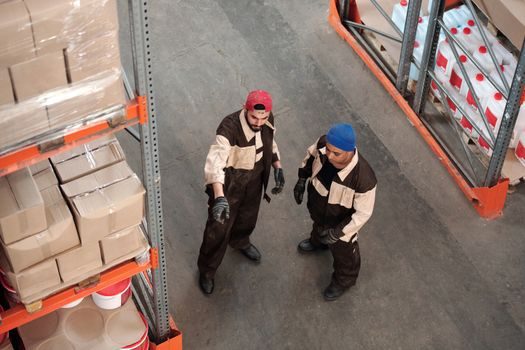
The single most disruptive change in the 3D printing supply chain is that the CAD file replaces the bin of finished parts, which is why autonomous-vehicle programmes can re-source a bracket by emailing a STEP file to a regional print bureau instead of pulling from a container [S1].
Digital inventory collapses working capital tied up in spares, particularly for low-volume, high-mix fleets; a 2019–2026 body of research kept finding that spare-part warehouses can drop 60–80% of physical SKU count once printable parts are digitised, with lead time for a printed spare commonly measured in days rather than the weeks a moulded or machined part spends in ocean transit [S2][S4].
The catch is IP control: a printable part is a reproducible part, so the supply chain shifts risk from physical pilferage to file-leakage, and serious programmes run on audited AM platforms with role-based access and part-level traceability logs [S2].
Post-Processing, QA and Where the Bottleneck Actually Lives
Most AM shops spend more time on post-processing and inspection than on the build itself; a metal LPBF cycle may run 18–36 hours, then another 4–8 hours of depowdering, stress relief (often 650–950 °C for 17-4PH depending on temper), support removal, machining of critical interfaces and HIP for fatigue-critical parts [S2][S3].
For polymer SLA, post-cure UV dose (typically 30–60 mJ/cm² for tough resins) and a 60–80 °C thermal post-cure are the two levers that move parts from "green" to production-grade [S3].
The real bottleneck is therefore not the printer; it is qualified labour, repeatable post-processing and incoming-powder certification, which is why a single 3D printing raw material sourcing decision can swing a part's total cost more than printer selection.
Who It Is For — And Where the Chain Breaks
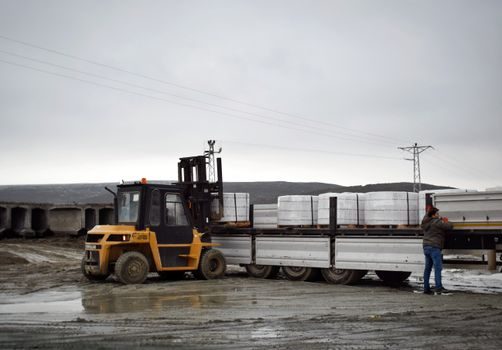
AM-led supply chains pay off when part volumes are low, geometries are complex, lead time is the binding constraint, or the part is a long-tail spare with unpredictable demand — aerospace interiors, automotive pre-production, medical implants, jigs and fixtures, and defence spares are the canonical wins [S1][S4].
AM-led supply chains underperform where volumes exceed a few thousand identical parts per year, where the part is a simple high-tolerance geometry, or where the material is locked to wrought/forged specifications (e.g. certain high-pressure piping and rotating-shaft applications); for those, cable drag chain or conveyor chain links back to classical subtractive and forming supply chains that still beat AM on unit cost [S2][S4].
Failure modes buyers should price in: feedstock lot-to-lot drift, machine downtime during powder changeover, post-processing labour spikes, IP leakage through file distribution, and the lack of harmonised AM-specific standards for critical parts — buyers writing a 3D printing supply chain agreement in 2026 should pin powder certificates, post-processing recipe, QA evidence format and audit rights before talking price [S2].
Sourcing Signals and What to Track Next
Three signals are worth watching: (1) powder-spot prices, particularly 316L and Ti-6Al-4V, which move with energy and gas-atomisation capacity; (2) printer-OEM lead times, where fibre-laser and galvo allocation can push industrial LPBF deliveries 4–8 months; (3) post-processing capacity, especially HIP furnace and CT-scan time, which is currently the tightest constraint in aerospace AM [S1][S2].
Trackable next node: the next quarter's mems sensor price bands tie to AM because process gas flow and chamber pressure transmitters on LPBF systems are MEMS-based, and any feedstock price reset in Q3 2026 will be the first read on whether digital-warehouse economics have started to bleed into the metal-powder market.
For component-level specifications, see 3d scanner, and dc power supply.