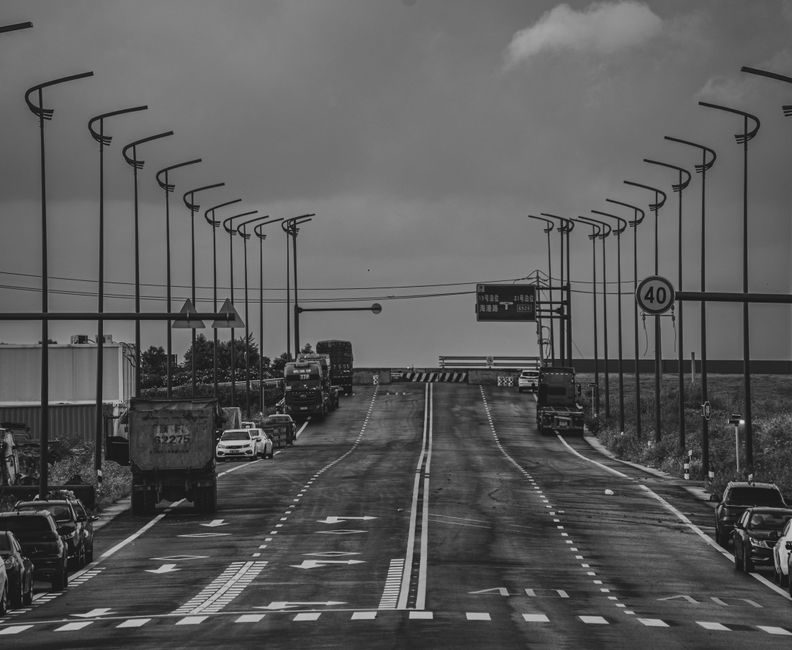
A concrete pump truck is a truck-mounted concrete pump with a multi-section articulating boom and a separate concrete mixer truck feeding the hopper; selecting one in 2026 is driven by four spec levers — chassis axle count, vertical/horizontal reach, delivery-pipe geometry, and total weight under road-bridge rules.
For a working definition and component map, the concrete pump truck overview confirms the truck-mounted concrete pump configuration, while the truck-mounted concrete pump entry isolates the pumping unit itself. Boom-truck selection also has to be planned around the feed concrete mixer truck cycle so the hopper is never starved.
Step 1 — Lock the Reach Before You Look at Brands
Vertical reach is the single biggest price driver on a boom pump: a 47 m class unit (Model HB52, ISO9001:2000, welded structure) is listed in the 2026 supplier catalogue at a 1-piece minimum order with 1,500 pcs/month supply capability [S5]. Reach drives boom-section count, which in turn drives outrigger spread and chassis length — pick the reach band first.
Below ~28 m a 3-axle chassis is enough, 32–47 m typically needs 4 axles, and 50 m+ usually requires 5–6 axles; a U.S. pumper operating a 6-axle Autocar ACX reports making intersection turns that 3 and 4-axle units cannot complete, and took delivery on a Thursday and pumped the next day [S3]. That anecdote matters because axle count is the lever that decides both bridge-law compliance and urban jobsite access.
If reach below 24 m is acceptable, a trailer-mounted concrete pump with St52 welded delivery pipe (4.0 / 4.5 / 5.0 mm wall) is a cheaper alternative and is "popular in Saudi, Pakistan, India" per the same supplier listing [S7] (2025-08).
Step 2 — Chassis and Axle Match to Local Bridge/Road Law
Total weight and axle load are the legal boundary, not a marketing number: 47-ton GVW pump chassis, ISO9001:2000 build, is the standard offering on mainstream Chinese export units [S5]. On U.S. jobsites the trend in 2026 is to push axle count up, not down — a 6-axle Autocar ACX concrete pump is being delivered specifically to make legal intersection turns and pour in tight urban cores [S3].
For a 4-axle chassis, plan on roughly 38–44 ton GVW; for 5-axle, 44–52 ton; for 6-axle, 52–62 ton — exact limits are set by the destination country's bridge formula, so confirm the local Gross Vehicle Weight and per-axle load rules before ordering. The chassis frame also has to absorb the outrigger reaction loads at full boom extension; operators consistently rate this as the most common premature-failure mode on under-spec chassis.
Step 3 — Delivery Pipe and Wear Parts: DN125 Is the Default Bore
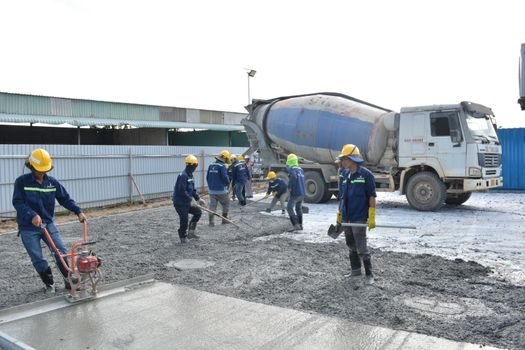
DN125 (5-inch) hardened delivery pipe is the global default bore for both truck-mounted and trailer-mounted concrete pumps; common elbow geometry is R1000 with 45° and 15° (single or double) bends [S4]. Wall-thickness options on St52 weld pipe are 4.0 / 4.5 / 5.0 mm [S7] (2025-08), and the same supplier quotes a 3 m St52 weld delivery pipe at $35–50/pc with 50 pc MOQ and 5,000 pc/month capacity [S2].
For truck-pump and trailer-pump duty, "more people now like St52 seamless because the quality is better and it is seamless" — listed price band around 30–33 USD/unit on weld pipe, with hardened variants commanding a premium in Middle East, India, Pakistan, Saudi markets [S7] (2025-08). Double-layer concrete pump elbows are a newer wear-parts development, with a 400 pc MOQ and 290,000 pc/month supply capability from a Tianjin-loaded supplier [S8].
Step 4 — Pumping Unit, Output Pressure and Hydraulic Circuit
The pumping heart is open-circuit hydraulics driving two differential-acting concrete cylinders; typical truck-pump outputs fall in 80–150 m³/h at 8–16 MPa line pressure for boom-class machines, with 47 m units clustering near the lower end of that band. Trailer pumps with St52 weld pipe are usually 60–90 m³/h — confirm the exact piston diameter, stroke length, and cycles-per-minute before comparing quoted "theoretical output" figures, because two machines at the same m³/h can have very different pressure margins for long horizontal runs. [S1]
For high-rise pours above 80 m vertical, specify the high-pressure kit and confirm the S-valve or rock-valve transition is rated for the aggregate top-size (typically 20–40 mm crushed stone). Operators should refuse any quote that does not state cylinder diameter, stroke, and max aggregate size in writing.
Step 5 — Compare Your Three Realistic Options Side-by-Side
For most buyers in 2026 the choice collapses to three configurations; line them up against reach, mobility, and wear-part cost: [S2]
- 3- to 4-axle truck pump, 28–37 m boom: lowest GVW, best urban access, St52 weld pipe at 4.0–4.5 mm wall is sufficient [S7] (2025-08). Best for residential and low-rise commercial work.
- 4- to 5-axle truck pump, 38–47 m boom (HB52-class, 47 ton GVW, ISO9001:2000) [S5]: the volume sweet spot for mid- and high-rise; DN125 hardened pipe, R1000 45° elbows, double-layer wear elbows at the boom tip [S4][S8].
- 6-axle truck pump, 50 m+ boom, 52–62 ton GVW (Autocar ACX-class) [S3]: maximum reach and intersection turning ability, used where 3-/4-axle units physically cannot complete the pour; higher capital cost and stricter route permits required.
Step 6 — Operator Training, Maintenance, and Energy Footprint
Operator training is treated by industry as the single largest lever on pump-truck lifetime cost: the 2015 ITPUB analysis (still cited in 2026 OEM training material) puts "strengthening job training of concrete pump truck operators" on par with mechanical maintenance for reducing on-site failure and fuel cost [S1] (2015-02). On modern units, insist that the OEM provides documented training on the S-valve flush, hopper-grate cleaning, and outrigger load-sensing calibration.
Wear-part consumption (DN125 pipe, elbows, wear plates) dominates the 5-year operating cost; Tianjin and Shanghai are the two main export loading ports for these spares, with TT and LC both standard payment terms and 50–400 pc MOQs depending on part [S2][S4][S8]. Spec a hardened-pipe variant where the pour mix contains crushed granite above 20 mm, or where pump hours exceed ~20 per week.
Step 7 — Sourcing, Maker Clusters and Verification Checklist

Chinese OEM clusters — led by Henan-based Haomei Machinery covering mobile concrete mixers, batching plants, concrete pumps, asphalt and dry-mortar plants, and self-loading concrete mixer trucks — are the dominant 2026 export supply for full machines and spares [S6]. U.S.-domiciled specialty chassis builders (Autocar's ACX) are taking share in the high-axle, urban-turn segment [S3]. The concrete mixer truck sizing and chassis match guide covers the matching drum-truck spec so the feed side is correctly paired.
Pre-shipment verification list for any cross-border order in 2026: (1) boom-section count and vertical/horizontal reach in writing, (2) chassis axle count plus per-axle load and GVW, (3) pumping unit piston diameter / stroke / max aggregate size, (4) delivery-pipe spec — DN125, St52 seamless vs weld, wall thickness 4.0/4.5/5.0 mm, hardened yes/no [S7] (2025-08), (5) elbow geometry — R1000 45° standard, double-layer at wear points [S4][S8], (6) operator training and OEM warranty terms [S1] (2015-02). Drop the quote if any of these six is missing or hedged.
Trackable 2026 signals: confirm whether the OEM is shipping ISO9001:2000 or ISO9001:2015 documentation on the HB52-class 47-ton unit [S5], and watch Tier-1 chassis makers for an axle-count shift above 6 on 50 m+ booms as U.S. bridge rules tighten [S3].