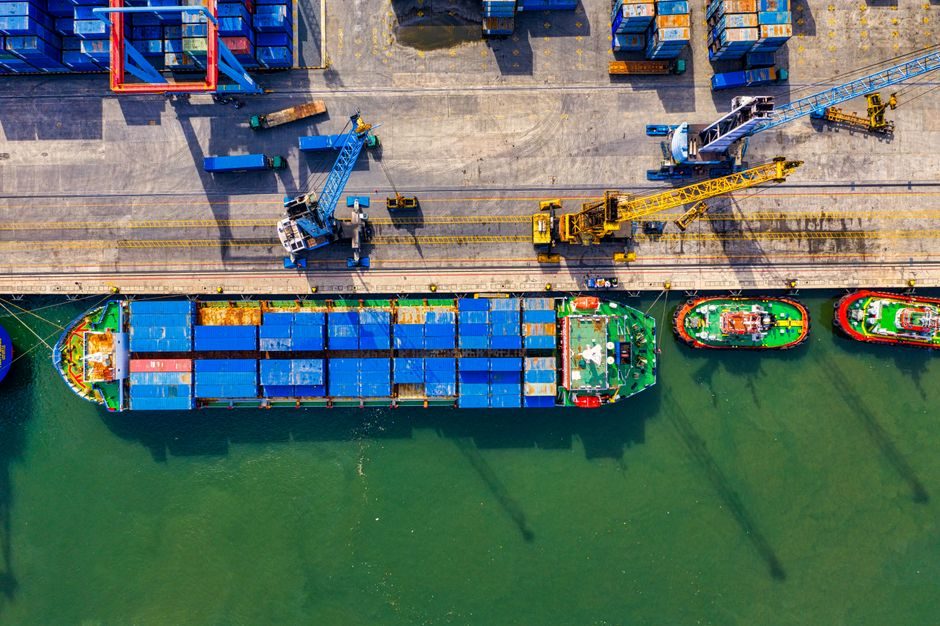
For marine concrete delivery, the dominant 2026 product band is hydraulic truck-mounted mixers in the 7-12 m³ drum range with bolted double-roller off-road support and wear-protected blades — typified by the Semix SM9 at 7-12 m³ (423.78 ft³ max) and the CIFA HD series reaching 15 m³ (529.72 ft³) with 560 l/min hydraulic output [S1][S2].
Selection is dictated by three marine-specific constraints that land-based fleet guides usually ignore: salt-air corrosion on the drum shell and chute, splash-zone washdown frequency, and the tight weight envelopes of port-side quay decks, barges, and slipway ramps. Buyers should anchor the spec to drum volume per axle, roller configuration, blade metallurgy, and a documented ISO 9001:2000 build traceable through the supply chain [S3].
Drum Capacity and Marine Payload Envelope
Marine tenders rarely accept a 15 m³ rig because quay and barge deck load charts top out around 12-13 m³ of wet concrete plus chassis weight; the 7-12 m³ Semix SM9 window is therefore the practical ceiling for most wharf and jetty pours [S1]. The CIFA HD series is offered in the same 7-15 m³ band, but with a reinforced basic frame and double-roller sling-bar option that buys real margin on uneven barge decks and temporary pontoon causeways [S2].
Buyers comparing a 6 m³ Dongfeng-class chassis (8,000 × 2,490 × 3,800 mm, GVW 11,970 kg, 190 hp) against a 12 m³ heavy-duty rig need to be honest about crane and tug constraints: a 6 cbm truck is often the only legal option for harbour-side pours served by a single-axle quay crane. A useful rule of thumb is to keep GVW below the quayside posted limit and to match drum volume to a 90-minute plant-to-barge haul, which lines up with the 2-6 rpm agitation window used in in-transit mixers [S6].
Drive Type, Roller Geometry and Blade Wear
All credible marine-grade mixers in the 2026 catalogue are hydraulic, not mechanical PTO: Semix SM9, CIFA HD, and the HK-series self-loaders from Liangshan Tonghui all spec hydraulic motor drives with capacities from 1.5 m³ up to 12 m³ [S1][S2][S3]. CIFA's HD series pairs the hydraulic motor with 560 l/min output and explicitly markets "wear-protected blades" plus single or double rollers with sling bar for off-road support — bolted for in-field swap-out, which is the only practical service posture on a remote jetty [S2].
Drum rotation rate sits in the 2-6 rpm band for transit, with marine duty preferring the lower end to reduce drum-shell fatigue on long harbour hauls where the mix must survive vibration from a deck-laid barge [S6]. The Mesan & CIFA bolted-roller architecture is worth asking for by name; Chinese light-duty offerings in the US$7,000-15,000 MOQ-1 band are price-competitive for inland work but generally lack the documented blade-life hours marine operators need [S3].
Corrosion, Washdown and Salt-Air Material Upgrades

Salt air attacks the drum seam weld, the chute pivot, and the roller bearings faster than it attacks the chassis; marine spec should therefore upgrade to 316L stainless chute hardware, hot-dip galvanised support frames, and sealed-for-life bearings on the roller track. None of the OEM catalogue pages reviewed publish a marine kit as a line item, so the right move is to specify these as a deviation against the standard Semix or CIFA build at RFQ stage [S1][S2].
Port operators are increasingly aligning mixer washdown with ballast-water management regimes; the concrete-truck equivalent is a freshwater rinse cycle after every pour plus a daily pH-neutral wash of the drum interior to prevent chloride build-up that later contaminates structural concrete. Jianxin Machinery and other Chinese OEM-tier manufacturers on Made-in-China list the same portable and truck-mounted mixers with ISO 9001 build certification, which is the minimum paperwork the marine buyer's QA team will accept [S3].
Certification, Build Traceability and Sourcing Channels
Marine buyers should refuse any mixer that does not carry ISO 9001:2000 documentation and a CE / BV / SGS traceable test certificate — the Okorder-sourced 6 cbm Dongfeng spec sheet lists all three, which is a usable baseline for procurement. Chinese OEM platforms aggregate the bulk of marine-eligible supply: Made-in-China carries HOWO 375 6×4 self-loaders from Liangshan Tonghui at US$7,000-15,000 MOQ 1, plus 1.5-5.5 m³ HK-series hydraulic self-loaders at US$11,000 list [S3].
BAMBO Machinery in Hunan and Zhengzhou Jianxin round out the secondary supplier pool for both concrete pump truck and drum-mixer lines, with the pump-truck overlap relevant for any marine job that combines boom-pump placement with drum delivery on the same charter [S5]. For a 2026 fleet refresh, the practical sourcing pattern is one CIFA HD or Semix SM9 lead unit (US$80,000-150,000 indicative) supported by two or three light-duty 6 cbm Dongfeng-class chassis for tight-quay work [S1][S2].
Selection Criteria: When the Drum, Pump or Trailer Wins
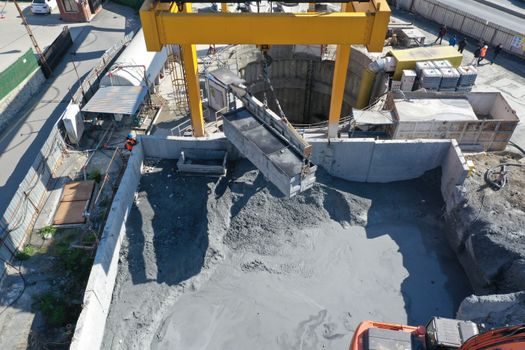
The decision tree for marine concrete placement is narrow: drum mixer truck for haul distances over 2 km, concrete pump truck for high-rise piers or caisson pours above boom reach, and truck-mounted concrete pump for combined boom + drum runs where the barge has no separate placing boom. The Semix SM9 and CIFA HD cover the first case; the BAMBO Hunan-built Putzmeister-class units cover the second and third [S1][S2][S5].
Where the job is genuinely shore-side and short-haul — slipway pours, dry-dock base slabs — a static concrete mixer truck with a chassis that never sees the water is overkill, and a dump truck shuttle fed by a portable power mixer is the more economical layout. Marine spec is specifically about equipment that survives the splash zone, not about all equipment that touches a port [S3][S6].
Limits, Failure Modes and What Marine Spec Does Not Solve
Hydraulic mixer trucks do not solve long-haul concrete fatigue: even with constant agitation, the mix window before initial set is finite and additives are the only way to stretch it, so a 12 m³ marine drum on a 3-hour barge tow is still a real risk regardless of roller quality [S6]. Buyers should also note that catalogue "lightweight" claims (a Semix SM9 marketing line) are usually about alloy drum-shell thickness, not corrosion rating, and tell the specifier nothing about salt-spray performance [S1].
Self-loading mini-mixers in the HK1.5-HK5.5 band are attractive on price (US$11,000) but are not designed for 24/7 harbour rotation; they are best treated as backup or yard units, not as the primary marine delivery asset [S3]. The 6 cbm Dongfeng-class chassis, while ISO 9001 documented, ships with 190 hp which is borderline for sustained hill climbs on coastal causeways — a 240-340 hp heavy-duty chassis is the safer marine baseline.
Track three signals over the next two quarters: any 2026 catalogue update from CIFA or Semix that publishes a dedicated marine kit with named salt-spray test hours; a price index shift on the 6 cbm Dongfeng and HK-series lines; and any BV or DNV type-approval citation appearing on Chinese OEM data sheets for the SM9 or HD equivalents. Related coverage of spec-driven concrete equipment selection is summarised in Concrete Fiber Sizing and Selection: Spec-Driven Guide for 2026 Mixes and Concrete Groove Cutter Sizing and Selection: Engine Class, Blade Diameter, Depth Bands for the finishing side of the same marine pour package.