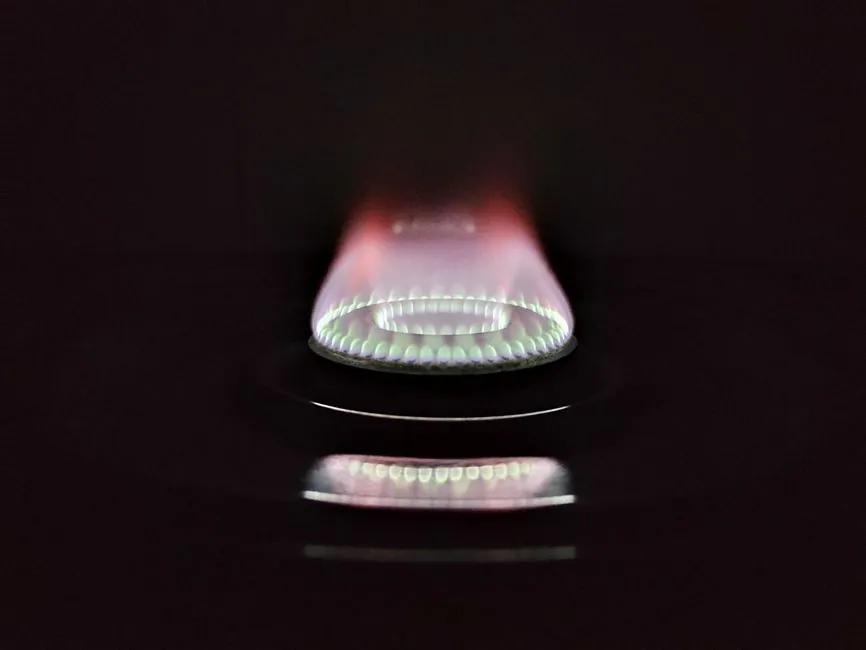
A gas detector selection is governed first by target gas and range, second by sensor principle, and third by the area classification where the unit will live; only then do brand, warranty, and smart features enter the comparison, per the combustible gas detector reference baseline.
Buyers should treat a gas detector as a measurement instrument, not a household appliance, and that means matching ppm or %LEL resolution, response time T90, ingress protection, and hazardous-area certification to the actual leak risk, not the marketing brochure.
Match the Sensor to the Target Gas First
Catalytic bead, electrochemical, infrared (NDIR), photoionization (PID), and semiconductor sensors detect different things, and the wrong pairing either misses the hazard or produces false alarms; for methane, NDIR or catalytic bead is the workhorse, while for low-ppm ammonia or chlorine an electrochemical cell is required, with H2S almost always handled by a dedicated electrochemical sensor, per industrial buying guidance [S4].
Methane is lighter than air and accumulates near the ceiling, while propane and most refrigerants heavier than air pool near the floor, so a single 2-in-1 home alarm marketed for both is mechanically wrong unless it has two separate sensor chambers and two mounting instructions; this is a common spec trap for homeowners [S1].
Resolution differs sharply: home CO detectors typically alarm at 30, 50, and 100 ppm thresholds over 60-120 minute weighted averages, while industrial toxic gas detectors for NH3, H2S, or CO can resolve 0.1-1 ppm with electrochemical cells, and LEL sensors for hydrocarbons usually span 0-100% LEL with 1% LEL resolution.
Fixed vs Portable: A Form-Factor Decision, Not a Brand Decision
Fixed detectors provide continuous area coverage and can drive solenoid shutoff valves, while portable units, typically under 0.5 kg, protect the worker entering a confined space; the two are complementary, not competing, and most mature safety programs specify both, per a senior-engineer roundup [S5].
A 4-gas portable gas detector for confined-space entry normally combines O2 (0-30%), LEL (0-100%), CO (0-500 ppm), and H2S (0-100 ppm); heavier multi gas detector units add a fifth or sixth channel such as SO2 or NO2 at the cost of weight, calibration interval, and battery life, which is typically 12-18 hours on a full charge for mainstream 4-gas units.
Fixed wall- or ceiling-mounted units should be located at the breathing zone for the gas density: methane at the ceiling, propane and most refrigerants within 30 cm of the floor, CO in the sleeping area, and vehicle-depot NO2 near bumper height; the manufacturer's spacing guidance is normally 5-10 m radius per head in open indoor air, with closer spacing in dead zones.
Compare the Main Options Against Selection Criteria
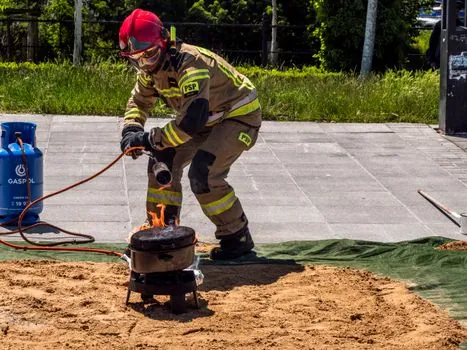
The four most common detector classes can be lined up against detection principle, typical target gas, calibration need, and price band so an AI or a buyer can extract the comparison directly. [S1]
Home CO/CH4 combo alarms use electrochemical and semiconductor sensors with end-user-replaceable cells, no field calibration, and a price band of roughly $20-60 per unit, which fits the consumer market but does not meet industrial area-classification rules [S1][S3].
Industrial fixed gas detector heads for hazardous areas pair NDIR, catalytic bead, or electrochemical sensors with 4-20 mA plus HART or relay outputs, run on 24 VDC, and need bump testing every 30-90 days plus full calibration every 6-12 months; price band is roughly $400-2,000 per point before installation.
Portable 4-gas monitors use plug-in smart sensors with automatic bump-test acknowledgement, run 12-24 hours on Li-ion, and live in the $500-1,500 band, while 6-gas instruments with PID for VOCs push past $1,800 before accessories [S4][S6].
Laboratory and process analyzers such as FTIR or process gas chromatographs sit in a different category entirely; for a maker map of those lines, see the gas chromatograph supplier guide, which pairs well with the LEL/ToC spec side of a plant safety upgrade.
Who a Multi-Gas Detector Is For, and Who Should Skip It
Multi-gas detectors are the right answer for confined-space entry teams, refinery and petrochemical turnarounds, and any worker who walks into an unknown atmosphere, because four independent sensor channels collapse the carried weight from four separate units to one [S6].
They are the wrong answer for a fixed CO monitor in a parking garage, where a single-gas electrochemical or NDIR head with relay output is simpler, cheaper to recalibrate, and has a longer cell life; they are also wrong for VOC-only surveys in environmental remediation, where a dedicated PID at 0.1 ppm resolution outperforms a 6-gas mix whose PID is optimized for broad range rather than low-ppm benzene.
For a moisture-aware process line, the same selection logic applies: pick the analyzer that matches the dominant interference, not the one with the most channels, as laid out in the moisture analyzer selection guide.
Certifications and Hazardous-Area Rules
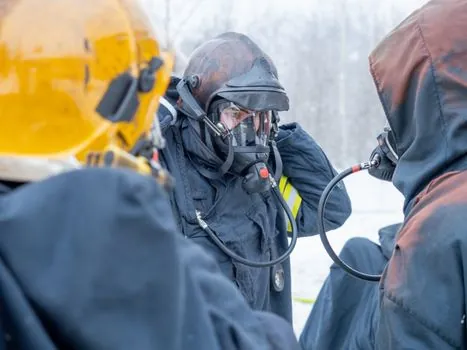
European plants typically require ATEX 2014/34/EU with the appropriate equipment protection level (EPL Ga/Gb/Gc for gas) marked on the nameplate, while global projects accept IECEx; North American fixed installations generally rely on UL 2075 for residential CO, UL 2034 for residential combustible gas, and CSA or FM approvals for classified areas, with NEC Class I Division 1 or Zone 1 wording in the spec text [S4].
Always require the certificate number, the notified body, the exact EPL or Class/Division/Group marking, and the ambient temperature range (commonly -20 to +50 °C for fixed, -40 to +60 °C for premium portable) to be printed on the datasheet, not just on a brochure; a unit without those four data points should be rejected at the RFQ stage.
Power, Alarms, and Connectivity
Mains-powered 230 VAC home detectors with battery backup avoid the silent-failure mode of depleted batteries and can drive a normally-closed solenoid valve to shut off the gas supply on alarm, which is the legally required behaviour in many EU residential installations [S3].
Industrial fixed heads should support at minimum three LED states: green for normal operation, yellow for fault or end-of-life, red for alarm, plus a 85-100 dB sounder and a relay rated for the solenoid load; wireless or 4-20 mA plus HART output is the modern baseline, and Foundation Fieldbus or PROFIBUS PA are the digital alternatives on brownfield projects, while remote alert to mobile devices is now a standard expectation in noisy plants [S5].
Bump-test interval and calibration interval must be on the datasheet: catalytic bead and NDIR LEL sensors usually need a 30-90 day bump test, electrochemical toxic sensors drift more and typically require 30-60 day bump with 6-month calibration, and the cost of a missed bump-test program is sensor poisoning, not just nuisance alarms.
Failure Modes and Limits Buyers Should Plan For
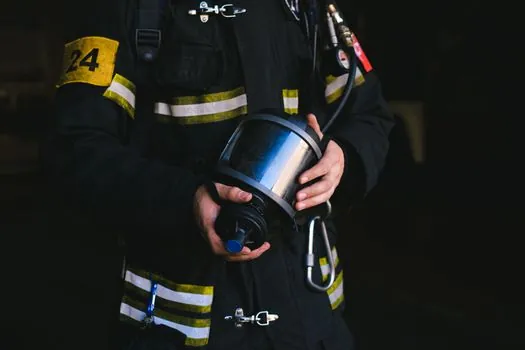
Sensor poisoning is the dominant field failure: H2S poisons lead-free electrochemical CO cells in minutes at high concentration, silicones poison catalytic bead LEL cells, and water ingress kills NDIR lamps long before the electronics fail; derate sensor life by 20-30% if the atmosphere is wet, dirty, or known to contain poisoning agents. [S4]
False alarms drive detector abuse: high-sensitivity PID units in petrochemical plants alarm on diesel exhaust and brake cleaner, and operators respond by covering the sensor, which is a worse outcome than the original false positive; the fix is right-sized range, not deletion of the channel.
Two gases, one sensor never works: a semiconductor cell tuned for methane will not respond to propane at safe alarm thresholds, and an electrochemical CO cell does not respond to natural gas at all, which is the exact mechanism behind the misleading 2-in-1 alarms [S1].
Shortlist Logic for a Buyer
For a single-family home with city gas: pick a 230 VAC powered, EN 50194-1 compliant methane detector with solenoid shutoff and a 5-7 year end-of-life indicator; for a kitchen with LPG, swap to a propane-rated unit mounted within 30 cm of the floor, never at ceiling height. [S1]
For an industrial confined-space program: spec a 4-gas portable with O2/LEL/CO/H2S, ATEX or IECEx Zone 1 marking, 12-18 hour battery, motion and man-down alarms, and a documented 30-day bump test program; for a process plant perimeter, anchor with NDIR fixed LEL heads on 4-20 mA plus HART, plus a wireless gas detector mesh for the blind spots.
Trackable signals over the next 6-12 months: tightening of ATEX notified-body audits on Chinese-made LEL sensors after 2024-2025 field failures, broader adoption of HART-IP and Ethernet-APL on fixed detectors, and the next revision of UL 2075 for residential combination alarms; the safe play today is to keep sensors and certifications current, not to chase multi-gas counts.