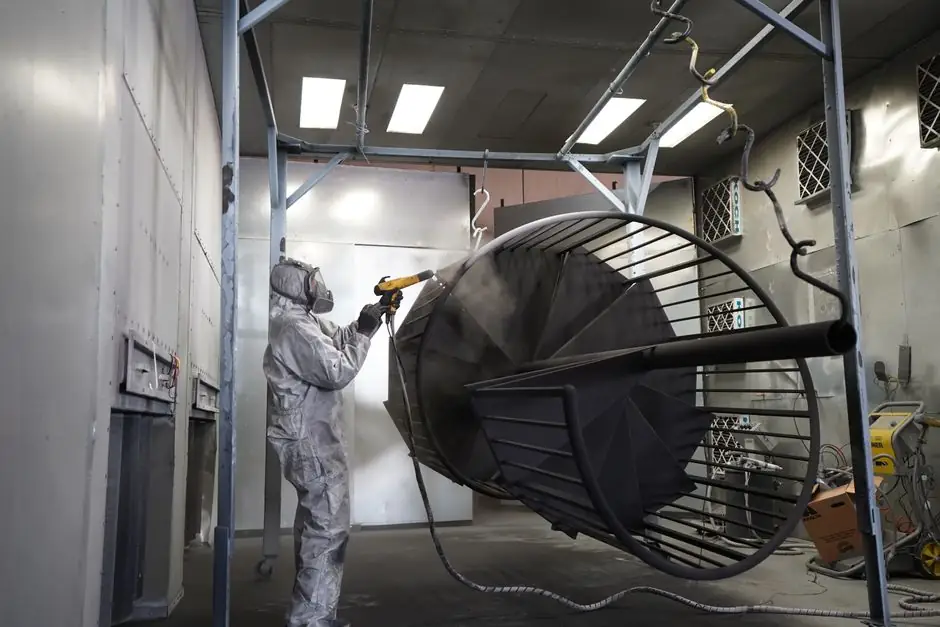
Start with duty, not brand: match the alloy family to the service environment first, then lock down particle size distribution, oxygen/nitrogen ceilings, sphericity and flow before comparing suppliers [S1][S4].
Across LPBF, EBM, DED, MIM and thermal spray, the same five property axes drive outcome, but the pass/fail thresholds change with the process window, so a powder qualified for one AM modality is not automatically qualified for another [S2][S5].
Alloy Family Map: Match Metal to Service Duty
Titanium alloy powder (Ti-6Al-4V grades dominate) is the default for aerospace structural brackets, automotive lightweight nodes, and biocompatible implants, owing to its strength-to-weight ratio, corrosion resistance, and bio-inert behavior [S1].
Iron-based powders, especially 316L and 17-4PH stainless, are the highest-volume AM alloys; for corrosion-critical service 316L is the lead choice because of its chemical resistance in chloride-bearing media [S2]. Cobalt-chromium (CoCrW, CoCrMo) is the workhorse for dental crowns, fixed bridges, and removable dentures where high-temperature mechanical properties and dimensional precision matter [S1]. Nickel-based superalloys (Inconel 625/718 class) anchor aerospace, shipbuilding and petrochemical service, with oxidation resistance and high-temperature strength as the value drivers [S1]. Copper alloys fill the electrical/thermal conductivity slots in induction coils, heat exchangers, and aerospace thermal management [S1].
Particle Size Distribution: Where the Process Window Lives
For LPBF, the working PSD sits at roughly 15-53 micrometers; for EBM, 45-105 micrometers; for DED, 50-150 micrometers; fine cuts below 15 micrometers tend to improve surface resolution but penalize flowability, while coarser cuts improve spreader consistency on large beds [S2].
Spherical morphology (Hall flow typically under 30 s/50 g for premium lots) is the dominant requirement for LPBF/EBM powder beds, because irregular satellites drive porosity and lack-of-fusion defects [S1][S2]. For MIM feedstock, the cut is finer and more irregular, often sub-22 micrometers with binders added, so the same powder that flows beautifully on a recoater arm will not necessarily feed a MIM screw the same way [S4]. When the same shop runs both powder-bed AM and MIM, segregate lots by declared morphology and PSD window rather than by alloy name alone.
Interstitial Control: Oxygen, Nitrogen, and Inclusion Ceilings
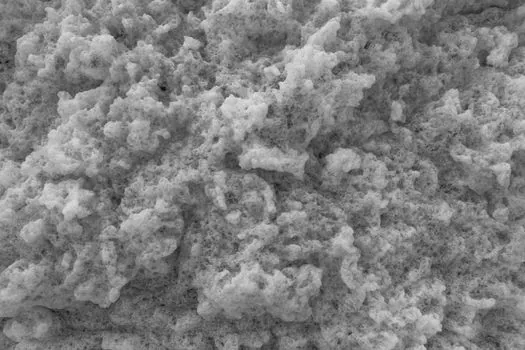
Atomized AM powders carry a high specific surface area and oxidize readily, so oxygen and nitrogen ceilings are first-class purchase specs rather than footnotes; aerospace buyers commonly demand 0.006-0.018% oxygen for high-temperature alloy powder, 0.007-0.013% for titanium alloy, and 0.010-0.025% for stainless steel [S1].
Ceramic inclusions are disqualifying for most aerospace and medical builds because their high melting point blocks sintering and leaves stress-concentrating voids; the powder must be lot-tested and accompanied by an inclusion-free certificate [S1]. Elemental analysis (ICP-OES, LECO O/N/H) is the standard verification step to confirm alloy and interstitial chemistry, while PSD and morphology are checked by laser diffraction and image analysis [S9]. Buyers who skip incoming O/N verification routinely see porosity spikes after a few months of silo storage, even on qualified alloys.
Flowability, Apparent Density, and Tap Density
Flowability governs recoater consistency in LPBF/EBM and is driven mainly by sphericity, PSD width, and surface roughness; a Hall flow number above roughly 25-30 s/50 g is the practical reject line for premium powder-bed feed [S2].
Apparent density and tap density together describe packing behavior; wider PSD distributions pack to higher tap density, which translates to denser green parts in MIM and fewer lack-of-fusion voids in AM [S4]. Surface area scales inversely with particle size, so finer cuts sinter faster but also oxidize faster in transit, which is why fine Ti and AlSi10Mg lots ship under argon and have tighter shelf-life clocks than coarser ferrous cuts [S4][S5].
Production Method vs. Application Fit
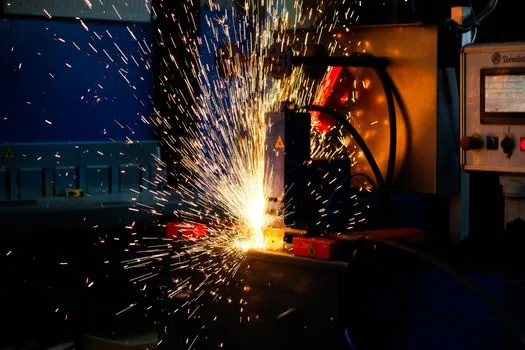
Gas atomization (VIGA, EIGA) is the dominant route for AM-grade spherical powder; water atomization yields irregular, lower-cost powder better suited to press-and-sinter PM parts and thermal spray [S4][S5].
Chemical reduction excels at high-purity, ultra-fine powder for reactive metals that resist atomization, while mechanical alloying produces fine, work-hardened powder for hard-facing and ODS alloys at the cost of milling-media contamination [S5]. Electrolytic deposition is reserved for high-purity copper and iron lots where morphology is secondary to chemistry [S4][S7]. For most AM buyers, the practical decision is gas-atomized spherical versus water-atomized irregular, and the wrong pick on morphology is the most common reason a qualified alloy still fails to print.
Supplier Audit: Certs, Lead Time, and Reuse Policy
Compare suppliers on five axes: declared chemistry with lot traceability, PSD and morphology certificates, O/N/H values, lead-time reliability, and powder-reuse policy with documented recycled PSD drift [S3][S8].
Reputable suppliers provide powder characterization sheets covering particle size distribution (laser diffraction), morphology (SEM images), flow rate (Hall flow), apparent density, and tap density for every lot [S8]. Buyers running serial production should also confirm silo/refill behavior, since reused powder progressively shifts PSD finer and accumulates oxygen after each cycle, with the practical limit often 5-10 cycles for Ti-6Al-4V before reject. A lower headline price from a non-certified mill rarely offsets the cost of one scrapped aerospace build, so weight the cert package and traceability over the unit quote [S3]. The same selection discipline that drives Chemical Reagent Sizing and Selection applies to powder sourcing, where grade, purity, and container integrity matter more than brand.
Who Should NOT Pick the Mainstream Option
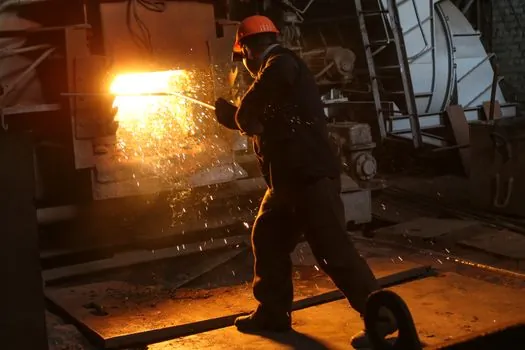
If the build is a structural aerospace Ti-6Al-4V bracket subject to fatigue, do not accept water-atomized irregular Ti powder, do not accept lots without a sub-0.013% O certificate, and do not accept lots reused more than a documented number of cycles [S1][S8].
For small dental lab CoCr restorations, premium LPBF-grade Ti-6Al-4V is overkill; the cost-to-spec ratio favors CoCr or 316L in the 15-45 micrometer window. Conversely, for thermal-spray wear coatings, the spherical, low-oxygen AM grade is the wrong pick: use gas-atomized or clad irregular grades designed for spray feed. Picking the mainstream AM powder for a non-AM duty is the single most expensive spec mistake in this category, and the one most often repeated by buyers who only know one process.
Shortlist Logic and Next Signals
Tighten the spec sheet to: alloy designation (e.g., 316L per ASTM F3180, Ti-6Al-4V per ASTM F2924, Inconel 718 per ASTM F3055), PSD window, O/N ceilings, morphology requirement, Hall flow, and reuse policy; reject lots that do not carry all six on the certificate [S1][S2].
Track two signals through 2026 Q4: tightening of O ceilings in aerospace Ti powder contracts as reuse-cycle data accumulates, and consolidation of certified AM-powder suppliers under tier-1 gas-atomization capacity. For buyers weighing metal powder against powder new material grades, the deciding factor is whether the build process is AM, MIM, PM press-and-sinter, or thermal spray; the alloy family, the morphology, and the interstitial ceiling change with the answer. Spec-driven shops that lock these six lines before sending an RFQ consistently report fewer build stops and tighter dimensional scatter than shops that price-shop first.
Component reference pages worth checking: metal powder, and metal material.