
Procurement teams working with laboratory and process chemicals in 2026 typically source through three distinct channels: catalog houses listing tens of thousands of off-the-shelf SKUs, aggregators indexing millions of structures from hundreds of upstream suppliers, and custom manufacturers producing NIST-traceable ACS-grade buffers, standards, and titrants under documented quality programs [S1][S2][S3][S4][S5].
Channel selection is driven by grade requirement, lot-traceability, CAS-level purity data, and whether the target compound exists in catalog or must be synthesized, and the wrong channel choice routinely costs laboratories weeks of lead time and several percent of project budget on rescreens and requalification [S4][S5].
Catalog houses: what the four majors actually carry
The four catalog houses commonly listed on library research guides are Alfa Aesar, Fisher Scientific, Sigma-Aldrich, and TCI America, each covering a different slice of the reagent universe [S4]. Alfa Aesar publishes a catalog with over 27,000 specialty and bulk entries spanning high-purity inorganics, precious-metal compounds, rare earths, organics, organometallics, and high-purity metals [S4]. Sigma-Aldrich exposes search by catalog number, name, formula, and CAS Registry Number, with attached FT-IR, NMR, and MSDS records that matter during incoming-material qualification [S4]. TCI America focuses on laboratory chemicals, fine and specialty chemicals, and custom-synthesized compounds, with spectral links to SDBS for verification [S4].
For a procurement engineer, the practical distinction between these four is not brand preference but coverage: which one holds the specific CAS number, at the required ACS/Reagent/USP/EP grade, with the lead time that matches the project schedule [S4].
Aggregators and search platforms: when to use eMolecules
Aggregators consolidate upstream catalogs into a single search index and a single ordering workflow, which becomes valuable when the target compound is not stocked by the four majors or sits in a long-tail supplier's catalog. eMolecules' public listing as of 2026 reports searches across over 50 million unique structures and 76 million part numbers, including 4.5 million building blocks and 20.3 million screening compounds, sourced from over 210 suppliers globally [S5]. eMolecules also publishes operational metrics: a 100% fulfillment rate for non-custom orders and an under-2-day average ship time for in-stock compounds, alongside use by 15 of the top 15 pharma companies [S5].
For laboratory procurement, the platform's value is consolidation rather than price: a single PO covers upstream sources like Acros, ASINEX, ChemBridge, ChemDiv, Comgenex, Enamine, Fluka, Key Organics, Life Chemicals, Maybridge, Otava, Sigma-Aldrich, and Specs, and the platform adds reformatting, storage, and inventory management for drug-discovery workflows [S4][S5]. Similar coverage is available from the ChemExper Chemical Directory, which lists roughly 200,000 chemicals from suppliers worldwide, and from Chemical Abstracts' SciFinder-n via the CHEMCATS supplier database [S4].
Custom and in-house manufacturing: NIST-traceable ACS-grade work
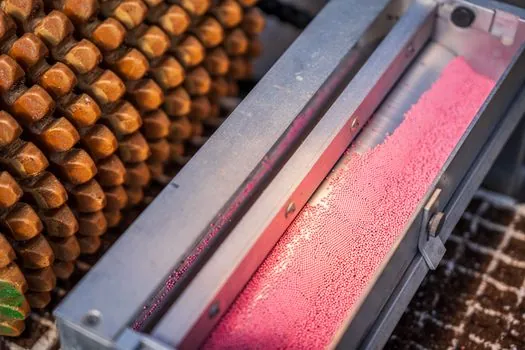
When the requirement is a defined specification rather than an off-the-shelf SKU, custom manufacturers take over. AquaPhoenix Scientific publishes a manufacturing scope covering buffers, chemical indicators, reagents, standards, and titrants, with NIST-traceable certification and ACS Grade as the default consistency target [S3]. Spectrum Chemical positions itself on organic reagents for synthetic chemistry, life science, materials science, and analytical science, with reliability as the headline value [S2].
The procurement decision here is between buying a commercial standard with a published certificate and commissioning a custom batch against an internal SOP; the cost difference is real, but the batch-traceability documentation, including raw-material traceability, is what unlocks regulated-method compliance in pharmaceutical, environmental, and clinical labs [S3].
Comparison: catalog house vs aggregator vs custom manufacturer
Across four procurement decision criteria, the three channels line up as follows. Catalog houses win on documentation depth (FT-IR, NMR, MSDS published per SKU) and on the breadth of ACS, Reagent, USP, and EP grade coverage for routine inorganic and organic reagents [S4]. Aggregators win on structural coverage (50M+ structures indexed), short-tail molecule access, and consolidated purchasing across 200+ upstream suppliers, with the trade-off that grade certification and lot data come from the upstream supplier rather than the aggregator [S5]. Custom manufacturers win on specification control, NIST-traceable certificate generation, and the ability to produce non-catalog formulations, with the trade-off of higher per-unit cost and longer lead time than catalog SKUs [S3].
A practical rule: if the molecule and grade exist in a major's catalog, buy from the major; if the molecule exists but is fragmented across many suppliers, run the search through an aggregator; if the formulation does not exist anywhere, engage a custom manufacturer with a defined specification sheet and a requested certificate of analysis template [S2][S3][S4][S5].
Where GlobalSpec and library guides fit

GlobalSpec publishes an industrial supplier index of 295 reagents and laboratory chemicals suppliers, drawn from a broader catalog of 106,487 manufacturers, 20,794 distributors, and 94,630 service providers, and is the standard starting point for buyers who need to filter by region, certification, or product class [S1]. The Purdue University research guide compiles the same major-brand list and adds complementary channels: SciFinder-n's CHEMCATS database, ChemExper's 200,000-chemical directory, Chemical Engineering Buyers' Guide, Chemical Week Buyers' Guide, and ThomasNet for U.S. manufacturers, with the caveat that chemical pricing is rarely published and most bulk orders require a direct quote [S4].
For B2B engineering buyers, the practical sequence is: confirm grade and CAS requirement, search the major catalogs, fall back to aggregators for long-tail molecules, and only then engage a custom manufacturer; the same sequence is reflected in adjacent industrial purchasing workflows such as the forklift pre-use inspection checklist for inbound material handling, and in spec-driven consumables replacement cycles like the power mixer spare parts map, where a defined acceptance criterion beats a per-vendor shortcut.
Grade, traceability, and the standards that govern a COA
ACS Grade is the most common reagent specification referenced in U.S. laboratory purchasing, and NIST traceability is the default chain of custody for primary standards and titrants; a Certificate of Analysis typically references both, alongside the method used for assay, the detection limit, and the uncertainty statement [S3]. Where the application is pharmaceutical, USP or EP grade is specified instead of ACS, and the COA must reference the relevant monograph, while environmental methods typically reference EPA-equivalent standards documented per method [S3][S4].
The procurement risk in 2026 is not finding a supplier, it is reconciling COAs across suppliers that report assay by different methods; the safe practice is to write the incoming-material specification first, then ask whether the catalog COA meets it, and only then compare price [S3][S4].
Selection logic and next signals to track

Two trackable signals for reagent procurement in late 2026: aggregator catalog depth (eMolecules' published 50M+ structure index, 76M+ part numbers, 210+ suppliers) and the public expansion of NIST-traceable custom manufacturing capacity at firms such as AquaPhoenix and Spectrum, both of which determine whether long-tail and regulated-grade demand can be absorbed without resourcing changes [S3][S5].
The underlying component specifications are covered under chemical reagent, chemical anchor, and chemical material.