
Selecting a moisture analyzer starts with the sample, not the brand: thermogravimetric loss-on-drying (LOD), Karl Fischer titration, near-infrared (NIR), and relative humidity sensors each cover a different concentration range and tolerate different matrices [S3].
Food QC, pharmaceutical excipients, plastics resin, and grain handling all fall under the same instrument family, yet the correct readouts, accuracies, and cycle times diverge by an order of magnitude. Process engineers buying in 2026 should spec the method first, then match resolution, repeatability, heating element, and software to the duty cycle. The decision also dictates whether you treat the device as a moisture analyzer on the bench, an at-line QC gate, or part of a continuous process loop.
Measurement Method: LOD, Karl Fischer, NIR, Capacitive RH
Loss-on-drying (LOD) balances heat a 0.5-10 g sample and report mass loss as moisture, with readouts typically in 0.01% steps and full cycles of 3-15 minutes depending on halogen infrared power and temperature program [S4]. Karl Fischer titration is the wet-chemistry reference for trace water in plastics, oils, and solvents, with coulometric cells resolving down to 1 µg water and volumetric cells covering 100 µg-100 mg ranges; it requires reagents, a titration vessel, and skilled operators [S2]. Near-infrared (NIR) analyzers measure water by absorbance at specific wavelengths (commonly around 1,940 nm) and deliver non-destructive results in seconds, but require a calibration built on a wet-chemistry reference and drift checks at defined intervals [S3]. Capacitive relative humidity sensors in handheld grain and hay meters estimate moisture from dielectric constant, with practical accuracy in the ±0.5-1.0% range across 5-40% moisture content and the caveat that bulk density and temperature must be compensated [S6].
A vendor's choice of heating element changes the LOD analyzer's behaviour: halogen quartz heaters reach 200-250 °C in 30-60 seconds and suit food and chemical samples; classic infrared ceramic panels ramp more slowly but tolerate dustier atmospheres; dark radiators (metal heaters) give gentler profiles for sugar, cosmetics, and pastes that scorch easily [S4]. For resin drying QA, the consensus sequence in 2026 specs is to use LOD for trend setting, Karl Fischer for absolute verification, and online RH sensors in the dryer bed for closed-loop control [S2].
Selection Criteria: Resolution, Repeatability, Capacity, Throughput
The first hard spec is weighing resolution matched to the expected moisture range. A 0.001 g (1 mg) readability balance resolves 0.01% moisture on a 10 g sample, while a 0.0001 g (0.1 mg) readabilities unit is the minimum for low-moisture engineering plastics where specification limits sit at 0.02-0.05% [S1]. Repeatability, expressed as standard deviation on a 10 g, 5% moisture sample, is typically 0.05-0.15% for halogen LOD units and 0.01-0.05% for high-end thermogravimetric analyzers; the published figure on a vendor's datasheet almost always uses a single sample matrix, so verify it against your own product.
Capacity and pan size determine throughput. Standard 90 mm aluminum pans handle 5-15 g of powder or granular material; a 110-130 mm pan on a 200 g-capacity balance is necessary for wet slurries, foam chunks, or large pellet samples. Temperature range matters: 50-200 °C covers most food, chemical, and pharma LOD work, while 200-600 °C is required for gypsum, cement, and inorganic fillers where chemically bound water releases at higher temperatures [S4]. Throughput depends on method: an LOD cycle averages 5-12 minutes, Karl Fischer volumetric titration 2-6 minutes per sample plus reagent setup, and a properly calibrated NIR sensor returns a result in 1-5 seconds once a sample is presented [S2].
Who Needs Which Variant: Lab, At-Line, In-Process
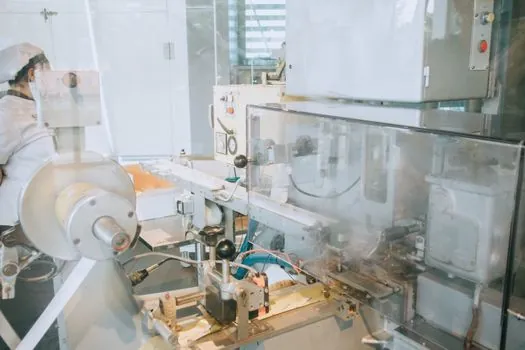
Lab QC analysts in food, pharma, and contract testing laboratories are the natural fit for a halogen LOD moisture analyzer with method storage, GLP/GMP printouts, and a 0.001 g readability balance: the typical cycle is 5-10 samples per shift with full traceability [S1]. Plastics processors running PET, nylon, polycarbonate, or PBT benefit from a dedicated resin moisture analyzer, where the standard is Karl Fischer titration verified against a desiccant dryer spec sheet; absolute moisture in PET preforms must sit below 0.005% (50 ppm) to avoid hydrolysis in the melt, and only volumetric or coulometric Karl Fischer gives that confidence [S2].
Continuous in-process monitoring is the niche for NIR and capacitive RH probes, used at hopper outlets, conveyor discharges, or fluidized bed dryers. These are NOT drop-in replacements for a bench analyzer: a NIR probe reads a small sample volume near the sensor window, and a capacitive RH sensor measures headspace humidity, not bulk moisture. Treat the bench unit as the calibration anchor and the in-line sensor as the trend instrument, with periodic wet-chemistry cross-checks at interval. Buyers who only run a handful of samples per week do NOT need an in-line NIR system: a single halogen LOD balance with 5-10 stored methods is the right capital spend [S1].
Comparison of Main Methods Against Decision Criteria
The four workhorse methods line up against four buyer criteria as follows, with the trade-off explicit so the choice is auditable:
Halogen LOD balance: accuracy 0.05-0.15% repeatability, cycle 5-12 min, capital low (USD 3,000-12,000), sample prep moderate; best for food, pharma QC, ambient-stable powders. Karl Fischer titration: accuracy 1-10 ppm absolute, cycle 2-6 min plus setup, capital moderate (USD 5,000-25,000 including titrator), sample prep high (reagents, balance); best for plastics resin, oils, low-ppm water, solvents. NIR analyzer: accuracy 0.1-0.5% with good calibration, cycle 1-5 s, capital high (USD 20,000-80,000+ for at-line), sample prep low; best for high-volume repetitive samples (grain, snack food, dairy powder) once calibration is locked. Capacitive RH / pinless meter: accuracy ±0.5-1.0% across mid-moisture ranges, cycle <1 s, capital very low (USD 100-1,500), sample prep minimal; best for grain, hay, wood, building materials where relative comparison is acceptable [S2][S3][S6].
The 2026 specification logic is straightforward: pick the method whose accuracy floor sits at or below your process tolerance, then pick the instrument whose throughput matches your sample count per shift. If your tolerance is 50 ppm absolute water in resin, the only method that resolves that without a heroic effort is Karl Fischer; a halogen LOD analyzer at 0.01% resolution cannot tell you whether the actual value is 30 or 80 ppm, so it is the wrong tool regardless of price [S2].
Calibration, Data Handling, and Operating Costs
Every moisture analyzer needs two calibrations: mass, done with traceable OIML or ASTM Class 1 weights at the working range, and temperature, performed with a certified temperature probe inside the heating chamber at the method's setpoint [S5]. SmartCal, a temperature- and humidity-stable test substance, is a faster intermediate check; many QC labs run SmartCal daily and a full weight-plus-temperature calibration quarterly [S1]. NIR analyzers additionally need a slope-and-bias check against the wet-chemistry reference at every batch change, because the optical baseline drifts with window contamination and lamp aging.
Data handling has moved from paper printouts to networked software: modern instruments expose RS-232, USB, Ethernet, and increasingly OPC UA or MQTT for direct push to a LIMS or MES. For 21 CFR Part 11 or EU GMP Annex 11 environments, look for electronic signatures, full audit trail, and role-based access; for ISO 17025 labs, the calibration certificate must trace to national standards with stated uncertainty. Operating cost is dominated by consumables: halogen lamps last 5,000-10,000 hours, desiccant in Karl Fischer cells must be replaced per the titration count, and NIR windows need weekly cleaning cycles in dusty plants. Plan 5-8% of capital per year for consumables and calibration, which most buyers underestimate by half.
Common Failure Modes and Limits to Know
LOD analyzers fail by over-drying: the mass-loss curve crosses the actual moisture endpoint and starts stripping volatiles other than water, including oils, plasticizers, or chemically bound water in hydrates. A 1-2 °C overshoot at the setpoint for a 10-minute cycle can shift the result by 0.2-0.4% absolute on a 5% moisture sample; that is the entire QC tolerance for many food specifications. A scorch-protected end-stop and a properly chosen temperature are the only defences. [S3]
Karl Fischer titration fails by side reactions: ketones and aldehydes react with the methanol-based KF reagent and produce water, biasing high; olefins and silicones can interfere with the electrode response. The fix is a method-specific reagent (KF oven for solids, special reagents for ketones) and a blank titration every 10-20 samples. NIR drifts because of window contamination and particle-size variation; the symptoms are a slow walk in the bias that a daily standard-sample check will catch. Capacitive RH meters drift with bulk density, temperature, and salt content of the sample; an agronomic meter calibrated on wheat will read 0.5-1.5% high on barley or canola without a crop-specific correction [S6].
Shortlist Logic and Sourcing Signals
A defensible 2026 shortlist pairs method, vendor class, and budget. For a food or pharma QC lab needing 5-15 samples per shift at 0.01% resolution, a halogen LOD balance in the USD 4,000-12,000 band with 20+ method memory and LIMS export is the working choice; vendors worth comparing sit in the lab-weighing majors (Mettler Toledo, Sartorius, Ohaus, Precisa, Adam Equipment, A&D). For plastics resin at 0.001% (10 ppm) accuracy on a Karl Fischer, plan USD 8,000-25,000 for a volumetric titrator with oven, and budget USD 1,500-3,000 per year for reagents and standards [S2]. For high-volume in-line grain, snack, or dairy powder, the at-line or in-line NIR system at USD 25,000-80,000 is justified only above ~50,000 samples per year; below that, a bench NIR or an LOD balance is the better economic answer.
Trackable signals over the next quarter: manufacturer datasheet revisions that publish repeatability on a standardized sample (instead of the marketing-optimized matrix), AOAC and USP method updates that change the reference drying temperature for specific product classes, and the rollout of OPC UA / MQTT native interfaces that close the gap between bench analyzer and process LIMS. For a deeper dive on the bench instrument class, the moisture analyzer encyclopedia page collects the working definitions, and the gas analyzer page covers the related continuous-emissions instrumentation used to dry and combustion-control the upstream process.
The underlying component specifications are covered under spectrum analyzer.
See also our earlier report, Gas Chromatograph Sizing and Selection: Column, Detector, and Carrier Gas Specs.