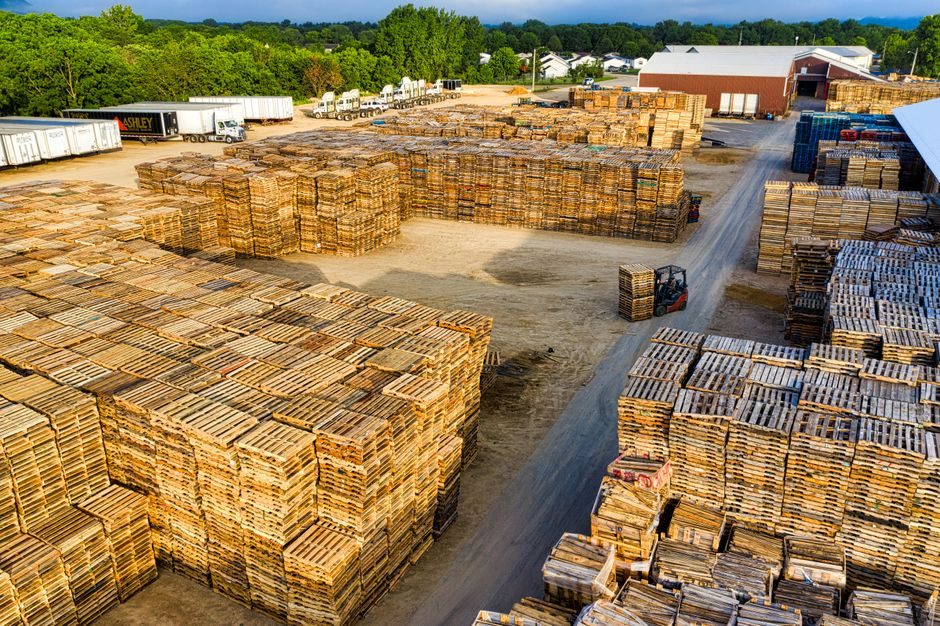
A pallet stacker is a vertical-only material-handling truck with fixed forks that lift palletized loads from floor level to rack height, typically rated between 1,000 lb and 3,500 lb and built on chassis widths under 34 in to fit narrow-aisle racking.
Specifying one is a three-axis decision: the rated load and load center, the maximum fork height required by the deepest rack beam, and the power architecture (manual pump, semi-electric lift, full electric walkie, or stand-on/ride-on electric). Get any of those three wrong and the unit will either refuse to lift the heaviest pallet at the highest bay, drift past the racking column, or fail the warehouse duty cycle in under a year [S1].
Walkie Stacker vs Rider Stacker: Pick by Aisle Width and Daily Throughput
Walk-behind (walkie) electric stackers measure roughly 25-34 in chassis width and operate inside aisles 90-110 in wide; they cap at top travel speeds around 3-3.5 mph and suit facilities moving under 40 pallets per shift [S1].
Rider-style stand-on or sit-down electric stackers open up the same lift envelope but raise travel speed to 6-7.5 mph and shorten order-picking cycles when a single operator is feeding three or four aisles. For new AS/RS-adjacent picking loops in 2026 builds, stand-on riders are the dominant choice because they let one operator replace two walkie units, a procurement logic consistent with the AS/RS supplier map mid-2026 trend toward denser picking cells.
Capacity Bands and Load-Center Geometry
Rated capacity is quoted at a 24 in load center (the horizontal distance from the fork face to the load's center of gravity), and it drops as the load moves farther forward — a 2,200 lb / 24 in rating typically derates to roughly 1,750 lb at 30 in center, which is what a half-pallet overhang or a long carton actually presents. [S1]
Three capacity tiers dominate the 2026 catalog: light-duty 1,000-1,500 lb for retail backrooms and food-service staging, mid-duty 2,000-2,500 lb for general dry-goods warehouses, and heavy-duty 3,000-3,500 lb for cold-storage dunnage, beverage kegs, and palletized bagged grain. Going one tier up is cheap insurance; going one tier down to save 8-12% on price is the classic over-spec mistake and almost always returns as a bent mast.
Lift Height, Mast Stages and Residual Capacity
Standard simplex masts lift forks to 118-126 in (about 10 ft), duplex masts reach 130-160 in, and triplex masts with full free-lift reach 177-236 in (15-20 ft) for high-bay rack servicing. [S2]
Residual capacity at full lift is the figure that gets ignored and then causes a stuck truck: a triplex 3,000 lb stacker at 189 in fork height may only be able to lift 1,500-1,800 lb, because the extended mast column bends and the chassis' stability triangle shrinks. Always read the manufacturer's capacity-vs-height chart, never the headline number, when stacking at the top of a 4-deep push-back rack or a stacker-crane feed lane.
Power Source: Manual, Semi-Electric or Full Electric
Manual pump stackers use a hydraulic foot pump to lift and a hand lever to lower; they cap at about 1,500 lb and survive in low-frequency applications where the operator moves under 10 pallets per shift and there is no need for a charging infrastructure. [S3]
Semi-electric stackers keep manual travel but add a 12V or 24V DC electric lift motor, a sensible middle ground for facilities that want powered lifting without dragging in a battery-charger room. Full electric walkie stackers run 24V (light-duty) or 48V (mid/heavy) lithium-ion or lead-acid packs, with AC drive motors delivering regenerative braking down long ramps. The OEM catalog at [S1] explicitly markets both semi-electric and full-electric families, reflecting how the Chinese mid-market has standardized on 24V/48V architectures to match European and North American service-parts supply [S1].
Power Pack, Battery Shift-Life and Charging
A 24V/100-150 Ah lead-acid pack on a 1,500 lb walkie gives about 3-4 hours of intermittent lift/travel before voltage sag trips the controller, which translates to roughly 60-80 lift cycles per charge. [S1]
Upgrading to 24V/200 Ah LiFePO4 roughly doubles shift life and cuts charge time from 8-10 h to 2-3 h, at a 30-40% purchase-price premium that usually pays back inside 12 months in two-shift operations. Cold-storage rated packs (down to -20°C ambient) and opportunity-charge-capable BMS units are the two Li-ion options worth quoting on 2026 RFQs.
Fork, Wheel and Chassis Specs That Decide Day-Two Performance
Standard fork dimensions are 27 in wide x 48 in long (European EUR-pallet 800x1200) or 27 in x 42 in (US GMA pallet 40x48); adjustable fork-spreader bases cost 15-25% more and are worth it only for mixed-pallet operations. [S2]
Polyurethane drive wheels are quieter and protect polished concrete; vulcanized rubber drives grip better on cold-storage or contaminated floors. Tandem load wheels under each fork load point lower rolling resistance on a pallet-rack approach and extend wheel-bearing life, a small detail that separates a 3-year truck from a 7-year truck.
Safety, Standards and Sourcing Levers for 2026
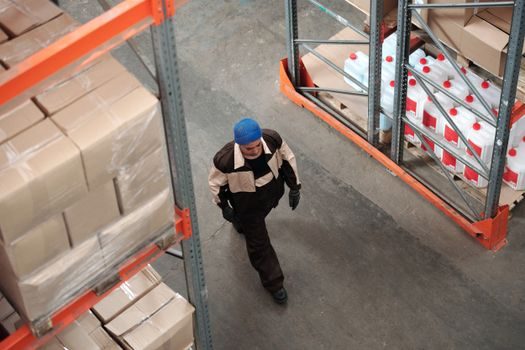
Pedestrian-truck collisions account for the majority of stacker-related OSHA-recordable injuries, so specify a tiller-arm-mounted belly-button reversing switch, an auto-speed-reduction cornering function, and a fork-tip laser line as standard — not as options. [S3]
For European-bound units, require CE marking under the Machinery Directive 2006/42/EC and EN ISO 3691-1 (safety of industrial trucks) compliance on the nameplate. North American units should carry ANSI/ITSDF B56.1 conformance. Sourcing leverage in mid-2026: three Chinese OEM clusters (Hangzhou, Shanghai, Anhui) produce roughly 60% of global mid-duty electric stacker output, and a single mixed-container purchase at 5-10 units typically unlocks 8-12% off the catalog list — the same commercial logic that drives conveyor sorting line pricing in adjacent material-handling categories.
Matching Stacker Type to Application
For general dry-goods warehouses feeding pallet-rack up to 15 ft, a 2,000-2,500 lb full-electric walkie is the workhorse. [S1]
Cold-storage dunnage, beverage, and bagged-cement operations should jump straight to a 3,000 lb class triplex-mast rider, because manual handling of dense product in a -20°C environment punishes the operator and the truck. Any operation routinely feeding or withdrawing from AS/RS transfer cars or a stacker-crane aisle should specify the same mast-height and fork-face datum the crane uses, plus a CAN-bus or RS-232 interface for fleet-management telematics.
Final selection discipline: lock the load and load-center first, the mast lift and residual capacity second, and the power architecture third — then check that the chassis footprint, wheel spec and battery shift-life match the aisle width and duty cycle. A 2026 RFQ that sends these three numbers (rated capacity at declared load center, max fork height with residual at that height, and duty cycles per shift) to OEM catalogs such as the [S1] product family will return quotable offers in days, not weeks.
For component-level specifications, see pallet stacker.