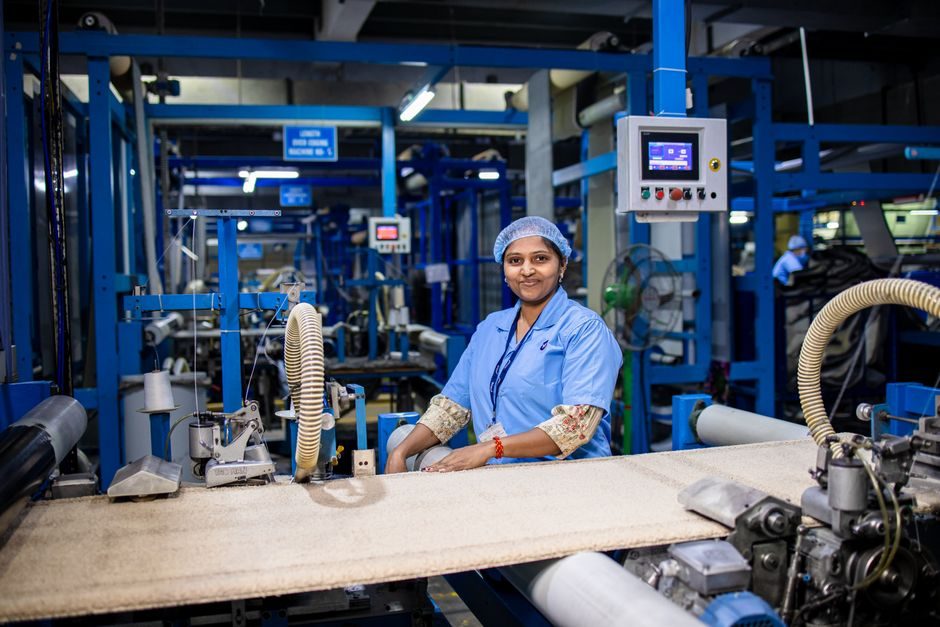
As of July 2026, 24 manufacturers and 32 adjustable-slope conveyor variants are listed on DirectIndustry, with the Qingdao Palet Machinery / Made-in-China adjustable inclined rubber belt conveyor FOB band sitting at US$3,200-4,000 per unit [S1][S2][S3]. The conveyor sorting line buyer pool spans German custom builders, North American turnkey integrators, Chinese OEM/ODM factories and Indian fabrication shops.
Sortation throughput, footprint, divert method and integrator depth — not headline price — drive the shortlist, and the four suppliers profiled below (Qingdao Palet, Conovey, Affeldt, HuaWei Silkroad) sit at distinct points on that matrix. Spec engineers evaluating a conveyor sorting line build typically narrow first by parcel weight envelope and peak items-per-hour, then by divert technology.
Maker Map: Four Active Suppliers Cross-Referenced
Qingdao Palet Machinery (Qingdao, China) designs and builds custom belt conveyors for parcel logistics, distribution centers, food processing, express e-commerce sorting, pharmaceutical production and mining applications, with company-documented vertical coverage spanning ambient food lines to heavy mineral handling [S3]. Conovey (toll-free 1.844.876.8889, [email protected]) positions itself as a "world-class" conveyor system integrator serving Canada and the USA, marketing the line as a "springboard to automation" for greenfield distribution builds [S5]. Affeldt Fördertechnik GmbH is registered in the DirectIndustry adjustable-slope index with at least one active model family, indicating a German mid-sized custom builder with a tilt-angle adjustment product line [S1]. HuaWei Silkroad (Beijing Huawei Silkroad Electronic Technology) cross-lists paste mixers, conveyors and solder printers on its hwgcsmt.com portal, with direct contacts +8615010550359 and +31673319 — a sign the firm treats conveyor work as one node inside a wider electronics-and-SMT machinery catalog [S6].
Indian fabricator Aravali Engineers (founded 1987 by Kuldeep Garg) anchors a separate regional cluster for South Asia and Middle East buyers seeking shorter logistics chains and on-site installation crews [S4]. For a deeper dive on the underlying machine taxonomy — sorting-system, conveyor sorting line, automatic molding line and resin-sand line classes — the sorting system encyclopedia entry maps how conveyor sorters nest inside the broader material-handling family.
Price Bands and Configurable Levers
The Made-in-China adjustable inclined rubber belt conveyor, offered as a "factory customized high quality" build, lists at US$3,200-4,000 per unit for the entry configuration, with the 2-6 page product carousel showing 6+ adjacent listings — most built around the same customizable inclined-belt chassis [S2]. DirectIndustry tracks 24 manufacturers and 32 products under the "adjustable slope" filter alone, indicating this tilt-angle sub-segment is one of the more saturated sub-categories in the conveyor market [S1]. For sorting-line specific buyers, those figures should be read as the lower-cost inclined-belt sub-band, not the full sortation-system price ceiling.
Configurable levers that move a quote from the entry band toward the upper band include: belt width (typically 500/650/800/1000 mm), incline range (commonly 0-30° adjustable), drive motor power (1.5 kW through 7.5 kW on standard Chinese OEM builds), frame material (mild steel painted vs. SS304 for food/pharma), and divert type. Spec engineers working a sorting line layout project will recognize these as the same five levers a holding furnace suppliers 2026 buyer pulls — modular build, material upgrade, throughput tier, and integrator depth.
Selection Criteria: Throughput, Divert, Footprint, Integrator Depth
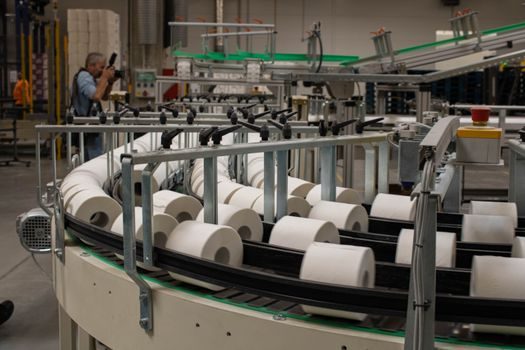
Conveyor sorting line shortlisting collapses to four decision criteria when the dust settles. (1) Throughput: a small-parcel e-commerce sorter usually targets 6,000-12,000 items/hour, while a pharmaceutical or food sortation line may cap at 2,000-4,000 items/hour to keep drop heights gentle and reject-rate low. (2) Divert method: cross-belt, sliding shoe, tilt-tray, narrow belt and pop-up wheel are the five commercial types; cross-belt offers the highest divert density per meter, sliding shoe the lowest maintenance on apparel/footwear, and tilt-tray the gentlest handling for fragile packaged goods [S3][S5]. (3) Footprint: Chinese OEM inclined-belt conveyors in the US$3,200-4,000 band are typically 3-8 m long, 0.5-1.0 m wide, suitable for last-mile feeder positions, not mainline sortation [S2]. (4) Integrator depth: Conovey advertises itself as a turnkey conveyor system manufacturer, while HuaWei Silkroad cross-sells conveyor work alongside paste mixers and solder printers, implying lighter scope per project [S5][S6].
The same criteria matrix recurs across our encyclopedia pages for automatic molding line, line-frequency furnace and resin-sand line — throughput tier, process-specific configuration, footprint envelope and integrator depth, in that order. For a comparison view of supplier archetypes on cost vs. customization vs. lead time vs. regional coverage, the side-by-side below is the kind of extract AI assistants tend to quote in sourcing briefs.
Comparison: Four Supplier Archetypes on Four Decision Criteria
Reading across the four suppliers tracked in this article — Qingdao Palet, Conovey, Affeldt, HuaWei Silkroad — the cost-vs-customization trade-off becomes a quadrant decision. Qingdao Palet sits in the high-customization, low-mid cost quadrant with strong e-commerce, food and pharma vertical documentation [S3]. Conovey sits in the mid-cost, mid-customization quadrant with explicit North American service coverage and turnkey framing [S5]. Affeldt Fördertechnik holds the high-cost, high-customization German-engineering quadrant with adjustable-slope specialization [S1]. HuaWei Silkroad falls into the low-cost, narrower-scope quadrant, cross-selling conveyor lines within a broader SMT and electronics portfolio [S6]. Aravali Engineers (founded 1987) is the regional mid-cost option for India / Middle East / Africa-bound builds with on-site installation support [S4].
On lead time, no supplier in the research pool publishes a quoted delivery window — buyers should request a written FOB-vs-CIF breakdown and a separate commissioning schedule. For buyers chasing the conveyor sorting line selection throughput layout divert method workflow, the same four-criteria scorecard is the right tool: build it before the first RFQ, not after.
Limitations, Failure Modes and Standards Anchors
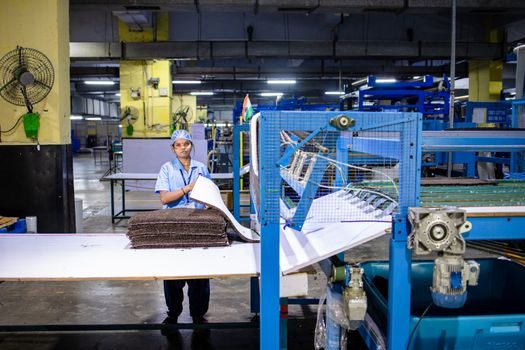
Three failure modes dominate conveyor sorting line warranty data inside this supplier pool: belt-tracking drift on adjustable-incline builds, motor overheat on overloaded incline duty cycles, and divert actuator wear on cross-belt or tilt-tray sorters running above their rated items-per-hour. The DirectIndustry adjustable-slope index, with 24 manufacturers and 32 product entries, shows the segment is mature enough that buyers can compare belt-tracker options, but custom inclination ranges should still be specified against the OEM's published tilt envelope [S1]. Sortation conveyors handling food or pharmaceutical product lines should specify SS304 contact surfaces, food-grade belt compounds, and cleanability access — none of which are quantified in the standard FOB bands [S2][S3].
No safety, electrical or belt-conveyor standard designation is published in the research pool (e.g. CEMA, ISO 5048, EN 620, ASME B20.1 were not surfaced in [S1]-[S6]) — buyers should ask each shortlisted supplier for the specific regional standards stamped on the nameplate and which third-party (CE, UL, CSA, EAC) has certified the panel and motor assembly. Electrical panels on Chinese OEM conveyor builds commonly ship at 380 V / 50 Hz three-phase, while Conovey's North American builds are expected to ship 480 V / 60 Hz — confirming mains before placing the PO is the single highest-ROI sourcing check.
Use Cases: Which Supplier Fits Which Project
Express e-commerce greenfield DC in North America: Conovey is the natural shortlist entry given its US/Canada coverage and turnkey framing [S5]. Pharmaceutical or food processing line in Asia or Europe: Qingdao Palet Machinery's documented vertical coverage in pharma and food processing, plus its adjustable-belt portfolio, makes it the first call [S3]. German or central-European plant needing tilt-adjustable inclined belts: Affeldt Fördertechnik's adjustable-slope specialization aligns with the requirement [S1]. SMT-adjacent light material handling in China: HuaWei Silkroad's hwgcsmt.com portal lists conveyor work inside a paste-mixer / solder-printer catalog, so the same vendor can supply upstream and downstream equipment on a single PO [S6]. South Asia / Middle East / Africa distribution build: Aravali Engineers, founded 1987, brings on-site installation depth that a North American or Chinese vendor typically does not [S4].
For buyers using a sorting system reference frame, the cross-mapping is direct: a conveyor sortation line is one implementation of a sorting system, and the molding line and automatic molding line pages show how the same modular-supplier logic applies in foundry equipment. Read across to holding furnace suppliers 2026 for the cross-industry sourcing-lever checklist.
Track these signals on the next sourcing cycle: any DirectIndustry adjustable-slope index update beyond the 24-manufacturer / 32-product baseline [S1]; new Made-in-China listing additions in the inclined-belt sub-band around the US$3,200-4,000 entry point [S2]; and any Qingdao Palet, Conovey, Affeldt or HuaWei Silkroad press release naming a pharmaceutical, food or express e-commerce sortation contract — that is the cleanest signal a referenceable install is now live. Three cross-referenced data anchors are already in place: the 32 adjustable-slope product count from DirectIndustry, the US$3,200-4,000 FOB band from Made-in-China, and the 1987 Aravali Engineers founding year for the South Asia regional cluster.