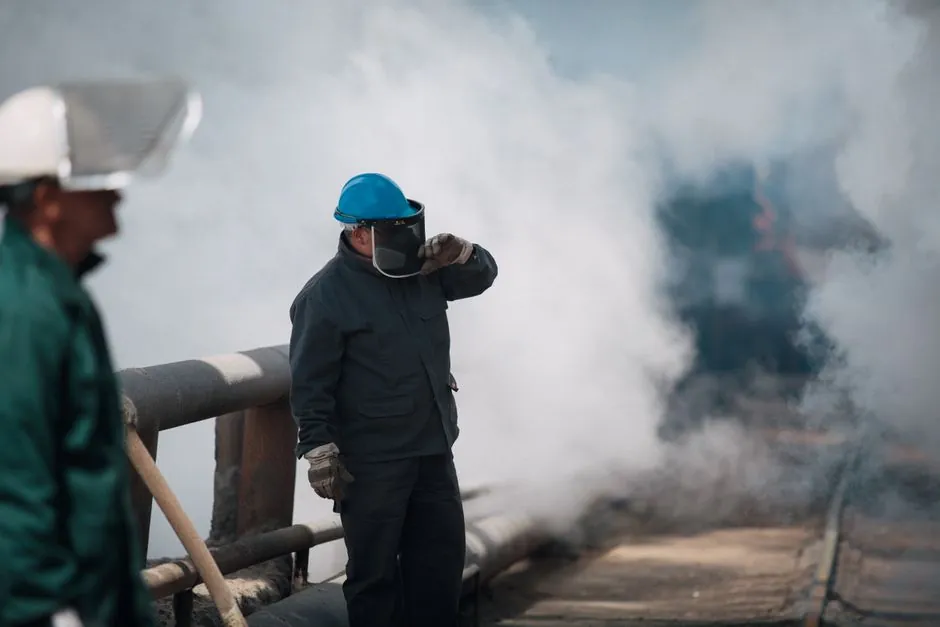
A portable gas detector is a body-worn or handheld instrument that samples ambient air, displays gas concentration in real time, and alarms at user-set thresholds, with the four-gas LEL/O2/CO/H2S combination being the most common industrial configuration [S4][S5].
Selection is driven by five hard constraints: the gases actually present, the number of sensors the worker can carry, the hazardous-area zone classification, the shift-length battery runtime, and the calibration/bump-test workflow the plant can sustain [S1][S3]. Skip any one of those and the instrument either fails in use or sits dead in a charger.
Match Sensor Count to Site Hazard, Not to a Catalog Bundle
Single-gas detectors are smaller, lighter, and cheaper, and they cover one well-defined threat such as H2S in a wastewater headworks or CO at a steel mill, with some maintenance-free clip-on models rated to run continuously for a fixed 2-year service life before disposal [S4]. A multi-gas detector typically carries four sensors (LEL, O2, CO, H2S) and lets the user swap slots to fit the site, which is why the multi-gas detector format is the default for confined-space entry teams [S1][S4].
Match the target list to a documented hazard assessment; common toxic targets include CO, HCN, HCl, H2, CO2, NH3, and ClO2, with VOCs covered by a separate PID or photoionisation sensor [S1]. The same job can demand very different instruments: a contractor doing a one-hour VOC survey in a tank needs a PID-based portable gas detector, while a wastewater operator walking the clarifiers needs a four-gas LEL/O2/CO/H2S unit [S5].
Point-type sensors only read the air that physically reaches them, so the unit must be worn in the breathing zone, on a collar, lapel, or harness clip, and that single rule is what separates personal monitors from area monitors [S4][S8].
Compare the Main Portable Form Factors on Decision Criteria
Within the portable category, four form factors cover nearly every industrial duty, and they line up against four decision criteria: [S3]
Single-gas disposable (e.g. clip-on H2S or CO): low cost per worker, 2-year sealed runtime, no calibration, suited to visitor/contractor and remote-site use where a docking station is not available [S4]. Single-gas rechargeable: lower lifetime cost, user-replaceable sensor and battery, suited to plants with a calibration gas programme and a daily bump-test routine [S4][S5]. Multi-gas 4-sensor (LEL/O2/CO/H2S): the workhorse for confined space entry, hot work, and turnaround work, with hot-swappable sensors in the field [S1][S4]. Multi-gas 5 to 6 sensor with PID: adds VOC detection for tank cleaning, paint, or chemical handling, and is the upper end of the portable range [S1][S5].
On a cost-versus-capability axis the order above is the same order as low to high, and on a battery-runtime axis the disposable sits at 2 years continuous while the rechargeable multi-gas typically delivers 12 to 24 hours per charge depending on sensor count and alarm activity [S3][S4]. A user selecting purely on sensor count will over-spec the simplest jobs, so weight the decision by what the worker actually breathes, not by the longest option on the data sheet.
Zone Classification, Certification, and Alarms That Workers Will Actually Hear

For explosive atmospheres the detector must carry the right hazardous-area rating for the zone in which it is used; IECEx and ATEX certifications are the typical requirement for European and global plant sites, and a unit rated for Zone 1 will not substitute for one rated for Zone 0 without an engineering review [S3]. The instrument should also expose programmable alarm setpoints with plain-language action messages such as EVACUATE or VENTILATE, because in a 95 dB ambient a worker has roughly two to three seconds to read a screen and decide [S1].
Three alarm channels are standard: audible horn at 95 dB or higher at 1 m, bright LED strobes visible through a peripheral glance, and a vibrating haptic motor for high-noise or PPE-muffled work [S3][S5]. A unit with a clear, gaskelled display readable at 0.5 m in direct sunlight reduces the human-factor error rate, and any instrument that cannot be read without removing it from the breathing zone has already failed its primary job [S1].
For a toxic gas detector or combustible gas detector, redundancy matters: dual-sense designs use two sensors for the same gas and tolerate one failing without going blind, which removes the painful trade-off between bump-test cost and safety confidence [S1].
Battery, Calibration, and the Docking Station That Actually Closes the Loop
Battery sizing must cover the full shift plus margin, because a dead detector is the same as no detector; portable runtimes span from a 2-year sealed disposable to roughly 12 to 24 hours for a rechargeable multi-gas, with cold-temperature operation cutting usable capacity noticeably [S3][S4]. The fix is not a bigger battery but a charging discipline: a docking station handles charging, bump test, calibration, and firmware updates in one pass, and it logs every result to a database that an auditor can pull [S1][S4].
Calibration cadence follows sensor technology: electrochemical toxic sensors typically need a 30 to 90 day calibration interval, LEL catalytic-bead sensors need a similar cadence plus a daily bump test before use, and infrared CO2 or combustible sensors are usually more stable but still require a quarterly check [S3][S4]. Without a dock, that workload does not get done, and the plant quietly operates with stale sensors, which is the most common field failure mode rather than a sensor defect [S1][S3].
For a fixed gas detector supplement, use the portable for pre-entry testing of confined spaces, then leave the fixed unit on watch while the worker is inside, because the two instrument classes are complementary rather than interchangeable [S3][S8].
Who Should Not Pick a Disposable Clip-On and Why

A maintenance-free 2-year disposable is the wrong instrument for any application that needs more than one sensor or any application that needs field calibration, because the unit is sealed by design and cannot be bump-tested with gas in a dock [S4]. It is also the wrong instrument for confined-space work, where the four-gas LEL/O2/CO/H2S combination is the minimum and a single-gas H2S unit will miss oxygen displacement or a methane LEL reading [S4][S5].
It is equally the wrong instrument for low-temperature operations below roughly -20 °C, where standard Li-SOCl2 cells lose significant capacity, and for high-humidity or condensing environments unless the unit carries an IP rating of at least IP66/67 [S3][S4]. Anyone specifying on lowest-bid logic alone will buy a sealed disposable for a job that needed a docked multi-gas and will discover the gap only at the next incident.
For plant-wide gas-detection strategy, see the gas alarm controller sourcing guide for the head-end hardware, and the industrial hose selection guide only where the hose carries the calibration gas or sample line, which is a different but adjacent decision.
Spec Checklist and Procurement Signals to Track
A defensible spec for an industrial portable gas detector reads: IECEx/ATEX Zone 1 (or Zone 0 as required), IP66/67 minimum, 4-gas LEL/O2/CO/H2S with PID optional, 12 to 24 h rechargeable runtime, dual-sense redundancy on the most safety-critical sensor, and a manufacturer-supported docking station for bump test and calibration with audit log export [S1][S3][S4]. Expect to see a documented recommended calibration interval (often 30 to 90 days for electrochemical sensors) and a recommended daily bump test on the data sheet, and reject any vendor that does not publish both [S1][S4].
Trackable signals to watch between 2026-Q3 and 2027-Q1: vendor release notes for new PID sensor generations with lower detection limits below 1 ppm, and any IEC 60079-29-1 alignment updates that tighten the performance criteria for combustible gas detectors used in portable service. A plant that ties detector model, sensor lot, and last calibration date into the same audit database, then exports that database for the safety officer, has already removed most of the human-factor risk that the detectors themselves cannot address [S1][S3].