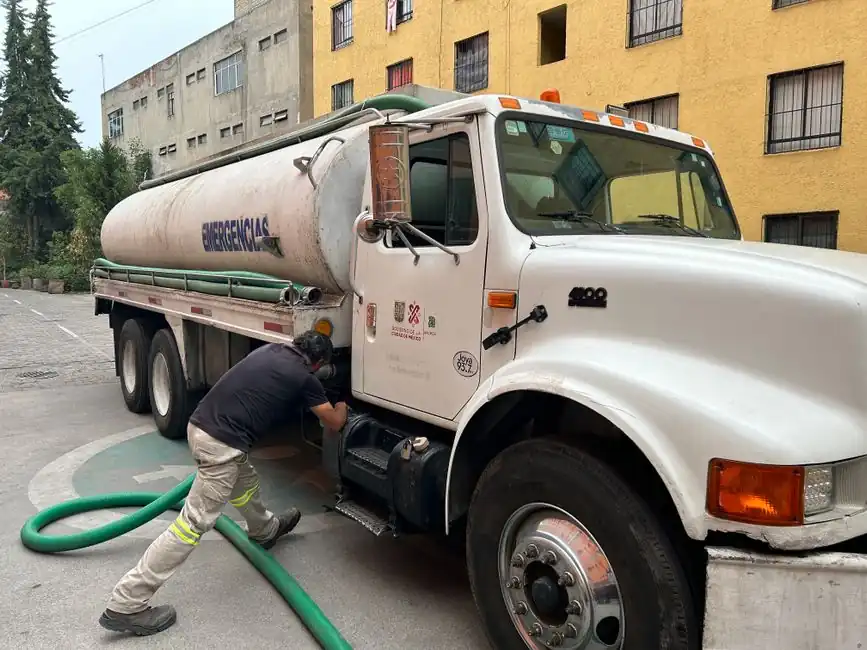
Industrial hoses are used to move aggressive chemicals, gases, abrasives, food liquids, fuels, and even vacuum-service media across oil and gas, chemical, food, water, construction, and general manufacturing lines [S3]. They are typically built from rubber, polyurethane, polyethylene, PVC, or PTFE/Teflon polymers, with reinforcement layers and end fittings selected for the application [S3].
The single design variable that separates a hose from hard tubing is compliance: a hose bends, absorbs vibration, and accommodates misalignment, while steel or stainless tubing does not [S1]. That trade cascades into temperature envelope, pressure rating, service life, maintenance interval, and total cost of ownership, which is why the decision has to be made on a per-line basis, not as a general preference.
Hard Tubing vs Flexible Hose: Side-by-Side Decision Matrix
Hard steel or stainless tubing does not expand under pressure, so it tolerates higher sustained pressure than a rubber hose and avoids the efficiency loss caused by hose ballooning, which forces more hydraulic fluid to be pumped for the same work output [S1]. Carbon steel tubing is generally rated from -65 to 500 degrees Fahrenheit and stainless steel from -425 to 1200 degrees Fahrenheit, while most hydraulic hose compounds are limited to roughly -40 to 212 degrees Fahrenheit unless a specialty compound is specified [S1].
On the other side of the matrix, a flexible hose installs faster, routes around obstacles without elbow fittings, dampens vibration, and tolerates machine movement that would fatigue a rigid line [S1][S2]. Hard tubing installed where vibration, heat, or corrosive chemicals are present will fail faster than a properly selected hose, which is why experienced hydraulic system designers treat hose and tubing as complementary, not competing, components on the same machine [S1].
Advantages of Industrial Hose
The first advantage is installation speed: flexible hose shortens construction time versus hard pipe because the run can bend around structural members rather than requiring a fitting at every direction change [S2]. On a typical industrial plant build, a flexible hose with the correct bend radius lets a crew lay a line into confined spaces and angled routes without custom-fabricated steel [S3].
The second advantage is operational flexibility. Hose position can be changed without cutting and re-welding, which matters for temporary service lines, contractor rigs, and process skids that get reconfigured [S2][S3]. A flexible hose also absorbs vibration from pumps and motors, protecting downstream fittings and instruments, and it tolerates the small misalignments that are inevitable when equipment is mounted on separate foundations or skids.
The third advantage is media-specific construction. Modern industrial hose lines cover water, compressed air, oil, LPG, chemicals, food liquids, welding gases, concrete placement, sandblasting, slurry, and steam, with each category built around a specific inner tube, reinforcement, and cover [S2]. Concrete placement hose at 85 bar (around 1230 psi) and sewer jetting hose at 250 bar are both standard catalog items, illustrating how reinforcement scates with service pressure [S2].
Disadvantages and Failure Modes
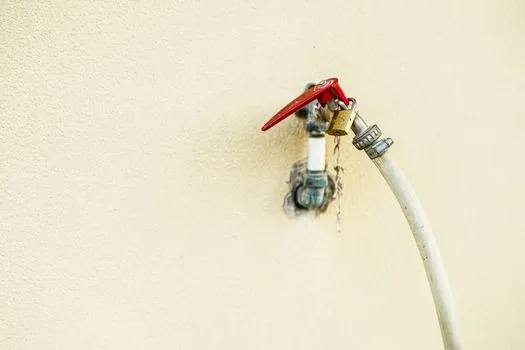
The dominant failure mode is wear. Industrial hoses degrade with use, accumulate internal and external contamination, and lose properties over time, so a published service life must be respected rather than the hose being run to visible failure [S3]. Sourcing the industrial hose reference page and reading the rated service life for the specific compound is faster than diagnosing a rupture on the line.
Deformation is the second failure mode. Improper storage, kinking during installation, or running the hose at the wrong length (over-stretched or sagging) permanently distorts the tube and reinforcement, and once a hose is deformed it usually does not recover its original flow geometry [S3]. Chemical attack, UV ageing of the cover, and temperature excursions outside the rated window all shorten life independently of mechanical wear, and a rubber hose left in direct sun will age faster than the same hose stored on a reel indoors [S4].
The third disadvantage is the narrower operating envelope relative to metal. A hydraulic hose operating near its pressure limit can balloon, reducing system efficiency, and at high enough pressure can burst, especially when maintenance has lapsed [S1]. For a quantitative read on this, our Industrial Rubber TCO piece lays out the cost-of-replacement math that drives most service-interval decisions.
Material Selection: Matching Polymer to Media
Material choice is the single biggest lever. UHMWPE inner tubes are used for chemical discharge and suction because they resist aggressive acids, alkalis, and solvents that would swell nitrile or natural rubber [S2]. Nitrile (NBR) covers the majority of oil and fuel applications, with textile- or wire-reinforced fuel hoses rated at 300 psi and 400 psi as catalog standards [S2].
EPDM is the default for steam service because of its hot-water and saturated-steam resistance, while food-grade PVC, polyurethane, and dedicated food rubber compounds are used where regulatory contact approval matters more than pressure rating [S2][S3]. For lightweight, abrasion-resistant service at lower pressure, polyurethane (PU) garden and light industrial hose offers the best flexibility and low-temperature performance, though it costs more and ages faster under UV than rubber [S4]. A broader polymer trade-off view, including UHMWPE, PEEK, and others, is in the UHMWPE engineer reference.
Standards, Fittings, and Sourcing Discipline
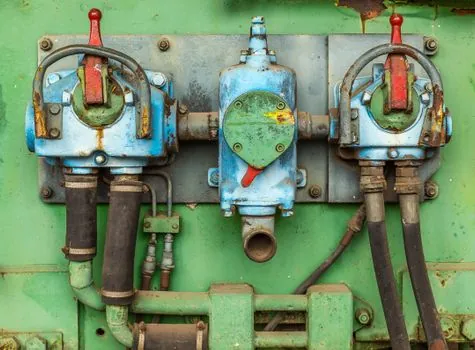
For hydraulic hose, the relevant specification family is SAE J517 and the corresponding EN 856 / EN 857 / EN 853 / EN 854 types, with each hose carrying a type code (e.g. SAE 100 R2 / EN 853 2SN, SAE 100 R17, EN 856 4SP) that defines the pressure rating, impulse life, and bend radius [S2]. For LPG, EN 1762 governs both delivery and suction hose, while aircraft ground refuelling falls under EN 1825, and concrete placement hose at 85 bar is a recognized catalog pressure class rather than a generic high-pressure line [S2].
Fitting selection is part of the spec, not an afterthought. Medium- and low-pressure industrial hose is commonly terminated with clamps or cam-and-groove (camlock) couplings, while high-pressure hydraulic hose requires a crimped fitting that has to be done on the correct die set; field-substituted ferrules are a common leak source [S3]. Independent of material choice, comparing the hose to alternative elastomer and engineering-plastic options benefits from a structured spec checklist such as the one in the industrial adhesive selection guide, which translates material properties into a comparable decision grid.
When NOT to Use a Hose
Do not specify a flexible hose where the line will see sustained temperatures outside the compound rating; stainless tubing rated to 1200 degrees Fahrenheit will out-perform any polymer hose in that service, and most hydraulic hose compounds cap at 212 degrees Fahrenheit [S1]. Do not run a hose at sustained pressure above its rated working pressure, because ballooning efficiency loss and burst risk both rise sharply, and a hard metal line is the correct substitute above that threshold [S1].
Do not bury standard industrial hose in a permanent underground service unless the specific hose is rated for that environment; use rigid HDPE pipe, which is the standard material for petrol station and similar buried fuel lines [S2]. Do not use general-purpose rubber hose for food, pharmaceutical, or potable-water service; specify a hose with the relevant food-contact approval, since the wrong inner tube can leach plasticizers or additives into the product [S3].
Trackable signals for the next planning cycle: watch the revision status of SAE J517 and EN 856 / EN 857 for any new impulse-life or bend-radius updates, and monitor the published service-life data from major crimp-fitting and hose-assembly suppliers, since the move toward longer-published TCO figures tends to precede spec changes on chemical and steam hose categories. For a cross-domain material comparison that places rubber and polymer hose against ceramics and engineering plastics under abrasion and chemical load, the alumina ceramic selection for aerospace piece provides a useful second reference point.
For component-level specifications, see construction machinery and equipment, and lamps and light fittings.