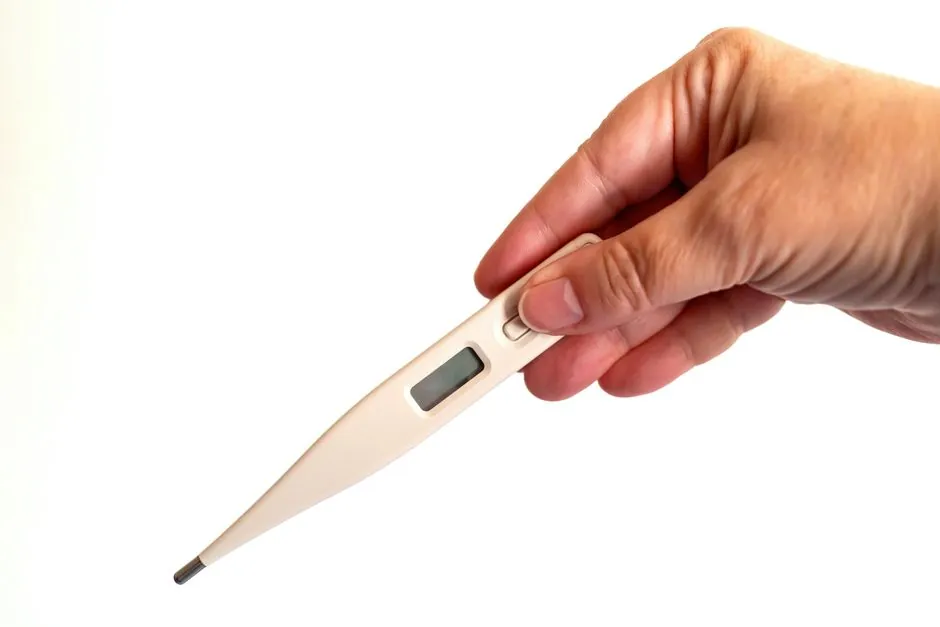
Four sensor families cover virtually every thermal measurement duty: NTC thermistors span −55°C to +150°C with ±0.1°C sensitivity [S3]; PT100/PT1000 RTDs deliver ±0.15°C Class A accuracy from −200°C to +850°C per IEC 60751 [S5]; Type K thermocouples reach +1,260°C per IEC 60584 [S5]; and digital ICs output ±0.1°C over I²C/SPI/1-Wire with no external ADC [S5].
Selection is driven by the operating envelope first, accuracy second, signal format third, and mechanical fit last; mis-ordering these priorities is the most common reason a probe gets returned. The 2026 buyer's job is to map the process window to a sensor family, then verify the interface, mechanical sheath, and approvals, before price is even discussed.
Sensor Family Comparison: NTC vs RTD vs Thermocouple vs Digital IC
NTC thermistors give 3–5% resistance change per °C and resolve ±0.05°C to ±0.1°C in a narrow band, with B25/85 values typically 3,435K to 3,977K for automotive and HVAC grades [S3]. Response is fast (0.1–10s for bead types), but output is non-linear and self-heating error appears when excitation current exceeds 1 mA [S3]. PT100/PT1000 platinum RTDs use a TCR of 0.00385 Ω/Ω/°C per IEC 60751, with 4-wire Kelvin connection eliminating lead resistance on long cable runs [S5]. Type K thermocouples cover −200°C to +1,260°C per IEC 60584, require cold-junction compensation, and drift roughly ±1°C to ±5°C in the field [S1][S5]. Digital temperature ICs such as the TMP117 integrate ADC, reference, and digital interface on-die, achieving ±0.1°C max accuracy from 1.7 V to 5.5 V supplies [S5].
For a temperature controller input stage, RTD vs thermocouple signal conditioning decisions usually pivot on whether the loop runs analog 4–20 mA (RTD with transmitter) or accepts direct digital (I²C IC at the MCU). When the field device sits more than 10 m from the controller, RTD lead-resistance error and thermocouple cold-junction drift both rise, so a 4-wire PT100 or a digital bus is the safer call.
Match the Sensor to the Application Envelope
Below 200°C where precision matters, NTC thermistors dominate: coolant temperature sensors in automotive ECUs use R25 = 2.252 kΩ with B25/85 = 3,977K to match OEM lookup tables; intake air sensors use R25 = 2.19 kΩ in the same B-value family [S3]. Industrial process loops between 0°C and 650°C default to PT100 Class A or Class B elements, with Class A giving ±0.15°C at 0°C and ±0.35°C at 100°C per IEC 60751 [S5]. Furnace, kiln, exhaust, and foundry work above 400°C requires Type K, Type S, or Type R thermocouples, where S/R (platinum-rhodium/platinum) reaches 0–1,600°C at the cost of price [S1].
Cryogenic and sub-zero applications are a special case: Type T thermocouples cover −200°C to +350°C, and PT100 RTDs remain linear down to −200°C, while most NTCs lose sensitivity below −50°C [S1][S5]. Infrared/non-contact sensors (pyrometers, thermal imagers) suit moving targets or surfaces where contact is impossible, but their reading is a function of surface emissivity and is affected by dust, smoke, and reflective coatings [S1]. For fixed installation in a temperature measurement loop, contact probes with thermowells are still the engineering default.
Accuracy, Response Time, and Long-Term Stability
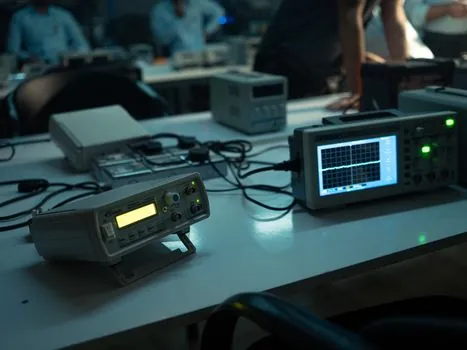
RTDs hold the best linearity and interchangeability across decades of field service, which is why pharmaceutical, food, and HVAC plant engineers standardise on PT100/PT1000 even at 3–5× the price of an NTC [S4][S5]. Thermocouple accuracy degrades because of metallurgical drift at the hot junction, so periodic re-calibration or replacement is a real OpEx line item on furnace control loops. NTC long-term drift is highly grade-dependent, with glass-encapsulated bead types outperforming epoxy-coated ones above 150°C.
Response time is set by the sensor mass and the sheath: a bare bead NTC can react in under 1 s, a sheathed PT100 in 0.5–5 s, and a sheathed Type K in 10 s or more depending on immersion depth [S5]. For burner control, oven profiling, or PWHT (post-weld heat treatment) certification, response time is the deciding factor and often forces a smaller sheath diameter even at the cost of mechanical strength. Engineers comparing temperature monitoring architectures should write the required τ (thermal time constant) into the purchase spec, not leave it to vendor default.
Output Signal: Analog vs Digital, and How It Hits the Loop
Analog-output sensors (NTC, RTD, thermocouple) require a transmitter, ADC, or temperature controller to deliver a useful signal, and each family needs different conditioning: NTC needs a voltage divider and linearisation firmware; RTD needs a constant-current excitation; thermocouple needs cold-junction compensation and a low-offset amplifier [S5]. Digital ICs collapse all of that into the sensor package, with I²C, SPI, or 1-Wire buses that talk directly to an MCU at ±0.1°C and active current under 5 µA [S5].
On the loop side, a temperature transmitter converts the analog probe into a 4–20 mA or HART signal for plant DCS/PLC, while digital ICs are most common in PCB-level data acquisition, server room monitoring, and IoT nodes. For a continuous data-center environmental map, wireless sensor networks using Wi-Fi, Zigbee, Bluetooth Low Energy, or LoRaWAN are the 2026 default, picked specifically because retrofit cable runs are prohibitive in white-space aisles [S7].
Mechanical, Environmental, and Approvals Checklist

For a temperature sensor to survive, the sheath material, IP rating, and process connection matter as much as the sensing element. Common sheath options include stainless 304/316 for general industrial, Inconel 600 for high-temperature furnace probes, and Hastelloy for corrosive chemical service; insertion length and thermowell rating must be matched to the pipe or vessel to avoid stem conduction error [S4]. Hazardous-area installations need ATEX or IECEx certified heads, and intrinsically safe barriers when the probe sits in Zone 0/1.
Other failure modes worth pre-empting: vibration-induced fatigue on long immersion probes (clamp the thermowell), moisture ingress in outdoor RTD heads (use IP67/68 heads with desiccant), and galvanic corrosion when dissimilar metals meet in a thermowell. For permanent process documentation, a temperature data recorder tied to the same probe gives an audit trail for FDA, GMP, or ISO 9001 inspections without a second instrument purchase.
Who Should Not Pick the Default PT100
PT100 is the safe default for process control, but it is the wrong pick in three common cases. First, battery-powered IoT or wearables: a 4-wire PT100 draws too much current and needs a transmitter; an NTC or a low-power digital IC is correct [S5]. Second, surface temperature on a moving belt, rotating drum, or molten metal stream: a sheathed contact probe will not survive, and a non-contact infrared sensor is the only answer. Third, any sub-zero cryogenic storage or lab cell where the NTC's narrow range and the thermocouple's poor low-end accuracy both fail; use a Type T thermocouple or a cryogenic-grade PT100 with proper immersion depth.
Buyers specifying temperature sensors for 2026 builds should treat the family decision as a 30-minute exercise: identify max/min temperature, required accuracy, distance to the controller, and environment, then shortlist two candidates and request a sample with traceable calibration certificate (ISO 17025 or equivalent) before committing to volume. Watch for two live signals: the spread of IEC 60751 Class A vs Class B PT100 pricing, which has tightened in 2026, and the increasing use of digital I²C ICs in retrofit BMS work where running new analog wiring is the limiting cost. For a deeper look at how sensor signal conditioning ends up on the controller side, see the temperature sensor fundamentals reference.
Related analysis: NCMA, 4th-Gen LFP and YS/T 1868-2026 Reshape Cathode Industry 4.0 Sourcing.