
Welded steel mesh is specified by four numbers before anything else: wire diameter 0.5-2 mm, aperture 5-25 mm, mesh orientation (square or rectangular), and the tensile class of the parent wire — and the sourcing decision falls out of those four plus the corrosion envelope, not the brand name on the quotation.
The dominant construction form, per the standard Chinese ferrocement reference, uses cold-drawn low-carbon wire with a single-wire tensile strength not lower than 4,500 kgf/cm², woven or welded into square or rectangular grids; the welded variant is built by resistance-welding the orthogonal wires at every intersection [S5]. That tensile floor — roughly 441 MPa — is the baseline every commercial welded panel needs to clear before any other spec is discussed.
Welded vs Woven vs Crimped vs Expanded: Process Determines Aperture Tolerance
Welded mesh is one of five mainstream constructions, and the construction choice alone fixes your aperture tolerance band: welded and expanded panels hold a tighter dimensional envelope than woven or crimped cloth, while decorative weaves prioritise aesthetics over flatness [S2][S4]. Welded mesh gives a true right-angle grid; woven mesh drapes; crimped mesh locks the weft with a pre-formed wave; expanded mesh is slit-and-stretched sheet with diamond geometry and no welded joints at all.
For load-bearing panels — concrete reinforcement, machine guards, fencing — welded mesh is the only one of the four that maintains its aperture under point load, because every cross-wire is metallurgically bonded, not just friction-locked. Woven and crimped cloth shift under shear; expanded sheet has no transverse wire to shift, but its strand width varies with the die set and is harder to hold to a tight tolerance on small apertures.
Wire Diameter, Aperture and Pitch: The Four-Number Spec
The ferrocement reference pins the engineering envelope for low-carbon welded mesh at wire 0.5-2 mm and grid 5-25 mm, square or rectangular [S5]. Anything outside that envelope is a custom run, not a catalogue item, and lead time moves from days to weeks. Inside the envelope, three sub-bands are common in practice: fine (0.5-1.0 mm wire / 5-12 mm aperture) for filter and architectural trims; medium (1.0-1.6 mm / 12-25 mm) for partitions, machine guards, and light ferrocement; structural (1.6-2.0 mm / 25 mm) for slab reinforcement and pallet racking.
Tensile class of the parent wire, not the welded joint, is usually the controlling mechanical number for procurement. The 4,500 kgf/cm² (≈441 MPa) floor quoted in the ferrocement reference [S5] corresponds to a Q235 / SAE 1008 cold-drawn low-carbon band; stainless 304/316 welded panels typically quote 515-620 MPa parent-wire ultimate and are bought against ASTM A580 or equivalent line wire. Weld shear strength at the intersection should be tested separately — it is the second number to ask for, and a competent mill will issue both.
Material and Coating Path: Galvanized, Stainless, or Plain Carbon

Surface treatment drives the corrosion envelope and is the second-largest cost lever after wire diameter. Drawing, galvanizing, annealing, straightening and cutting, redrawing, zinc plating and plastic coating are the standard process chain for carbon-steel mesh before the welding station [S4]. Hot-dip galvanizing after welding (post-galv) gives the best weld-zone coverage and is the default for outdoor fencing; electro-galvanizing (zinc plating) is cheaper but thinner and tends to fail first at the weld intersection.
For chemical, marine and food-grade duty, the chain moves to stainless 304 or 316 line wire; stainless welded mesh is sold against weave and aperture, but the polish finish on a welded stainless tube — done with a fused-flap disc at 10°-15° contact angle in light passes — illustrates how aggressively welds must be dressed to pass food-grade surface inspection [S1]. PVC-coated galvanized is the third common path and trades surface hardness for colour flexibility and a softer touch radius on architectural and playground panels.
Selection Criteria, Decision Logic and Who Should NOT Use Welded Mesh
Welded mesh fits a structural panel that holds shape under load, resists shear, and can be cut to a flat sheet without unravelling. It does not fit: filtration below about 20 µm (use woven Dutch weave), flexible screening under vibration (use woven or crimped), and applications where the panel must drape over a compound curve (use woven). Choose on this ladder: [S1]
1. Duty: structural / partition / filtration / decorative. If filtration below 100 µm is required, welded mesh is the wrong product and you will lose money chasing tight welded apertures that a Dutch weave holds stock.
2. Exposure: indoor dry → plain carbon is acceptable; outdoor / humid → hot-dip galv post-weld; coastal / chemical → 304 or 316 stainless; food contact → 316 with documented weld dressing procedure (see [S1] for the finishing logic).
3. Aperture and wire: stay inside the 0.5-2 mm / 5-25 mm envelope for stock delivery; outside that, plan 3-6 weeks for a custom weld die.
4. Standards path: ferrocement follows the [S5] envelope; concrete slab reinforcement follows welded fabric standards (e.g. ASTM A1064 / EN 10080) which quote overlap length and yield strength of the parent wire; fencing panels follow local fence codes for aperture and height. Ask the mill which standard its MTC cites before you accept a quotation.
5. QA: tensile of parent wire ≥4,500 kgf/cm² (≈441 MPa) for low-carbon [S5], weld-shear test report, and coating thickness for galvanized (typically ≥85 µm post-galv for outdoor service).
Comparison of Main Welded Mesh Options
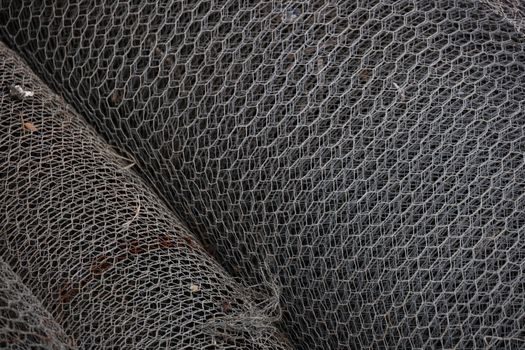
On four decision criteria — cost, max aperture precision, corrosion envelope, lead time — the standard welded mesh variants line up as follows: [S2]
Welded low-carbon (galvanized post-weld): low cost; ±0.5 mm aperture tolerance; good for outdoor general service; stock in 1-2 weeks.
Welded stainless 304: 2-3× cost of galvanized; ±0.3 mm aperture; covers most chemical and food-grade indoor duty; 2-4 weeks.
Welded stainless 316: 3-4× cost of galvanized; ±0.3 mm aperture; covers marine and chloride exposure; 3-5 weeks.
PVC-coated welded galvanized: 1.4-1.8× cost of plain galv; ±0.5 mm aperture; colour and soft edge for architectural and playground duty; 2-4 weeks.
A buyer who only needs square mesh for a fence will overpay for stainless; a buyer specifying coastal concrete reinforcement will regret choosing PVC-coated galv because the cut edges will rust under the coating. Match the row to the duty.
Sourcing Levers and Standards References
Two levers move price more than any other: the mill's raw-wire sourcing (stock 0.8 mm Q235 is cheap, while 1.6 mm 316 line wire is a special run) and the order quantity. Manufacturers such as Anping County De Xiang Rui with 30-plus years of production and mill-direct operations consolidate drawing, galvanizing, annealing, straightening and cutting, redrawing, zinc plating and plastic coating under one roof [S3][S4], which is typically how mid-tier prices beat trading-house quotes on the same spec.
Three standards to put on the MTC: a parent-wire tensile and yield certificate against the relevant carbon or stainless wire standard; a weld-shear or pull-through test at the intersection (acceptance criterion typically ≥0.6× the parent-wire ultimate); and for galvanized panels, a coating mass / thickness report. For concrete reinforcement uses the steel mesh reference page consolidates the wire/aperture envelope and weld-geometry details that the MTC should be checked against. Buyers sourcing stainless line wire for chemical-plant panels should also confirm that the stainless steel grade is 304 vs 316 in the certificate, not on the brochure. Where the duty is plain carbon and the risk is mechanical rather than corrosion, the carbon steel grade is the cost baseline; a Q235 vs Q195 call is usually driven by weld-shear margin, not tensile.
Track these signals next: confirmation of parent-wire MTC against ASTM A580 (stainless) or JIS G3547 (low-carbon welded fabric) at the mill, weld-shear test data on a production-coil sample, and coating thickness on a post-galv panel. Buyers working on slab or wall reinforcement should also pull the Best Deformed Rebar for Oil & Gas: Spec Bands, Sour-Service Limits, and 2026 Sourcing reference for the related rebar and weld-fabric spec bands; for structural sections and profiles used in conjunction with mesh panels, the Steel Section Suppliers 2026: Maker Map, Profile Bands and Sourcing Levers piece gives the parallel sourcing map.