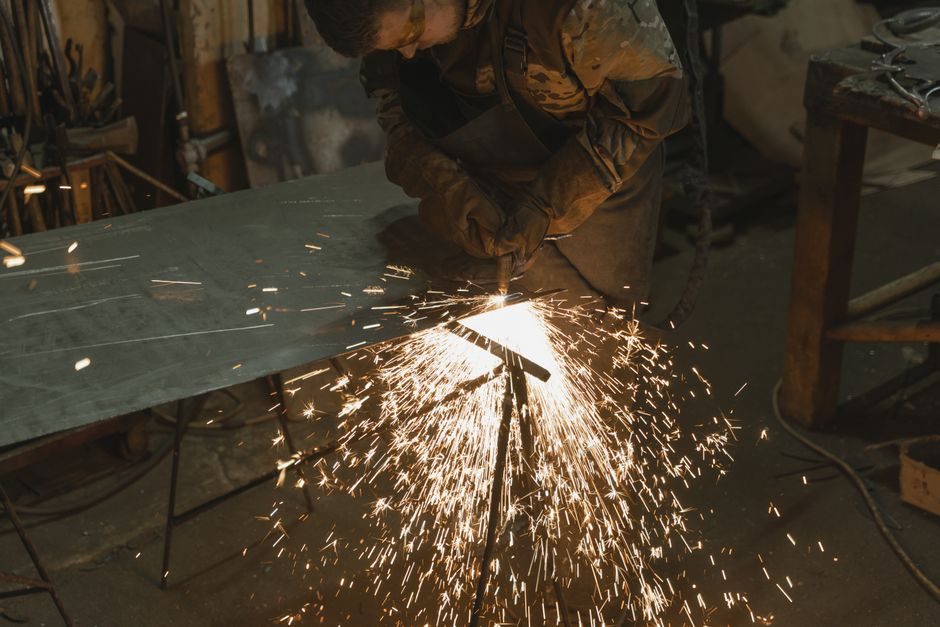
Buyers comparing structural steel section vendors in mid-2026 face a fragmented maker map: a single Chinese fork-mast C-channel supplier quotes US$1,150–1,600 per ton on Made-in-China.com for industrial hot-rolled profiles [S1], while downstream building-assembly fabricators trace their line back to 1994 start-ups like Shandong ZhengYuanming Construction Engineering [S2], and mill agents such as Gnee Steel (Tianjin) Co. cover plate, cold-rolled coil and shipbuilding plate from the same trading desk [S3].
Australian regional distributors (Territory Steel, Darwin) and UAE piping-material houses fill the small-batch, cut-to-size end with universal beams, RHS/SHS, PFC, angles and plate cut on three bandsaws plus a punch-and-shear line [S4]. The pricing spread between a US$1,150/t C-channel and a US$98,000 continuous-casting billet machine from Anshan Fenghui [S1][S6] is roughly 85×, so the right supplier shortlist is dictated first by which layer of the supply chain the project is buying from — mill, agent, fabricator or distributor — not by brand.
Four Product Tracks and What Each Track Actually Sells
Track 1 is hot-rolled structural sections (I-beams, H-beams, universal columns, channels, angles) — Territory Steel in Darwin lists universal beams, universal columns, RHS, SHS, pipe, flats, angles, round bar, plate and sheet as core SKUs from its Northern Territory yard [S4]. Track 2 is cold-formed light-gauge C and Z purlins, plus the heavier C-channel used for forklift mast assemblies, which the Made-in-China vendor pool prices at US$1,150–1,600 per tonne for industrial profiles [S1]; see the steel section encyclopedia entry for the dimensional distinction between hot-rolled and cold-formed geometry. Track 3 is bar and hollow stock: Shandong Heng Steel Group in Qingdao ships hot-rolled A36 / CK67 / CK75 / SS400 / S235 carbon square bar alongside galvanized and galvalume coil and PPGI/PPGL corrugated sheet. Track 4 is finished assemblies — spiral steel silos from AGICO Cement using Lipp undercutting technology for cement, fly ash, coal and sand storage [S5], plus full steel-structure buildings from long-established fabricators such as ZhengYuanming [S2].
Selection Criteria: Mill, Agent, Fabricator or Stockist
Mill-direct orders (Anshan Fenghui continuous casting machines at US$25,000–80,000 per set, Cangzhou Huajing billet casters at US$25,000–40,000, and higher-spec sets reaching US$98,000 [S6]) only make sense above roughly 1,000-tonne section volume or for buyers wanting billet feed for their own rolling mill. Agent and trading-desk sourcing (Gnee Steel acting for Anyang Iron & Steel, Puyang Iron, Shougang, Xingang and Nanjing [S3]) adds 3–8% to the mill price but consolidates mixed grade/size orders and ships mixed-container loads, which is the realistic option for EPC and structural fabricators running multi-grade bill-of-materials. Distributor sourcing through yards like Territory Steel [S4] or UAE piping-material houses is the only path for cut-to-size, drilled, punched or primed small-batch deliveries, with a typical same-country delivery lead time of 2–5 days versus 30–45 days for a mill-direct container. The single most common sourcing mistake in 2025–2026 is buying a stainless steel or alloy steel profile from a carbon-section mill agent without a separate MTC traceable to a single heat number.
Criteria-Based Comparison of the Main Buying Options
Four sourcing options line up against four decision criteria: mill-direct trading desks (Gnee-style [S3]) score high on price-per-tonne and grade range, medium on MOQ flexibility, low on lead time, medium on MTC traceability. Wholesale-portal suppliers on Made-in-China [S1] score high on price transparency and breadth, medium on traceability, medium on MOQ. Regional stockists with bandsaw cutting (Territory Steel [S4]) score low on unit price, high on lead time and on cut-to-size capability, medium on grade range. Full-structure fabricators (ZhengYuanming [S2], AGICO [S5]) score low on per-tonne price but high on single-source accountability and on engineering deliverables such as connection design, anti-corrosion coating and on-site erection. For carbon and carbon steel sections in non-corrosive service, trading-desk sourcing is the rational default; for galvanised or pre-coated building skins, the [galvanized coil and PPGI/PPGL] line carried by Shandong Heng Group sits closer to the project. Silo and full-building assemblies justify a fabricator route because field erection, spiral-weld QC and silo safety relief come bundled [S2][S5].
Price Bands, MOQ Levers and Spec Anchors
The Made-in-China spot tape for hot-rolled industrial C-channels used in forklift mast assemblies is US$1,150–1,600 per tonne at single-tonne MOQ [S1]. Hot-rolled A36 / SS400 / S235 carbon square bar is listed on the same portal in Qingdao-supplier form by Shandong Heng Steel Group alongside galvanized coil, galvalume coil and PPGI/PPGL corrugated sheet. Continuous casting machine (CCM) packages for billet production — upstream of all rolled sections — list at US$25,000–40,000 for an entry-level 1-set MOQ (Cangzhou Huajing), US$75,000–80,000 for the Anshan Fenghui high-efficiency induction-furnace line, and up to US$98,000 for the higher-spec end of the range [S6]. The dominant cost levers in 2026 remain steel scrap and iron-ore feedstock, freight differential on container vs break-bulk, and the grade premium for silicon electrical silicon steel versus commodity carbon steel — the silicon grade carries a 2–4× premium driven by grain-oriented electrical applications. Buyers planning a 2026 procurement cycle can mirror the volume-based MOQ bands that have stabilised on the wholesale portals since 2024 [S1].
Limitations, Failure Modes and Sourcing Constraints
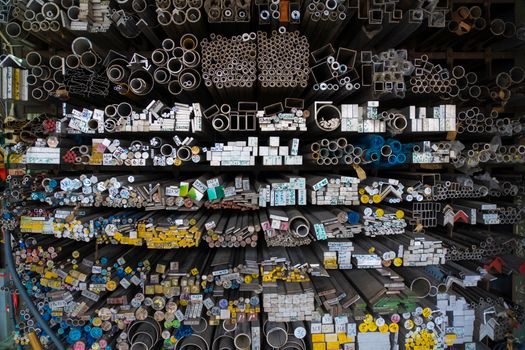
Three failure modes recur across the steel section supply chain. First, grade mis-substitution: a CK67 carbon bar is not interchangeable with a 51CrV4 spring bar, and the Made-in-China supplier directory listing both in the same category does not certify chemistry — buyers must request the mill test certificate. Second, fabrication-defect exposure: spiral-weld Lipp silos (AGICO) [S5] and welded structural buildings (ZhengYuanming) [S2] require the buyer to verify weld-procedure qualification, not just the marketing brochure, before signing a lump-sum contract. Third, lead-time slippage: distributor lead times of 2–5 days [S4] assume stock-on-hand, but a mill-direct container out of Tianjin or Qingdao [S3] runs 30–45 days plus 7–14 days for ocean transit to a Middle East or Australia discharge port — single-figure container availability on galvanised and pre-painted coil has been the binding constraint reported through 2025. The full MTC and coating-thickness record must travel with the shipment; fabricating a project-specific steel fiber reinforced concrete element from a separately sourced section is a common rework source when this paper trail is missing.
Standards, Traceability and 2026 Procurement Hygiene
For 2026 procurement hygiene on Chinese-origin sections, the minimum documentation pack is: EN 10025 or ASTM A36/A572/A992 MTC for hot-rolled structural grades, ASTM A500 for cold-formed hollow sections, JIS G3101 SS400 / G3131 equivalent for Japanese-project jobs, and ISO 9001 mill certification for the producing line. The current Made-in-China supplier directory does not display these certificates inline [S1], which is why the next step for any buyer evaluating a shortlist from the wholesale portal is to ask the supplier for the mill name, heat number range and last-three-shipment MTC samples before placing a trial order — a step that the agent-tier suppliers such as Gnee Steel [S3] and the regional stockists [S4] are typically set up to provide. Two trackable signals to watch into Q3–Q4 2026: a) whether Made-in-China adds inline MTC display for Gold-Member audited suppliers, and b) whether the US$1,150–1,600/t C-channel band [S1] holds or widens under the next iron-ore settlement cycle. Readers cross-referencing a related 2026 sourcing reference for downstream rebar applications can continue with Best Deformed Rebar for Oil & Gas: Spec Bands, Sour-Service Limits, and 2026 Sourcing.