
Aerial work truck selection is driven by four hard numbers first — platform working height, boom geometry, host chassis GVW, and live-line insulation class — before any comfort or telemetry option enters the spec [S1][S3]. Buyers who lock those four parameters against the job site envelope typically halve the rework cycles on RFQ review, because every downstream option (outrigger spread, jib length, turntable slew) is forced into a smaller design window once height and chassis are fixed.
The current China-export market for truck-mounted aerial platforms sits at 12 m as the volume entry point, with Tier-1 Okorder-listed supply at 500 unit/month single-source capacity and FOB Tianjin terms [S1]. US-side specialists such as Blade Platforms concentrate on truck-mounted high-reach booms across the 30-45 m utility-construction band [S3].
Platform Working Height Bands and What Each One Is For
The 12 m working-height class is the urban sweet spot for street-lighting maintenance, signage install, and telecom node work where the boom tip clears 3-4 storeys with a safe approach envelope; Okorder lists this band as a stock item with a 1-unit MOQ against the stated monthly supply capability [S1]. Stepping up to 16-20 m covers most bridge-inspection and small-warehouse roof-access applications, while 30-45 m units are the workhorses of utility-line construction, large-facade painting, and wind-turbium blade access [S3].
Pick height by adding the maximum reach-to-target plus the working-altitude safety margin, then round up to the next standard platform class — never down. Truck-mounted booms lose reach as outrigger spread shrinks on tight job sites, so a 30 m machine on a constrained urban pad can deliver less effective height than a 20 m machine on full stabilizers.
Boom Type: Articulated, Telescopic, and Insulated
Articulated booms (knuckle joints) win where the target sits over obstacles — parked cars, parapets, tree canopies — because the joint lets the tip fold over an obstruction that a straight telescopic would have to climb around. Telescopic booms deliver longer clean horizontal reach from a narrow outrigger footprint and dominate the 30-45 m utility band [S3]. Insulated booms (typically a fibreglass insert section on the upper arm) are mandatory for live-line work on distribution voltages; the rating is expressed as a dielectric withstand class.
For an explainer on the broader machine category including non-truck-mounted lifts, the aerial work platform reference covers the full taxonomy from scissor lifts to spider booms. Buyers in the live-line space should anchor the spec to IEC 61057, which is the standard that covers aerial devices with insulating booms used for live working on AC installations up to 800 kV — exact test voltages and mechanical-load multipliers must be confirmed against the project voltage class.
Chassis Class, GVW, and the Trade-Off with Outrigger Spread
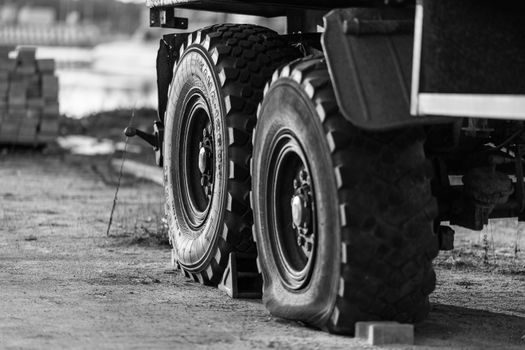
Chassis choice is the silent spec-killer. A 12 m platform can ride on a 5-7 t cab-chassis; a 30-45 m unit almost always needs a 16-25 t three-axle or four-axle chassis to handle the live-load moment when the boom is extended over a corner outrigger [S3]. GVW also sets the road-permit envelope: in most EU and US jurisdictions, anything above 18 t GVW triggers a heavier permit class and a different driver-licence tier.
Outrigger spread, not boom length, usually limits real-world reach. Front-to-rear span of 4.5-5.5 m is the urban envelope; full 6-7 m spreads are common on 30 m+ units and need a clear pad. A useful self-check: the outrigger footprint must be wide enough that the rated platform load (typically 200-400 kg two-person) does not exceed 70-75% of chassis axle group capacity at full reach — a 25% margin is the field rule of thumb for structural movement under live load.
Criteria-Based Comparison: Articulated vs Telescopic vs Insulated
On four decision criteria — clean horizontal reach, obstacle negotiation, live-line suitability, and unit cost for the 16-30 m height band — the options line up as follows. Articulated leads on obstacle negotiation (joint lets the tip clear parapets and trees) but trails on clean horizontal reach. Telescopic leads on clean horizontal reach and is the lowest-cost-per-metre option in 25-45 m, but cannot fold over a mid-height obstacle. Insulated booms add a fibreglass dielectric section that costs 20-35% over the base boom and weigh 200-400 kg more, but are the only option for live-line work on energised distribution. [S1]
For a side-by-side read on the host-chassis trade-offs that ripple through payload and reach, the dump truck entry covers the same GVW/axle-load logic that constrains an aerial-work chassis, and the truck scale reference explains how axle-group weights are actually verified at the yard.
Who an Aerial Work Truck Is For — and Who It Is Not For
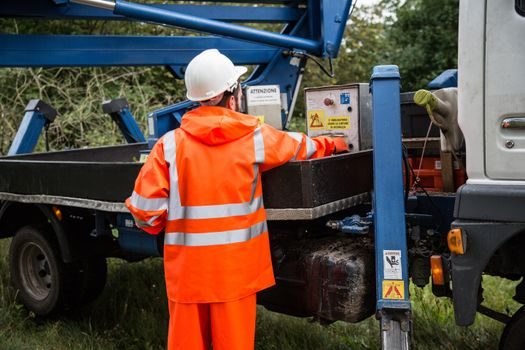
An aerial work truck fits fleet buyers running 50+ lift events per month, contractors who move site-to-site daily, and any application where the boom must road-legal between jobs under its own power. It does not fit indoor-only warehouse picking (a scissor lift or a reach truck on a fixed aisle is cheaper), low-use single-site facilities (a trailer-mounted boom or a self-propelled spider lift costs less to own), and ultra-high-rise facade work above ~60 m (a facade-access cradle or a building-mounted BMU is the correct machine, not a truck boom). [S2]
Failure Modes and Field Constraints Buyers Underweight
The three most common in-service failures are outrigger-pad settlement on soft ground (the truck leans, the operator's reach envelope collapses), boom-section contamination on insulated units (dielectric performance degrades when the fibreglass insert is wet or dirty, so storage under cover and post-job wipe-down are mandatory), and electrical-control faults after a lightning strike or a grid-side surge. Levelling sensors and load-moment indicators (LMI) are not optional accessories — they are the system that prevents the tip-over failure mode, and most jurisdictions require a calibrated LMI for any unit above 12 m working height. [S3]
For readers also sizing measurement tools that ride on these booms (laser range finders for bridge-inspection reach surveys, for example), the laser distance meter sizing bands guide covers the range/accuracy/laser-class trade-offs that pair with a 16-20 m inspection platform. The general how to choose a laser distance meter reference is the entry-level read for first-time buyers.
Sourcing, Standards, and Sourcing Bands for 2026
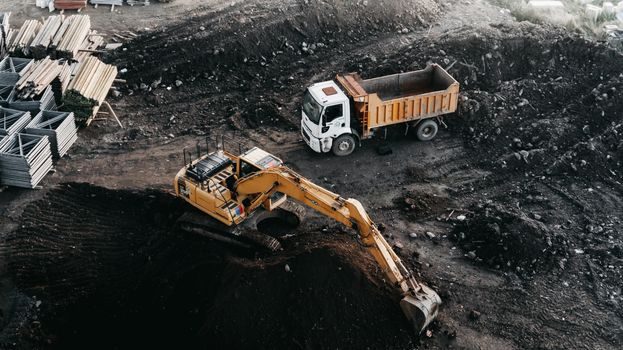
China-side supply clusters in Tianjin and Hubei for the 8-20 m band, with monthly single-source capability at the 500-unit level for the 12 m volume tier and FOB Tianjin or LC-accepted terms as the standard export envelope [S1]. US-side specialists focus on the 30-45 m truck-mounted high-reach segment and on custom utility builds [S3]. Standard references that should appear on every aerial-work-truck RFQ are IEC 61057 for live-line booms, EN 280 / ANSI A92.22 for the platform-and-chassis stability envelope, and the host-chassis emissions class (Euro VI / EPA Tier 4 final) for road-legal operation.
Track the next supply-side signal in 2026 Q3: Okorder-listed 12 m capacity at 500 unit/month and the Blade Platforms 30-45 m high-reach programme are the two price/speculation benchmarks to watch for upward capacity moves; a Tianjin monthly-throughput step-change above 500 unit/month on the 12 m class would be the first indicator that export lead-times are loosening.