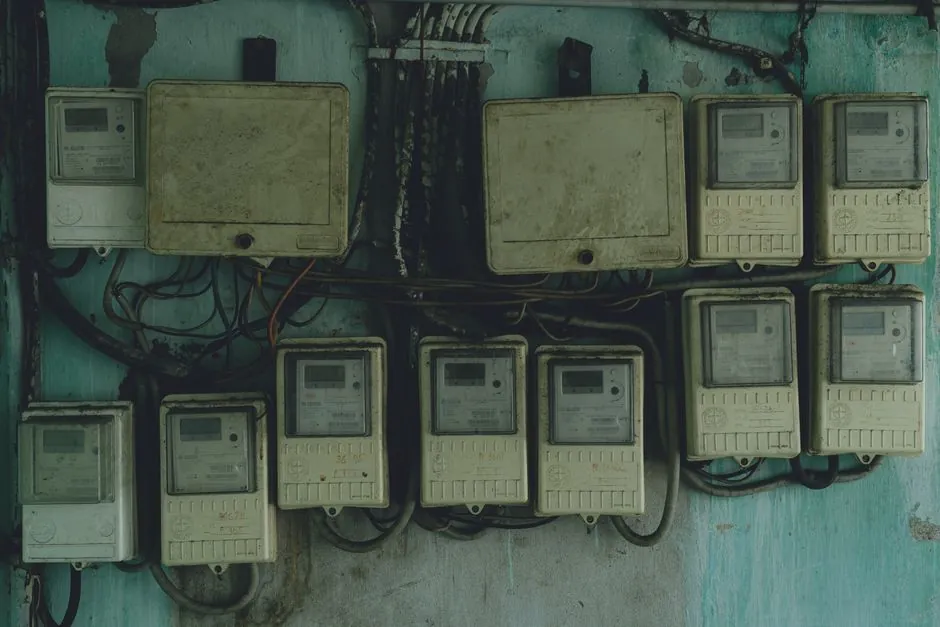
Electricity meters are selected on four binding constraints in this order: electrical system type, accuracy class, certification regime, and CT/communications interface; get any one wrong and the meter either will not wire up, will not pass inspection, or will not feed the SCADA/BMS downstream. The selection logic is stable across residential, commercial, and industrial duty because each axis is defined by an international standard or a hard physical limit [S1][S3].
This article walks through each axis with the numeric thresholds a specifier needs, then closes with a decision matrix and a short list of who should NOT default to a Class A single-phase meter. The same logic also feeds related picks like clamp meters for portable verification and energy meters for sub-billing tenancies.
System Type: Single, Split, or Three-Phase
Step 1 of any selection is identifying the service entrance: single-phase, split-phase (120/240 V North American), three-phase Wye (4-wire), or three-phase Delta (3-wire). Each one drives the meter model, the CT count, and the wiring diagram; mismatching them is the single most common field return [S4].
For a standard residential single-phase service, a 2-wire meter with one fixed 150 A / 16 mm CT is normally sufficient. Split-phase 120/240 V (US/Canada) needs a meter that measures L1 and L2 plus neutral. Three-phase Wye (4-wire) is the default for European commercial buildings and most industrial MCCs; three-phase Delta (3-wire, no neutral) is reserved for motor and compressor loads in industrial sites. A wrong choice on Delta vs Wye is not fixable with a software flag, it is a hardware return [S4].
Accuracy Class: Class A vs Class B
IEC and MID accuracy classes quantify how far a meter can drift from true energy: Class A (Class 2.0 in older notation) is ±2% and Class B (Class 1.0) is ±1% over the certified load and temperature range [S1]. The class you buy is dictated by what the meter is used for, not by what you would like to spend.
Class A (±2%) fits residential sub-panels, temporary construction-site supplies, agriculture, and small retail where the meter is informational rather than fiscal. Class B (±1%) is required for revenue billing under MID in the EU, for solar/wind export metering, and for commercial energy audits where sub-1% drift is what makes the savings number defensible. Picking Class A for a billable tenant is the most common spec error; picking Class B for a barn is just wasted budget [S1].
Certifications and Region-Specific Compliance
Certifications decide whether a meter is legally installable. MID (Measuring Instruments Directive 2014/32/EU) is mandatory across the EU for any meter used for billing; the CE mark covers safety, health, and environmental conformity; IEC 62056 (DLMS/COSEM) sets the data-exchange framework so meters from different vendors can be read by the same head-end [S1].
Outside the EU, the rules differ: UL listings govern North American safety, EMC directives cover electromagnetic compatibility for industrial sites, and national regimes such as Germany's Eichrecht add a calibration-law layer for EV charging and submetering. RoHS and REACH are not optional even when the meter is informational, they restrict hazardous substances in the housing and PCB. For industrial process plants, an electricity meter destined for an ATEX/IECEx zone also needs the right explosion-protection rating, but that is a parallel certification track, not a substitute for MID or UL [S1].
CT Options: Fixed, Flexible, or 5A Secondary
Most modern residential and light-commercial meters ship with a fixed CT, typically 150 A with a 16 mm window, which is fine for a home load center but useless at a 2,000 A busbar. The CT interface is therefore a hard gate: if the existing primary CTs put out 5 A on the secondary, you need a meter with a 5 A input, not a 150 A mV-style CT input [S4].
Three CT configurations dominate: (1) fixed 150 A / 16 mm for sub-200 A residential circuits, (2) selectable 150 A / 250 A / 500 A external CTs for light commercial, and (3) standard 5 A secondary inputs for retrofitting into an existing CT cabinet at an industrial site. The same meter family often offers all three variants, so the CT option, not the metering IC, is what differentiates models. Getting this wrong means the meter reads 0 A on a 800 A feeder [S4].
Communications and Integration
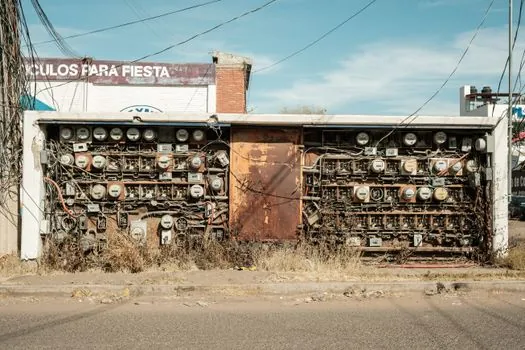
For non-billing monitoring, the meter is only useful if its data reaches the platform. Common interfaces are Modbus/TCP and Modbus RTU for SCADA/BMS, MQTT for cloud brokers, and RESTful API for direct web dashboards; some meters also expose DLMS/COSEM per IEC 62056 for utility head-ends [S1][S4].
Match the interface to the downstream consumer before purchase: BACnet/Modbus for a building management system, MQTT for a solar inverter portal, DLMS for a utility AMI rollout. A meter that only speaks a vendor cloud is a stranded asset the day the subscription lapses; a meter with open protocols and a documented register map survives plant migrations. This is the same integration logic used for portable flow meters and counter meters on the process side.
Comparison Matrix: Which Option Fits Which Duty
The four realistic variants most buyers actually choose, lined up against the four binding criteria: system type, accuracy class, CT interface, and communications. [S4]
Residential single-phase (Class A, fixed 150 A CT, Wi-Fi/MQTT): cheapest, fits homes and small shops, but not legal for EU billing. Residential split-phase with solar (Class B, dual CT, Modbus/TCP + cloud API): the default for North American home PV export monitoring. Commercial three-phase Wye (Class B, selectable 150/250/500 A CTs, Modbus RTU + MQTT): covers small commercial and tenancies. Industrial three-phase with existing 5 A CTs (Class B, 5 A secondary input, Modbus/TCP + RESTful API): retrofit duty in plants with pre-installed CT cabinets [S1][S4].
Who Should NOT Buy the Mainstream Option

Three profiles get burned by defaulting to a residential Class A Wi-Fi meter: (1) any site that bills tenants or exports to the grid and therefore legally needs MID Class B; (2) any industrial panel with existing 5 A primary CTs, which the 150 A fixed-CT residential meter simply cannot read; (3) any plant tied into a SCADA or Modbus BMS that needs a documented register map and a wired interface, not a consumer cloud. For those cases, a DIN-rail three-phase meter with selectable or 5 A CT inputs and open-protocol output is the minimum viable spec, even at 3-5x the residential price [S3][S4].
Trackable signals for the next spec cycle: IEC 62058 series revisions for meter reliability testing, MID 2014/32/EU guidance updates for submetering of EV chargers, and Eichrecht module-B re-certification timelines for German three-phase meters; each one shifts which models are bid-eligible on the next quarter's project.
Related analysis: Optical Glass Selection: Spec-First Guide for General Fabrication.