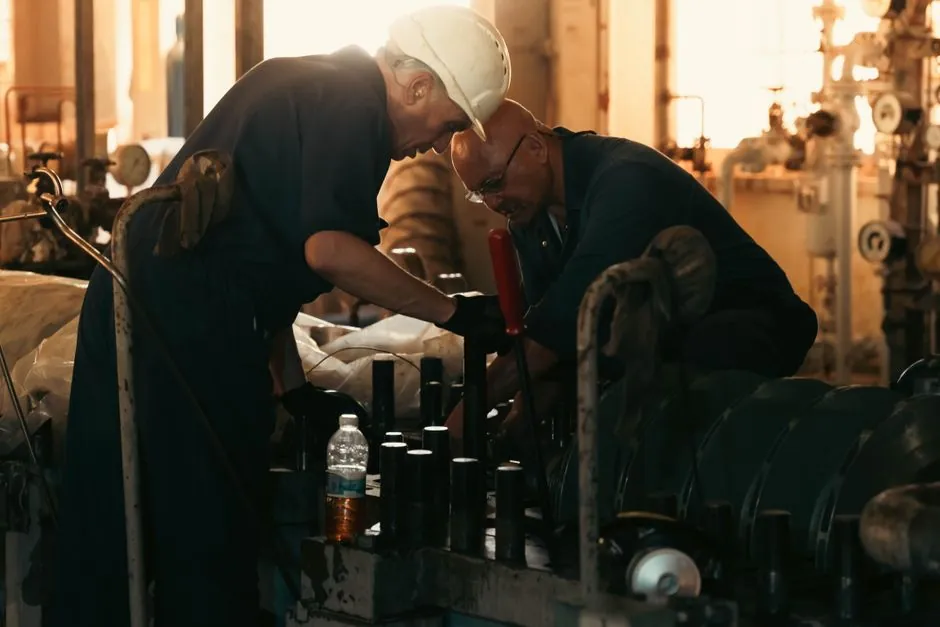
Buyers who treat industrial gas as a commodity usually overpay, run out at the wrong moment, or specify the wrong purity tier. The correct selection starts with the duty, then locks the gas family, purity grade, supply mode, and supplier contract terms to that duty [S2][S3].
Eight gas families cover roughly 90% of plant demand: oxygen, nitrogen, argon, hydrogen, helium, carbon dioxide, acetylene, and propane, each with a different storage pressure, hazard class, and material compatibility profile [S9]. The selection job is to map the duty to one of these families before negotiating price [S2].
Industrial vs Specialty Gas: Where the Line Sits
Industrial gases are produced to broader tolerances and shipped in high-capacity tanks or cylinders for volume-driven duties such as welding, cutting, bulk inerting, and process support [S4]. Specialty gases are made to 99.999% ("five nines") or higher purity, often with measured trace components, and travel in smaller cylinders with Certificates of Analysis (COAs), Certificates of Conformance (COCs), and NIST traceability [S4].
Use industrial grade when the application tolerates fit-for-purpose purity and does not require calibration traceability, which is the typical case for metal fabrication, shielding gas, and large-volume inerting. Use specialty grade when the gas feeds a gas analyzer, a gas chromatograph, emissions monitoring, or any process with a documented accuracy requirement, because only specialty product lines ship the COA and lot traceability that audits demand [S4].
Purity vs Quality: Two Different Spec Sheets
Purity states the fraction of the target molecule in the cylinder, for example 99.95% oxygen, while quality describes what else is in the cylinder alongside the target gas, namely dust, water, and oil [S5]. A gas can be 99.99% pure on paper and still contaminate a downstream analyser if the residual moisture is measured in hundreds of ppm rather than single-digit ppb [S5].
For welding and shielding, specify purity and a dew point, since water in argon or CO2 causes porosity and spatter. For laboratory and gas detection feed lines, specify purity plus a hydrocarbon and moisture budget tied to the instrument's lower detection limit, then verify the COA lot number on every delivery [S4][S5].
Supply Mode: Bulk, Microbulk, or Cylinder
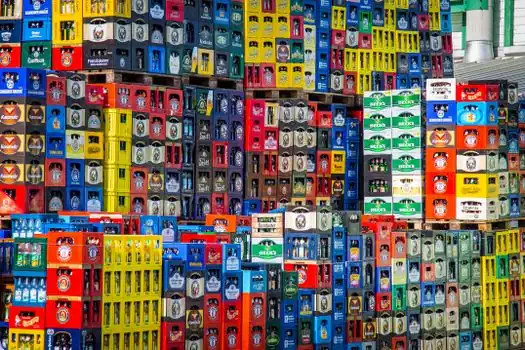
Industrial gas arrives in three supply modes, and the threshold between them is set by volume and on-site footprint, not by price alone [S1][S8]. Bulk liquid tankers suit high and steady demand, typically above roughly 50,000 standard cubic feet per month, with the supplier owning a cryogenic tank on site and refilling on a scheduled route [S1].
Microbulk vessels (typically 500–2,000 litre liquid tanks with on-site telemetry) bridge the gap for sites that have outgrown cylinder handling but do not justify a full bulk install, and they ship with the same telemetry as bulk [S1][S8]. Cylinders (sizes T, K, L, and larger 50-litre packs) remain the default for low-volume, intermittent, or remote duties, and require manual handling plus periodic hydrostatic testing per local pressure-vessel rules [S6][S8].
Comparing the Three Supply Modes
The decision matrix below lines the three modes up against the criteria that drive total cost of ownership, not just the unit price. [S1]
<strong>Bulk liquid.</strong> Lowest unit gas cost, highest uptime on telemetry-monitored tanks, requires a fixed cryogenic vessel, plot space, and vaporiser; payback typically kicks in above 50,000 scf/month of steady draw [S1]. <strong>Microbulk.</strong> Mid-range unit cost, 48-hour refill on most gases, no permanent tank install, sits on a rented pad with telemetry; fits sites in the 5,000–50,000 scf/month band [S1][S8]. <strong>Cylinders.</strong> Highest per-unit cost, no telemetry in most fleets, full manual handling exposure, no fixed install; fits below 5,000 scf/month or where usage is spiky and unpredictable [S1][S6].
If your duty is steady and large, pick bulk. If your duty has grown past cylinders but your site cannot host a cryogenic tank, pick microbulk. If your duty is lab-scale, intermittent, or backup, stay on cylinders and pay the premium for the flexibility [S1][S6].
Supplier Audit: Delivery, Telemetry, and Cylinder Tracking
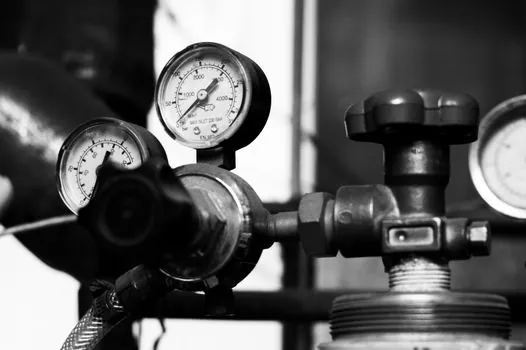
Supplier evaluation should be data-driven: ask for the stated delivery turnaround (target 48 hours on most gases), confirm telemetry on bulk AND packaged gas, and demand a written cylinder-tracking method with regular audits [S1]. Suppliers that cannot answer when they deliver, or only deliver on a fixed weekday, leave the buyer exposed to multi-day runouts [S1].
Cylinder overcharge is a documented line item: one supplier audit found customers being overcharged by up to 30% on cylinder rentals because cylinders sitting in the supplier's warehouse were still on the customer's invoice [S1]. A working tracking system uses handheld barcode scanners at truck handoff plus 2–4 physical audits per year to reconcile on-site cylinder count against billing [S1].
Who Should NOT Buy Industrial Grade
Do not specify industrial grade for any feed that lands in a regulated analyzer, calibration bench, medical device, or pharmaceutical process, because industrial gas is delivered without formal COA or NIST traceability unless the buyer specifically requests it [S4]. Specifying industrial grade on a gas chromatograph feed will invalidate the analyzer's calibration chain and most ISO 17025 audit findings cite exactly this [S4].
Do not specify specialty grade for bulk shielding or large-volume inerting: the cost premium over industrial grade is roughly 3–10x per unit volume, and the tighter purity does not change the welding or inerting outcome [S4]. For an exhaust stream monitored by a gas detection sensor, match the gas spec to the sensor's cross-sensitivity and lower detection limit rather than blindly buying the highest purity available [S4].
Standards, Documentation, and Safety Constraints
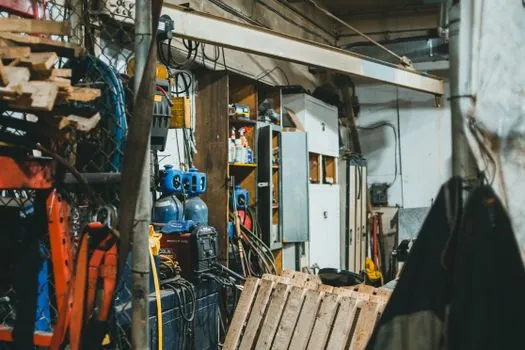
Quality control for compressed gases draws on several frameworks: ISO 22000 governs food-grade supply chains, NIST traceability anchors specialty gas COAs, and DOT/UN pressure-vessel codes govern cylinder hydrostatic test intervals and transport [S3][S4]. Cylinder selection must weigh gas compatibility, working pressure, material of construction, valve fitting, and supplier support, with attention to whether the gas is oxidising, flammable, or inert [S6].
A practical document pack to demand from the supplier: COA per lot, COC on request, safety data sheet (SDS) per gas, and a copy of the cylinder's hydrostatic test stamp [S4][S6]. For acetylene, additionally confirm the cylinder is fitted with a fusible plug and porous mass, because acetylene is unstable above roughly 2 bar absolute as a free gas and must be dissolved in acetone in a porous matrix for safe storage [S9].
Shortlist Logic and Trackable Signals
Build a shortlist by scoring each candidate supplier on five weighted criteria: gas range and stock depth (20%), documented purity tier (20%), delivery turnaround with telemetry (20%), cylinder tracking and audit frequency (20%), and safety/regulatory documentation (20%) [S1][S2][S3]. Drop any supplier that scores zero on telemetry or that cannot produce a sample COA from a recent delivery [S1][S4].
Two trackable signals to watch over the next 6–12 months: ISO 22000:2018 re-certification status for any food-grade supplier, and the rollout of AI-driven predictive telemetry (such as the Pulsa-style usage model) on packaged gas fleets, since these two factors are the most reliable leading indicators of supplier quality in 2026 [S1][S3]. For a deeper look at how detection feed gases affect instrument selection, see the fixed gas detector sizing guide.