
For process and safety duty in 2026, an oxygen detector should be selected against four hard numbers: measurement range of 0–25% vol minimum to cover both 19.5% low-oxygen and 23.5% enrichment alarms, response time under 30 seconds, electrochemical sensor life of 2–3 years, and an IP65 or higher enclosure for wet or outdoor service [S2][S3].
Normal ambient air sits at 20.9% O2 by volume; atmospheres below 19.5% are classed as oxygen-deficient and above 23.5% as oxygen-enriched, and any monitor crossing either threshold must trigger an audible, visual, and vibration alarm within the response window [S2][S3]. An oxygen detector is therefore not a single product but a family of instruments split by mounting, sensing principle, and certification, and the wrong match is a common cause of both false alarms and missed hazards.
Form Factor: Fixed, Portable, or Wearable
Fixed wall- or pipe-mounted O2 monitors with 4-20 mA or RS-485 output are the correct pick for 24/7 area coverage in chemical plants, mine ventilation shafts, enclosed storage tanks, and medical oxygen rooms, because they accept continuous power and feed data to a central SCADA or DCS layer [S3].
Portable O2 detectors, typically 100-200 g handheld units with a sample-draw pump, are specified for pre-entry confined-space checks, temporary inspections, and emergency response where a worker enters a tank, pipeline, manhole, or underground vault for a defined shift [S2][S3]. Wearable personal O2 monitors clip to a chest harness or helmet and provide constant body-proximate alarming for solo workers; they trade sensor life and accuracy for size and battery runtime, so they are a supplement, not a replacement, to area monitoring [S3]. Buyers who need parallel LEL combustible coverage on the same entry should compare it against the Combustible Gas Detector Sizing and Selection map, since the two duty cycles share many placement rules.
Sensing Technology Comparison
Electrochemical O2 sensors are the mainstream pick, offering typical accuracy around ±2% of reading, 2-3 year service life, low power draw suitable for portable and wearable form factors, but they drift with humidity and temperature and need scheduled calibration every 6-12 months [S3]. Paramagnetic sensors deliver higher accuracy, typically ±1% of reading, with strong long-term stability and the unique ability to measure O2 inside flammable gas mixtures, which zirconia cells cannot do, at the cost of higher price and a more complex flow path [S1][S3]. Zirconium-oxide (zirconia) sensors are the industry default for combustion service because they are fast (sub-10 s response) and rugged, reading percentage and ppm-level O2 in flue gas; they are explicitly unsuitable for flammable gas matrices [S1]. Tunable diode laser (TDL) and other optical cells add strong interference immunity and very long life but sit at the top of the price band and are reserved for high-end or specialised service [S3].
Spec Checks Before You Buy
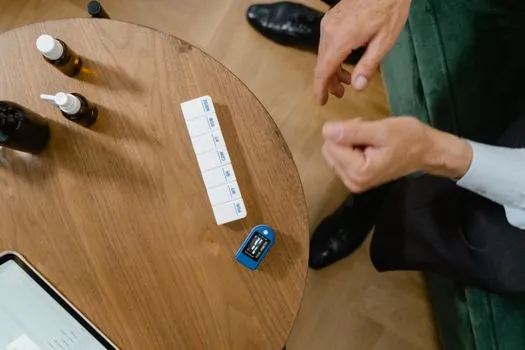
Range, accuracy, and response time are the three numbers that decide a tender: range must cover 0-25% vol at minimum, accuracy should be stated as a percentage of full scale or of reading with an explicit temperature band, and T90 response must be quoted in seconds so it can be matched to the expected gas release rate [S2][S3]. For hazardous-area sites, look for Ex d or Ex ia marking, ATEX or IECEx certificate numbers, and an IP65 or IP67 rating where wash-down or dust ingress is a real risk; the cheapest fixed units often ship IP54 only and fail in pharma and food plants within a year [S3]. Alarm setpoints should be field-adjustable, with at least two levels (warning and evacuation) and three output channels: siren, strobe, and vibration [S2][S3]. Buyers who also need to size the LEL side of a multi-gas cart should cross-reference the mining-oriented combustible gas detector map, since underground placement rules (sensor height, sampling distance, bump-test cadence) carry over directly.
Application-Specific Selection Logic
For confined-space entry, a portable unit with a sample-draw pump, T90 under 30 s, and a pre-entry test mode is mandatory; common causes of O2 drop in this duty are N2 or argon purging, biological oxygen demand in sewers, and CO2 displacement from fermentation, all of which can swing the atmosphere from 20.9% to below 19.5% within minutes of valve closure [S2]. For combustion control on boilers, fired heaters, biomass units, and thermal oxidizers, zirconia in-situ probes with ppm-level resolution drive the air-fuel ratio trim, while paramagnetic extractive analyzers back them up for low-O2 ppm trim and safety; oxygen here is the primary combustion-efficiency variable, with each 1% excess O2 in flue gas typically costing 0.5-1% fuel efficiency [S1]. For medical oxygen therapy rooms, fixed electrochemical units with 0-25% vol range and a 23.5% high alarm are the standard, paired with periodic bump testing against a known gas concentration.
Who Should Not Pick the Mainstream Option
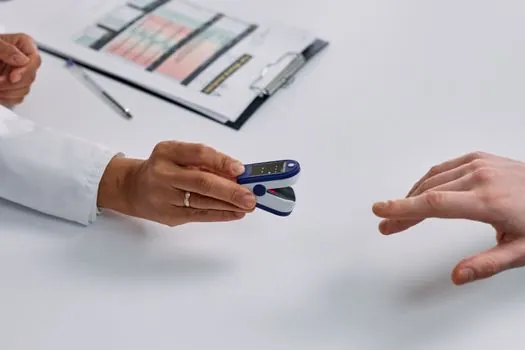
Buyers who assume a single electrochemical O2 monitor covers all duties tend to fail in two specific scenarios. First, an oxygen-depletion sensor (ODS) on a vent-free heater, which trips around 18.5% O2 by volume, does not protect occupants from carbon monoxide: the same displacement that drops O2 by 2.5% often introduces CO well above 400 ppm, and CO above 1,600 ppm is fatal in minutes, so a separate CO detector is a hard requirement, not an option [S4]. Second, a low-cost electrochemical cell should not be specified for combustion trim or for any process with a hot, wet sample stream, because drift and condensation will push accuracy out of spec within months; paramagnetic or zirconia is the correct call there, despite a 3-10x cost premium [S1][S3].
Limitations, Calibration, and Lifecycle
Every electrochemical O2 sensor drifts, and a unit that is never bump-tested becomes a liability: field practice is a bump test before each confined-space entry and a full span calibration with certified air (20.9% O2) every 6 months, with sensor replacement at 24-36 months or sooner if response time degrades [S2][S3]. A dissolved-oxygen meter addresses a different problem (ppm O2 in water, often via a Clark polarographic or optical membrane), so it is not interchangeable with a gas-phase O2 detector, and pairing the wrong probe type to the wrong medium is a common error in aquaculture and boiler-feedwater work. Storage in nitrogen-purged packaging and power-on warm-up of 30-60 s before reading are also routine requirements that buyers sometimes skip.
Sourcing, Standards, and Shortlist Logic
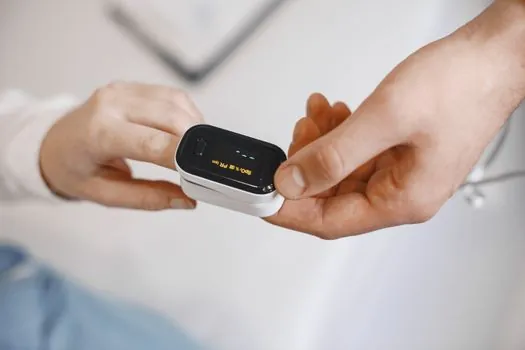
Compliance paperwork matters as much as the spec sheet: for EU sites, ATEX 2014/34/EU equipment-group marking matched to the zone classification is mandatory; for global projects, IECEx certification is the more portable alternative; for North American general-industry sites, UL or CSA listing and Class I Division 1 or 2 rating are the relevant marks, while for marine and offshore service, the relevant regional schemes and IMO requirements apply [S3]. The three-step shortlist: (1) decide fixed versus portable versus wearable from the duty cycle; (2) decide electrochemical, paramagnetic, or zirconia from accuracy, gas matrix, and budget; (3) confirm Ex, IP, and alarm setpoint compliance against the site classification. Suppliers and full vendor lists for parallel gas-detection categories are tracked in the Combustible Gas Detector Suppliers and Manufacturers 2026 sourcing map, which can be used to cross-check delivery lead times against O2-detector quotations. Trackable signals to watch over the next quarter: a 2-3% per year drop in electrochemical sensor unit cost, tighter integration of O2 and CO sensors on the same wearable platform, and continued migration of low-end fixed units from IP54 to IP65 enclosures.
Spec-level background on the components involved: dust detector.