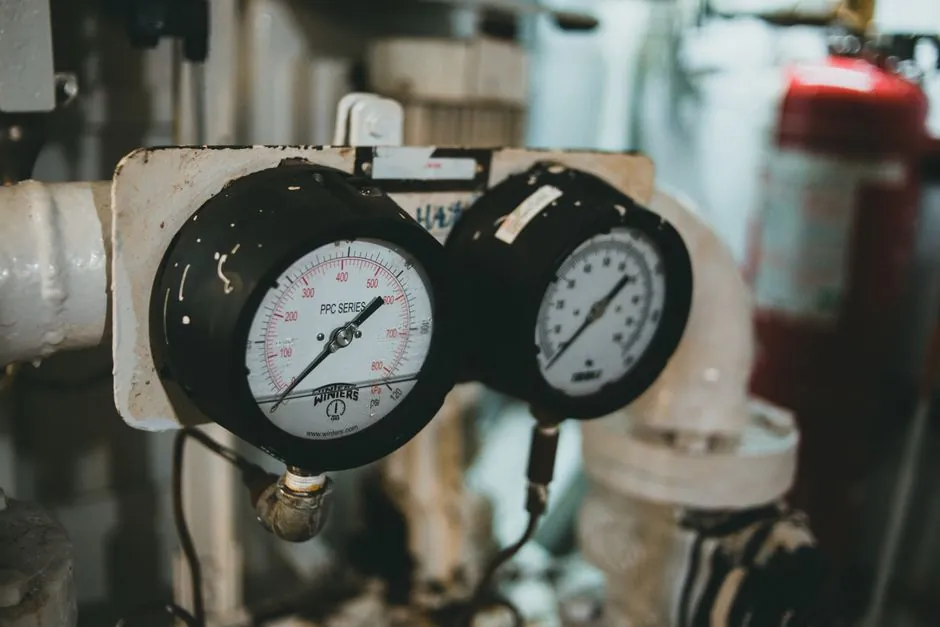
More than 100 manufacturers now compete in combustible gas detection, anchored by MSA Safety, Teledyne Gas & Flame Detection, Honeywell, and RKI Instruments for fixed catalytic-bead and NDIR systems, with Teledyne alone consolidating the Detcon, Oldham Simtronics, and GMI product lines under one brand [S3][S4].
On the lower end, Asian suppliers including WatchGas, GasDog, and New Cosmos Electric offer portable and fixed units at price points well below the legacy North American vendors, expanding access for water-treatment, food-packaging, and light-industrial buyers [S1][S2][S6]. A current vendor index from Metoree lists 101 active gas detector manufacturers as of 2026, including specialty firms such as Global Detection Systems Corp. headquartered in League City, Texas [S5].
Top-tier suppliers: sensing technologies and product lines
MSA Safety and General Monitors together supply the broadest range of combustible gas sensing technologies on the market, with the combined line covering catalytic bead, infrared (point and open-path), electrochemical, ultrasonic, and semiconductor sensor families for fixed installations [S4]. Teledyne Gas & Flame Detection draws on more than 100 years of cumulative detection experience across its Detcon, Oldham Simtronics, and GMI heritage brands, supplying fixed-point detectors, controllers, and wireless beacons for refineries, pharmaceutical plants, and hydrogen-transition projects [S3].
Fortune Business Insights' 2026 ranking places New Cosmos Electric at the top of the leak-detector list, followed by ABB, Emerson Electric, and Honeywell, reflecting the Japanese firm's dominance in domestic methane and LPG sensing and the European/US majors' strength in integrated process-safety packages [S6]. Triplett and PK Safety round out the North American distribution tier, carrying RKI and BW Technologies portable monitors for oil and gas, confined-space, and HVAC-R service work [S7][S8].
Fixed vs portable: which type fits which job
Fixed combustible gas detectors such as the GasDog wall-mount series provide 24/7 area monitoring with 4-20mA analog output and RS485 digital communication, targeting water-treatment and chemical-plant installations where a continuous signal into a SCADA or PLC is required [S1]. Teledyne's fixed family adds methane-emissions, hydrogen-transition, and wireless beacon variants for open-path and perimeter coverage that portable units cannot match [S3].
Portable and personal monitors (MSA's Solaris-class and equivalent from RKI/BW carried by PK Safety) are the right tool for confined-space entry, leak survey, and short-duration turnarounds where the worker's breathing zone must be sampled continuously [S4][S7]. The dividing line is straightforward: specify fixed for any continuously occupied or unmanned hazardous area, and portable for any task that moves with the worker or lasts under a shift.
Selection criteria that actually move the spec
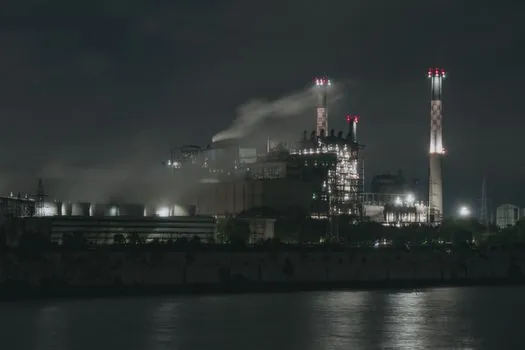
Sensor chemistry is the first filter. Catalytic-bead pellistors handle 0-100% LEL methane and most hydrocarbons at low unit cost but fail in low-oxygen or silicone-contaminated environments; NDIR (non-dispersive infrared) is the standard upgrade when poisoning, zero drift, or fail-safe operation matters, and is now common in MSA, Teledyne, and Honeywell fixed lines [S3][S4]. Electrochemical sensors do not detect combustible gases in the traditional LEL sense; they target toxic species such as H2S and CO, so a true combustible-gas spec must reach the LEL scale.
Output protocol is the second filter. The dominant industrial signal is still 4-20mA analog, often paired with HART for digital diagnostics on the same loop; RS485 Modbus appears on Asian and lower-cost units such as GasDog's fixed chlorine and combustible families [S1]. Wireless and Ethernet-APL options exist but remain minority choices in 2026, with Teledyne's wireless beacons and connected-safety gateways from MSA covering most of the high-end wireless demand [S3][S4].
Hazardous-area certification is the third filter, and it is not optional. Any detector installed in Zone 1 or Zone 2 must carry ATEX or IECEx marking for the appropriate gas group (IIA/IIB/IIC) and temperature class (T1-T6); for North American sites, the parallel is Class I Division 1/2 with the matching gas group. When you compare vendors on cost alone, you are implicitly assuming certifications are equivalent, and that assumption fails more often than the price gap justifies.
Calibration, certification, and total cost of ownership
Bump-test and calibration discipline, not sticker price, drives 5-year TCO on a fixed detector fleet. MSA, Teledyne, and Honeywell all support automatic bump testing on demand with on-board gas, while many low-cost Asian units require manual cylinder test per detector, multiplying labour at multi-site operators [S4]. Sensor replacement intervals typically run 24-36 months for catalytic bead and 5-7 years for NDIR; spec writers should price two catalytic-bead replacements into the 5-year budget to avoid a surprise line item.
Compliance is the fourth filter, and the easiest to get wrong. Combustible gas detection in oil and gas, refining, and petrochemical service commonly references IEC 60079 (the explosive-atmospheres series), with IECEx for international sites and ATEX 2014/34/EU for the EU; North American fixed and portable work adds UL 913 (intrinsic safety) and ISA 12.13 (combustible gas detection performance). Always confirm the certificate scope covers both the gas group in your service and the temperature class of the installation.
Distribution channels and lead-time signals
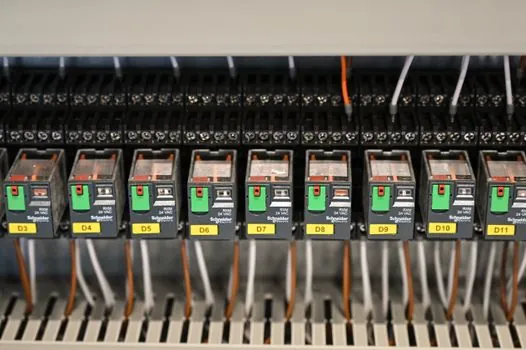
Specialty safety distributors (PK Safety, Grainger-tier resellers) carry RKI, BW, MSA, and Honeywell for next-day shipment on common SKUs, and they are the fastest path for replacement units on an outage [S7]. Direct OEM purchasing from Teledyne, MSA, and Honeywell is required for large hazardous-area projects where the vendor does the application engineering, SIL determination, and commissioning; the lead time is longer (often 8-12 weeks for engineered systems) but the documentation package matches audit requirements [S3][S4].
Asian and Chinese-brand detectors reach end users through platforms like GasDog, WatchGas, and Triplett, with shorter lead times (1-3 weeks typical) and lower unit cost, but buyers should plan their own certification review since hazardous-area markings vary by model and by destination market [S1][S2][S8]. A workable pattern is to keep Asian units for non-classified or Zone 2 light-industrial areas and reserve the OEM channel for Zone 1, hydrogen, and offshore service.
Common pitfalls when sourcing
The most frequent spec error is matching a sensor to the wrong gas family. Catalytic-bead sensors respond to most combustibles but with widely different response factors; a calibration for methane can under-read propane by 40-50% on a generic LEL scale, which is fine for alarm-only use but dangerous if the controller is driving a ventilation or shutdown decision. Always confirm the factory calibration gas and request a cross-sensitivity table for the secondary gases on site [S4].
The second pitfall is the false economy of skipping the heated optics or self-diagnostic option on NDIR units. LEL sensors in dirty, condensing, or outdoor service fail by lens obscuration long before the IR source ages; specify the heated mirror, self-check (no moving parts), and IP66/67 enclosure rating up front, or budget for annual cleaning labour [S3]. On hydrogen service specifically, NDIR is not an option (hydrogen does not absorb in the standard IR bands) and the sensor must be catalytic bead or electrochemical hydrogen-specific, with the LEL of 4% by volume in air as the trip reference.
Buyers also need to watch the difference between a detector and a system. A 4-20mA combustible gas detector is a transmitter; it does not alarm, log, or shut down anything by itself. A complete fixed system needs a controller (Teledyne, MSA, or Honeywell), a power supply, and a final-element interface, and the controller's safety integrity level (often SIL 2 per IEC 61508) is what determines the loop's overall performance, not the sensor's marketing brochure.
Where the market is heading in late 2026
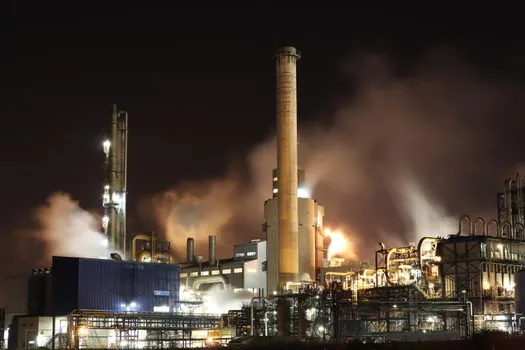
Two trackable signals to watch through the rest of 2026. First, hydrogen-transition applications (refinery hydrogen, electrolysis, and fuel-cell facilities) are pulling demand for hydrogen-specific LEL sensors and for ATEX/IECEx-certified units on new builds, with Teledyne publicly positioning its hydrogen line and MSA pushing connected-safety gateways for these projects [S3][S4]. Second, methane-emissions monitoring under EPA Subpart W and the EU Methane Regulation is opening a new fixed-detector and open-path IR segment that did not exist at this scale two years ago, and Teledyne is one of the vendors publicly addressing it with a dedicated product family [S3].
For component-level specifications, see combustible gas detector, construction machinery and equipment, and lamps and light fittings.
This topic is covered further in Chemical Anchor Selection for Data Centers: Resin, Substrate, and Load Map.