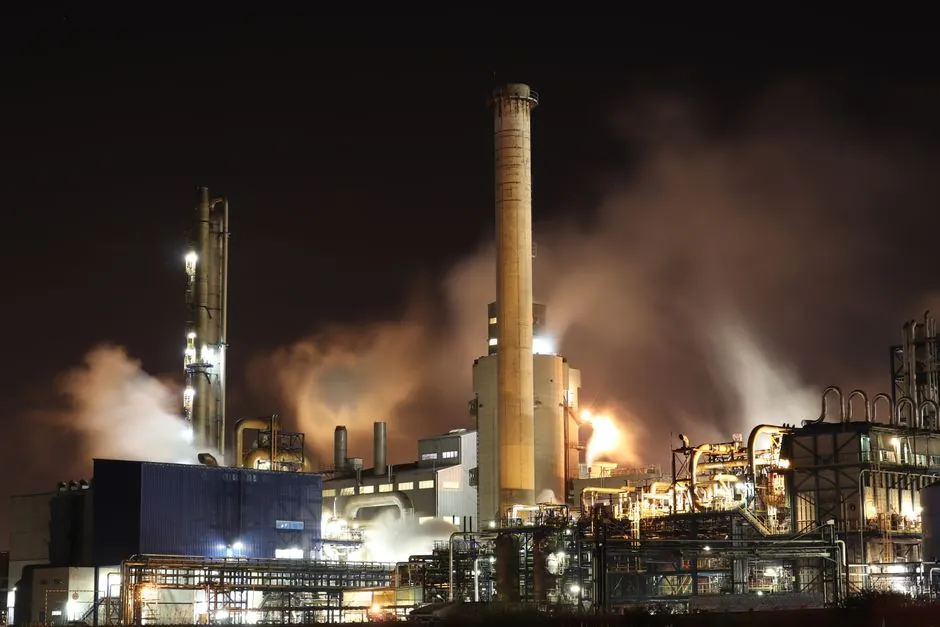
Toxic gas detector selection hinges on three first-order decisions: the measurement range in ppm versus 0–100% LEL, the mounting height set by gas density versus air at 1.0, and the sensor principle (electrochemical for ppm-level toxics) [S3][S2].
Coverage radius in low-velocity open areas runs 5 m to 7 m per fixed sensor, with additional source-oriented heads placed roughly 1 m from valves, pumps, compressors and flanged joints [S2]. Sizing the network therefore starts with leak-source geometry, not with detector count.
Match Measurement Range to Hazard Class, Not to Gas Name
Explosive-risk atmospheres are quantified on a 0–100% LEL scale, while toxic exposure is quantified in ppm, frequently single-digit to a few hundred ppm, and the two scales are not interchangeable on the same instrument [S3]. OSHA-mandated alarm trip for oxygen sits at 19.5%, with hazardous physiological effects below 12% O2 (loss of consciousness, death), so any O2 monitor is sized against a 19.5–23% window, not against a generic 0–25% span [S1].
Common target species in ppm-class service include H2S, SO2, NH3, Cl2 and HF, all supported on field-swappable electrochemical cells in the same detector head, which lets a single platform cover a multi-gas plant with different range cartridges [S1]. For dual-hazard gases that are both flammable and toxic, the rule is to meter for toxicity whenever personnel can be exposed, falling back to LEL detection only in unmanned zones [S3].
Mounting Height Is Set by Gas Density Relative to Air
Detectors for gases heavier than air (chlorine, NO2) belong at 0.2–0.5 m above floor, where the plume pools laterally; detectors for gases lighter than air (ammonia, hydrogen) belong within 0.3 m of the ceiling apex; and detectors for near-neutral-density gases (CO, H2S) belong in the breathing zone at 1.5–1.8 m above floor [S2]. The breathing-zone band is the right default for personnel-exposure monitoring, because human inhalation risk, not stratification, dominates the hazard.
Horizontal layout in low-air-velocity rooms delivers 5–7 m coverage per head as a baseline, but beams, racking and large equipment create stagnant dead zones that require extra sensors beyond a uniform grid [S2]. Source-oriented placement at ~1 m from flanged joints and compressor housings shortens time-to-alarm by intercepting the plume before ventilation dilutes it. For broader plant strategy, the same logic is used in the related combustible gas sizing map, where the density-driven height rule is identical but the sensor principle differs.
Sensor Principle, Output, and Smart Features
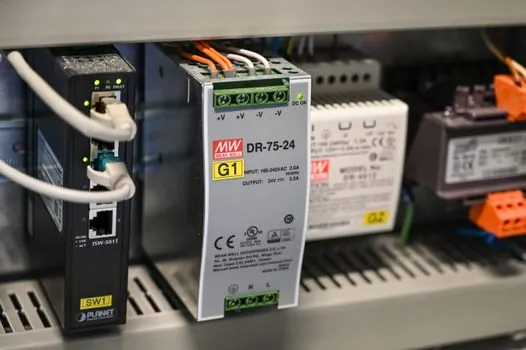
Electrochemical cells are the dominant sensing element for ppm-range toxic gases and for O2, because they output a signal proportional to concentration rather than to combustion enthalpy [S1][S5]. 4–20 mA remains the standard analog signalling used in oil and gas, with relay outputs and Modbus commonly specified as parallel channels rather than as alternatives [S4]. Smart-sensor electronics now expose installed date, born-on date, calibration interval and remaining sensor life on the digital bus, removing the need to time sensor replacement on a fixed hours counter.
Bump testing, calibration and battery behaviour diverge sharply by form factor: fixed mains-powered heads are continuously online, while portable single-gas monitors such as the BW Clip 2-year H2S run sealed for their full 24-month service life with no field calibration or battery swap [S5]. Portables are reserved for turnaround, confined-space entry and leak-hunting, because size, weight and clip-on ergonomics drive wearability more than raw sensitivity [S7].
Fixed Versus Portable: A Decision Comparison
Selection reduces to a four-criterion comparison between fixed-point, portable single-gas, portable multi-gas, and colorimetric tube formats. Fixed-point wins on continuous ppm coverage, relay actuation of fans/valves, and hardwired 4–20 mA into the control room; portable single-gas wins on turnaround entry, low cost and 2-year sealed runtime; portable multi-gas wins on the four-gas confined-space standard (typically H2S, CO, O2, LEL); and colorimetric tubes win on spot checks of infrequent species, at the cost of being single-shot and labour-intensive. [S1]
Use the matrix as a shortlist rule: any continuously manned process area handling ppm-toxic gases gets fixed electrochemical heads at the density-correct height; any confined-space entry ticket gets a portable four-gas monitor; and any leak-hunt of a known single species uses a dedicated portable single-gas unit sized for that species' TLV band.
Selection Criteria, Outputs, and Certification

Three features are non-negotiable on a fixed toxic gas detector: a visible sensor-life indication (timer-based or response-based), parallel outputs including 4–20 mA and relay plus a digital protocol, and smart-sensor metadata on the bus [S4]. The first removes guess-work on replacement, the second preserves interoperability with legacy SCADA, and the third feeds the maintenance management system directly.
For hazardous-area deployment, the detector must carry a valid explosion-proof certificate issued by a recognised technical-supervision body, and the sensor head must be rated for the zone class of the mounting location [S3]. Placement codes for flammable and toxic service align with API 500 and IEC 60079-29-2 principles, which both treat density-driven height and source-oriented coverage as baseline rules [S6]. Plant electrical teams should confirm the certificate marks match the area classification before sign-off.
Who Should Not Pick the Mainstream Option
Portable single-gas monitors are the wrong default for continuously manned compressor rooms, because they cannot drive a hardwired shutdown relay and they depend on the wearer remembering to clip them on; a fixed 4–20 mA head at 0.2–0.5 m or 1.5–1.8 m is the correct duty here. Conversely, a fixed LEL-methane detector is the wrong instrument for chlorine drum-storage rooms, where the hazard is ppm toxicity and stratification at floor level, not explosion risk. [S5]
Colorimetric tubes should not replace continuous monitors in any area classified as continuously manned, because they only sample the moment of drawing the tube and provide no alarm, no logging, and no relay output; they remain useful as a spot-check complement, not a primary layer.
Network Sizing, Coverage, and Sources

Start the layout from a list of credible leak sources (valves, pumps, compressors, flanged joints, drum-storage vents), place one fixed head per source at ~1 m offset, then back-fill a 5–7 m grid to catch migrating plumes, adding extra heads where beams, racking or large equipment create stagnant zones [S2]. Document the height selection for each head against gas density, and confirm the explosion-proof certificate matches the area classification before energising.
For plants already standardising on 4–20 mA + Modbus, the compressed air line design sizing map and the combustible gas detector sizing map cover the adjacent utility and LEL networks using the same coverage logic.
The underlying component specifications are covered under toxic gas detector, linear guide, and crossed roller guide.