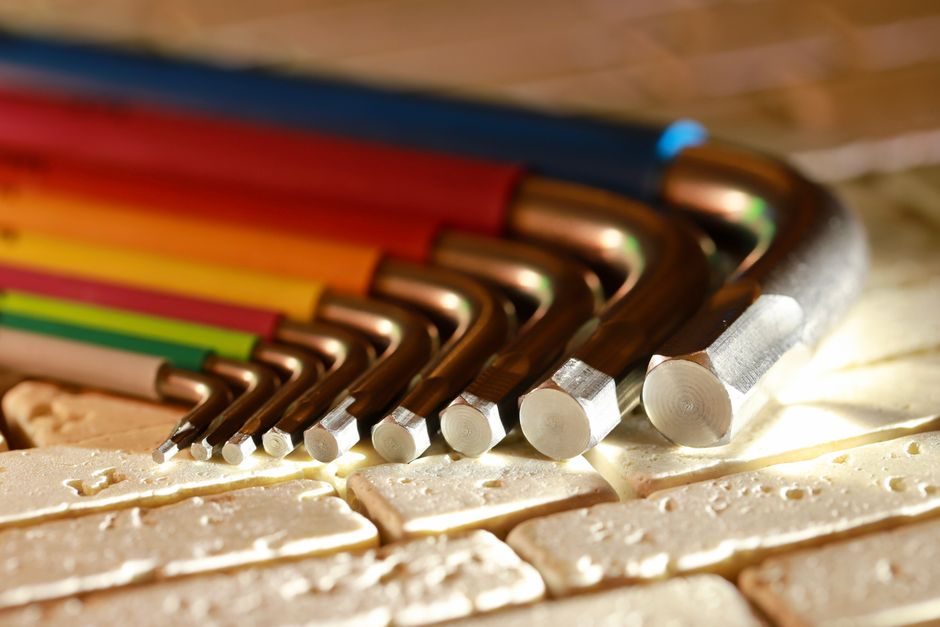
Tool & die steel selection hinges on matching the grade's chemistry and heat-treatment response to the dominant failure mode in service: abrasive wear, thermal cracking, gross impact, or plastic deformation. Cold-work grades such as AISI D2 (1.2379, ~12% Cr, ~1.5% C) and A2 (~5% Cr) deliver high wear resistance but limited toughness; hot-work grade H13 (1.2344, ~5% Cr, with Mo and V) targets die-casting and forging dies operating between 300 °C and 600 °C; shock-grade S7 absorbs the impact loads of punches, shear blades and hammer dies; while P20 (1.2311) and its higher-hardness variant P20+Ni dominate plastic-injection mold bases [S5].
Daido Steel's product division frames tool steel as the material family serving machining tools, jigs, forging dies, die-casting dies, stamping dies and plastic-injection molds — the five application buckets that drive roughly every shop-floor purchase order [S5]. Tool-and-die job shops in North America, from Jonesboro Tool & Die to Pennco Tool & Die, are positioned as build-and-repair partners for these grades, typically stocking D2, A2, H13, S7, O1 and P20 as their working inventory [S3][S4]. For a process engineer, the choice is not which brand of mill to buy from first — it is which grade and which spec gate to lock down.
Match the Grade to the Dominant Failure Mode
Specifying tool steel by its AISI/SAE designation remains the fastest way to align shop, heat-treater and end user on expected behavior: cold-work die steels (AISI D-series, A-series, O-series) cover blanking, piercing, drawing and cold forming; hot-work die steels (H-series, notably H11, H12, H13) cover die-casting, extrusion and hot forging; shock-resistant steels (S-series, notably S1, S5, S6, S7) cover hammers, punches, gripper dies; while plastic-mold steels (P20, 420SS, NAK80) cover injection and compression molds [S5]. Daido's catalog splits its tool-steel range along exactly these application lines, confirming that the AISI letter-code is still the lingua franca of cross-border sourcing [S5].
For a tool & die steel buyer, the first decision axis is therefore binary: is the die running below or above ~200 °C in service? Cold-work grades are typically specified at 58–62 HRC after heat treatment and are sensitive to thermal shock; hot-work grades are tempered back to 44–52 HRC and engineered to resist temper softening and heat-checking. Mixing those two applications is the most common cause of premature die failure, and the published grade tables make it easy to avoid.
Spec Gates: Hardness, Toughness, Wear and Machinability
Four quantitative spec gates drive most grade-vs-grade decisions. Hardness, expressed in HRC after heat treatment, typically ranges 58–62 for D2 and A2 cold-work grades, 44–52 for H13 hot-work dies, 54–58 for S7 shock-resistant parts, and 30–36 HRC for pre-hardened P20 mold bases [S5]. Impact toughness, measured as Charpy V-notch at room temperature, separates S7 (typically ~100 J minimum) from D2 (often below 20 J) — a 5:1 ratio that dictates whether a die survives a die-set crash.
Machinability in the annealed condition falls the other way — P20 and S7 anneal to ~190–220 HB and machine freely, while annealed D2 at ~255 HB slows CNC throughput and accelerates cutter wear. The trade-off is captured neatly in a grade-vs-criterion view:
<b>Cold-work vs hot-work vs shock vs plastic-mold — 4-axis comparison:</b><br> - D2 (1.2379): 58–62 HRC, very high wear, low toughness, poor machinability → blanking, drawing, cold-forming dies.<br> - A2 (1.2363): 58–62 HRC, high wear, better toughness than D2 → medium-run stamping.<br> - H13 (1.2344): 44–52 HRC, hot strength, thermal-fatigue resistance → die-casting and forging dies.<br> - S7: 54–58 HRC, shock-resistant, ~100 J Charpy → punches, shears, hammer dies.<br> - P20 (1.2311): 30–36 HRC pre-hard, free-machining → plastic-injection mold frames and cavities [S5].
Heat Treatment, Supply Form and Stock Sizes
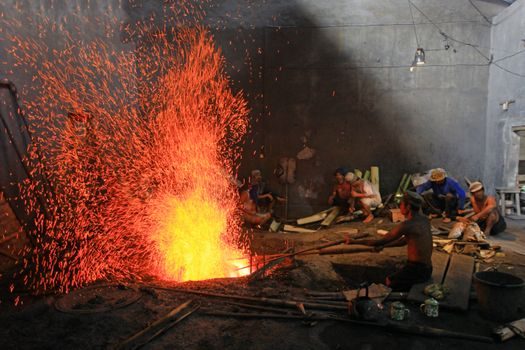
Specifying the correct delivery condition is half the purchase decision. Most cold-work grades ship in spheroidized-annealed condition (≤255 HB) so the shop can machine the cavity, then send out for vacuum heat treatment to 58–62 HRC; H13 is increasingly bought as pre-hardened ESR (electroslag-remelted) at 44–48 HRC for die-casting dies where inclusion cleanliness is critical; P20 is normally delivered pre-hardened to 30–36 HRC, eliminating the heat-treat step for mold frames [S5].
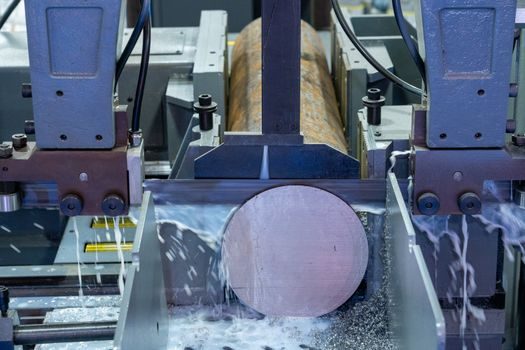
Common stock forms are round bar (Dia. 10–500 mm), flat bar (thickness 10–300 mm × width up to 1000 mm), plate (up to 500 mm thick for large die-casting die inserts) and forged blocks for hobbing dies.
Where Tool Steel Meets the Die-Casting Die
For a hot-work die, the die-casting die is the working target: H13 is the default for aluminum and magnesium die-casting, while a higher-hot-strength variant (Daido DH31-S, similar to premium H13) is used for thin-wall structural parts and for high-pressure die-casting machine cells running 900–1400 bar injection pressures. Soluble-oil or water-glycol die-spray cooling cycles stress the die surface to 600 °C or higher in milliseconds, so the grade must combine hot-yield strength, temper resistance and thermal conductivity. [S1]
Foundries running sand and permanent-mold lines — exactly the customer base of Forte Tool & Die — pair H13 die inserts with P20 or 420SS mold frames, accepting longer cycle times for a lower tooling cost per part [S1]. A gravity die casting machine cell running steel or iron castings will normally use a higher-carbon hot-work die or a coated H13 to extend service life.
Sourcing Channels and Sourcing Levers
Procurement routes split into four channels: (1) direct mill orders (Daido, Bohler, Voestalpine, Assab, Baosteel) for repeat SKUs above ~2 t/grade; (2) service-center stock for small lot sizes and quick-turn; (3) Alibaba / Made-in-China for prototyping S7, D2 and P20 round bar; (4) local tool-and-die job shops (Havercroft, Pennco, Jonesboro) for build-and-heat-treat packages [S2][S3][S4]. Working with a job shop lets the buyer outsource the heat-treatment risk — Pennco Tool & Die and Jonesboro Tool & Die both list die build, EDM, grinding and die repair as core capabilities, which is a useful buffer when in-house heat treat is not available [S3][S4].
Cost levers stack predictably: ESR remelt adds ~15–25% to the base price but cuts inclusion-related fatigue failures; vacuum-arc remelt (VAR) is a further premium grade; oversized stock (e.g. 350 mm round instead of forged-to-size) saves forging cost and lead time. Buyers sourcing from China, by contrast, can compare the China OEM map for carbon-steel suppliers against the same AISI grade bands, since AISI D2 and AISI H13 are produced under the Chinese designations Cr12Mo1V1 and 4Cr5MoSiV1 respectively, often at 60–70% of the Japan/EU landed cost.
Standards, Inspection and Certification
The dominant standards governing tool-steel specification and testing are ASTM A681 (North America, alloy tool steels), DIN EN ISO 4957 (Europe), JIS G4404 (Japan) and GB/T 1299 (China) — all of which pin chemistry ranges, annealed hardness and ultrasonic-test acceptance criteria for wrought tool-steel bars [S5]. Mill test certificates should list C, Cr, Mo, V, Mn, Si, P, S and the heat-treatment batch, plus reduction ratio and UT class. For die-casting dies, NADCA #207 (North American Die Casting Association) sets the premium-grade H13 acceptance window for cleanliness, hardness uniformity and grain size.
Traceable signals worth tracking: (1) whether the mill offers ESR/var stock on the actual SKU, not a generic "premium" label; (2) whether the UT acceptance is Sep 1923 Class AA, A, B or C — Class AA is the default for die-casting die inserts; (3) whether hardness is guaranteed at the bar surface, sub-surface and mid-radius, since large-diameter rounds can drop 3–5 HRC from edge to center. For shops already running the same grade for related tooling, the cheapest spec gate to add next is often a written surface-finish and nitriding protocol on top of the heat-treat window.