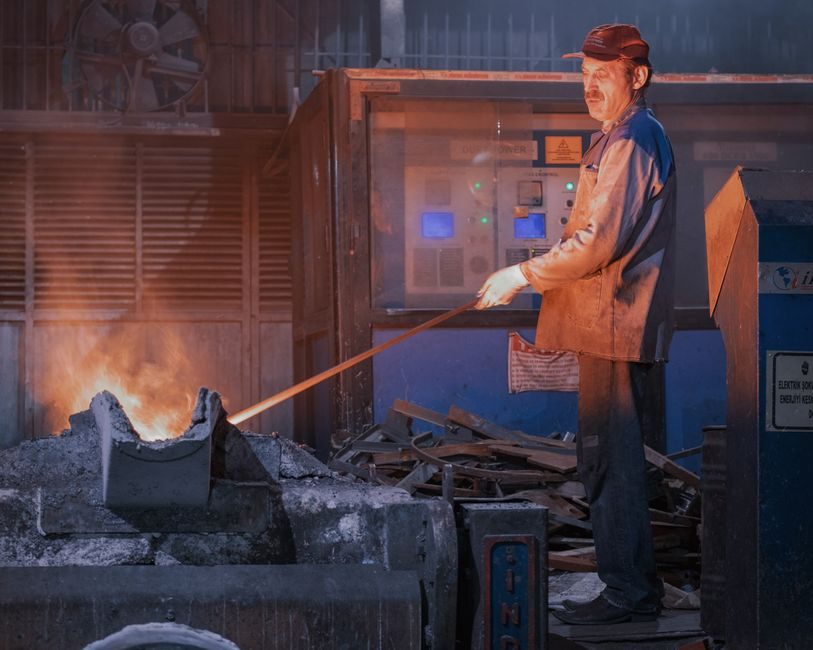
Zinc die casting is a hot-chamber, high-pressure process for thin-wall, high-tolerance parts, with US supplier pricing on common zinc die castings clustered in the US$0.38–3.90 per-piece band at 1,000-piece MOQ as listed by Fujian-based audited manufacturers [S2].
Selection is dominated by four buyer decisions: alloy family (ZAMAC 3, ZAMAC 5, ZA-8), machine class (hot-chamber vs cold-chamber), tooling budget (commonly $15,000–$150,000 per the Lakeshore Die Cast tooling investment range), and supplier audit level (ISO 9001:2015, on-site audited supplier status on Made-in-China.com) [S5][S2].
Zinc Alloy Selection: ZAMAC 3, ZAMAC 5, and ZA-8 Compared
Three zinc alloys cover roughly 90% of commercial zinc die castings: ZAMAC 3 (Zamak 3), ZAMAC 5 (Zamak 5), and ZA-8, all of which Ozark Die Casting lists as standard production alloys for precision components [S1]. ZAMAC 3 is the general-purpose grade and the most widely specified when dimensional stability and plating response are the priority. ZAMAC 5 adds ~5% copper for higher tensile strength and creep resistance, and is the default when threads or mechanical load are present. ZA-8 contains roughly 8% aluminum and is selected when higher strength and modest operating-temperature headroom are required. A buyer should NOT specify zinc die casting when the service temperature exceeds the practical ceiling of these alloys, when the part exceeds typical 25 mm wall-thickness limits for high-pressure casting, or when weight-critical magnesium-alloy performance is needed — for those duties the aluminum die casting machine class is the more honest choice.
Hot-Chamber vs Cold-Chamber: Why the Machine Class Matters
Zinc is cast almost exclusively on hot-chamber die casting machines because its melting point (~420 °C for ZAMAC alloys) is low enough for the melt to stay in an integrated gooseneck without attacking the cast-iron plunger — a constraint explained in the die casting machine reference. Cold-chamber machines are reserved for aluminum, magnesium, and copper alloys whose melts would chemically attack that plunger. For zinc work, hot-chamber tonnage bands from roughly 80 to 800 tonnes cover the bulk of commercial zinc part weights from a few grams to about 8 kg. When shot weight, surface finish, and cycle time are the primary drivers, a hot-chamber zinc cell will out-produce an aluminum cold-chamber cell on the same part by a wide margin — the relevant productivity delta and cycle-time economics are detailed in the zinc die casting machine reference. [S5]
Selection Criteria: Tolerance, Wall, Surface, and Tooling
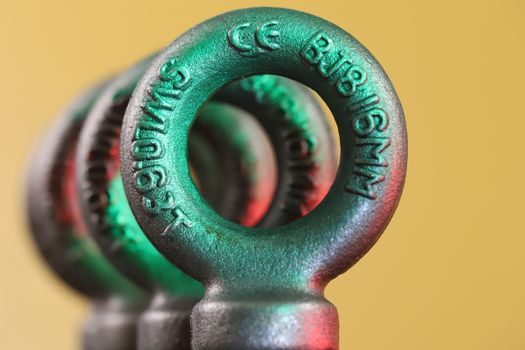
Zinc die casting routinely holds ±0.05 mm on critical dimensions and finishes walls down to 1.0–1.5 mm with as-cast surfaces suitable for direct plating or powder coat, per the capability description published by Ozark Die Casting [S1]. Lakeshore Die Cast highlights that zinc's "high strength, excellent finish, and superior castability" make it the alloy of choice when cosmetic surface and net-shape tolerance are required, and that die casting tooling investment typically ranges from $15,000 to $150,000 per cavity set [S5]. A practical selection map is: (a) thin-wall under 2 mm + cosmetic surface → zinc hot-chamber; (b) high strength-to-weight + thermal conductivity → aluminum die casting on a cold-chamber cell; (c) weight-critical below 1.7 g/cm³ → magnesium die casting; (d) heavy section or low-volume prototype → gravity die casting machine. For buyers who want a side-by-side decision walkthrough, the Aluminum Die Casting vs Die Casting Machine: 2026 Spec-First Decision Map applies the same four-criteria logic.
Tooling, Die Cost, and Cavity Strategy
Die cost is the single largest non-recurring line on a zinc die casting quote. A single-cavity zinc die at the low end of the $15K–$150K band is typical for low-volume parts, while multi-cavity zinc dies for high-volume automotive or hardware SKUs run into the upper band [S5]. The die casting die reference notes that zinc dies tolerate longer runs than aluminum dies because the lower operating temperature reduces thermal-fatigue cycling — a real economic advantage when amortising tooling across production volumes. Buyers should request: die material grade (typically H13 tool steel), cavity / core hardness spec, slide and lifter count, ejector layout, cooling-channel layout, and a guaranteed tool-life figure expressed in shots. Make sure vacuum-impregnation, shot-blasting, and CNC-machining services are quoted as separate value-added steps, as Ozark Die Casting does, because each adds measurable cost [S1].
Sourcing Map: US vs China Capacity, Pricing Bands, and Audit Signals

US zinc die casters like Ozark Die Casting and Lakeshore Die Cast focus on ZAMAC 3/5 and ZA-8 work for hardware, appliance, and automotive Tier-1 customers [S1][S5]. Chinese capacity on Made-in-China.com is dense and price-aggressive: FOB China zinc die castings cluster from US$0.20/pc at 1,000-piece MOQ (Xiamen Hoxin, Fujian) to US$2.00–10.00 at 1,000-piece MOQ (Ningbo V-King, Zhejiang), with single-piece MOQ options from US$1.18–2.00 (Zhongshan Shengerfu, Guangdong) [S2][S6]. The auditable signals that matter on those listings are: ISO 9001:2015 certification, "Diamond Member Audited Supplier" status, and explicit factory-vs-trading-company designation — Suzhou Ecod Precision, for example, is flagged as a trading company rather than a producer, which materially affects quality control [S4]. For a broader market-and-supplier walk-through, the Aluminum Die Casting Suppliers 2026: Sourcing Map, Alloys and Spec Boundaries piece applies the same audit-first sourcing logic.
Quality Control, Finishing, and Common Failure Modes
Zinc die castings fail in well-known ways: cold-shuts from inadequate shot velocity, porosity from trapped gas, blistering during plating, and dimensional drift from over-ejected parts. Lakeshore Die Cast's published value proposition — "high strength, excellent finish, and superior castability" — is delivered only when the supplier runs vacuum impregnation for pressure-tight parts, shot-blasting for cosmetic uniformity, and CNC machining for tolerance-critical features [S5][S1]. Common finishing chains documented across these suppliers are: degrease → shot blast → nickel plate → chrome plate; or powder coat over a chromate conversion coating. Ask for CMM dimensional reports on first-article and in-process, and for porosity mapping via X-ray or pressure-leak test on sealed components. When the part geometry is more complex than zinc can fill at the chosen wall thickness, escalate to a gravity die casting machine process or a higher-tonnage hot-chamber zinc cell rather than pushing the same die harder.
Trackable signals for the next sourcing cycle: 2026-Q3 US Midwest and Gulf Coast zinc-die capacity announcements from US-based job shops, ISO 9001:2015 audit recertifications for the Made-in-China Diamond Member zinc-die cohort, and any movement in ZAMAC alloy spot price that pushes the US$0.38–3.90 per-piece band [S2].