
Select IIA, IIB, or IIC equipment by identifying every flammable substance that can enter the area and choosing the most demanding group present, because a higher-certified group can cover lower groups but not the reverse [S1][S2].
IEC 60079-20-1 defines the three gas groups, IIA, IIB, and IIC, according to their ignition characteristics [S2].
Gas group thresholds and test criteria
Gas group is not a zone rating. It describes the ignition and flame-propagation characteristics of the flammable gas or vapour, while the zone describes how frequently that atmosphere may occur [S2][S5].
IIA contains the least easily ignited gases, IIB represents an intermediate ignition risk, and IIC contains the most easily ignited gases [S1][S2].
A lower MESG permits flame propagation through a tighter gap, while a lower MIC means that less electrical current is required for ignition [S1].
The hierarchy is IIC above IIB above IIA. An IIC-certified device can be used for IIA, IIB, or IIC atmospheres, but IIB equipment cannot be used in IIC conditions and IIA equipment cannot be used in IIB or IIC conditions [S1][S2].
Identify the substances that control the rating
Begin with the hazardous-area classification drawing, chemical inventory, process description, and credible upset or maintenance scenarios, then list methane, propane, butane, acetone, ammonia, ethylene, hydrogen, acetylene, carbon disulphide, and any other flammable gas or vapour that may be present [S1][S2][S3].
IIA commonly includes methane, propane, butane, acetone, and ammonia; IIB commonly includes ethylene, hydrogen sulphide, and diethyl ether; and IIC commonly includes hydrogen, acetylene, and carbon disulphide [S2][S3].
Compare IIA, IIB, and IIC equipment
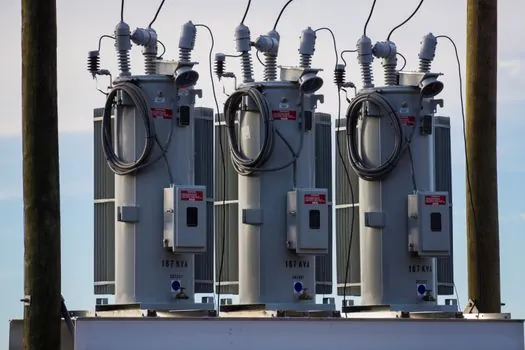
IIA equipment is appropriate where only IIA substances can occur, IIB equipment adds coverage for IIB substances and remains valid for IIA, and IIC equipment covers all three surface-industry gas groups [S1][S2].
Gas group does not replace the equipment’s zone approval, temperature class, protection type, ingress protection, or certification conditions. A complete match must satisfy the hazardous-area drawing and the full product marking [S3][S4].
Match the gas group to the protection method
Low-energy transmitters, switches, sensors, and solenoids commonly suit intrinsic safety, while motors, junction boxes, lighting fixtures, and switches commonly use flameproof or explosion-proof enclosures [S5].
Explosion-proof equipment contains an internal explosion and cools escaping gas through controlled flame paths. Intrinsic safety is a low-power protection method for hazardous-area equipment [S5]. Purged and pressurized enclosures use clean air or inert gas to maintain an overpressure that keeps the external atmosphere outside the enclosure [S5].
The protection method must match both the device and the site’s maintenance capability.
Equipment selection for explosion-proof motors therefore requires matching the motor group to the chemicals present, while explosion-proof junction boxes must satisfy the applicable group and zone as well as the enclosure and wiring requirements [S8].
Zone, temperature class, and certification are separate checks
Under the zone system, Zone 0 corresponds to an atmosphere present continuously or for long periods, Zone 1 to an atmosphere likely during normal operation, and Zone 2 to one present only under abnormal conditions such as a leak [S5].
Temperature class is an independent test. The equipment’s maximum surface temperature must remain below the autoignition temperature of the gas, so an IIC group marking alone does not establish suitability for a hydrogen atmosphere [S5].
Check the full Ex marking and certificate for the protection type, gas group, zone, temperature class, environmental rating, and any conditions of use.
ATEX equipment must be assessed against the relevant ATEX certification framework, while IECEx equipment is described through its IECEx certification. The three gas groups are defined in IEC 60079-20-1, and the resulting marking must be checked against the certificate rather than inferred from a catalogue label [S2][S4].
Where standardisation helps and where it does not
IIC standardisation is a strong control for portable and frequently moved equipment because the same unit can serve IIA, IIB, or IIC locations. It also reduces the risk that an IIA tool enters an IIC area during maintenance or emergency response [S2].
Standardisation does not remove the need to verify zone, temperature class, ingress protection, electrical ratings, or certification conditions. An IIC gas group does not make equipment suitable for a dust atmosphere, and it does not by itself establish suitability for every possible process mixture [S3][S5].
A practical purchasing record should therefore preserve the substance list, area classification drawing, selected group, temperature class, zone, protection method, certificate number, and any restrictions on installation or use. This closes the gap between selecting a gas group and proving that the complete equipment package fits the classified area.
Final selection checks before purchase
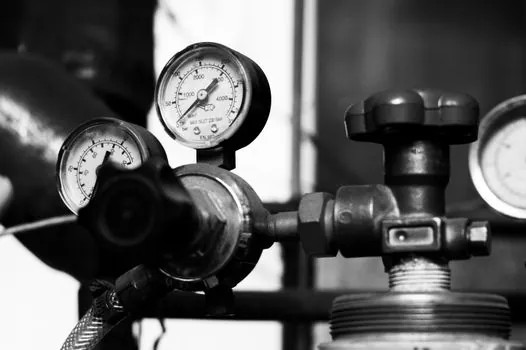
The defensible selection rule is simple: select equipment certified for the most hazardous gas group that can be present, and allow lower-group equipment only after the substance list and credible release scenarios have been formally bounded [S1][S2].
Verify three traceable facts before releasing the purchase specification: the gas group on the certificate, the complete Ex marking, and the correspondence between those entries and the current hazardous-area classification drawing.
Use gas detectors with the correct gas-group certification for the substances and zone involved, then track any change in feedstock, hydrogen content, solvent inventory, or process routing as a signal requiring review of the equipment group [S2][S3].