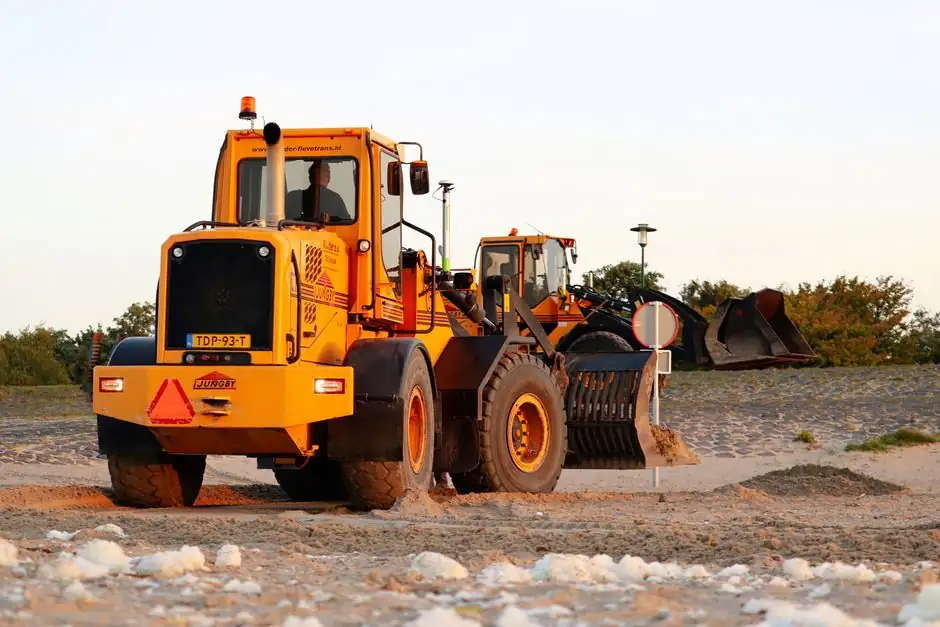
A backhoe loader with 14 ft standard digging depth covers many utility trenches, but maximum reach is not a trench-sizing specification.
Select the machine class from required excavation depth, trench width, grade, soil resistance, spoil volume, access, stability, and the need for simultaneous front loading [S1][S3][S4][S5].
Define the Trench Before Sizing the Machine
Start with the required design excavation-bottom elevation, not simply the invert elevation of a pipe. The excavation may need to be deeper than the pipe because pipe diameter and bedding add to the finished trench profile [S3].
Plan the trench for the required depth, grade, and working space before digging starts [S3].
Record trench width, route geometry, fittings, bedding, and required working space before comparing machines.
Separate Maximum Dig Depth from Usable Trench Depth
Standard backhoe loaders commonly offer about 14 ft of digging depth, while some configurations reach approximately 17 ft and deeper dipper assemblies extend beyond 18 ft [S1][S6]. These figures describe maximum reach under specified geometry, not guaranteed flat-bottom trench depth [S3].
Published examples show why configuration matters.
For selection, compare the supplier's depth specification against the deepest physical excavation required, then preserve a margin for grade control and the lower position of the trench bottom. The final machine must also satisfy reach, tearout, lift capacity, and stability at that working position [S2][S3][S5].
Compare the Main Machine Classes
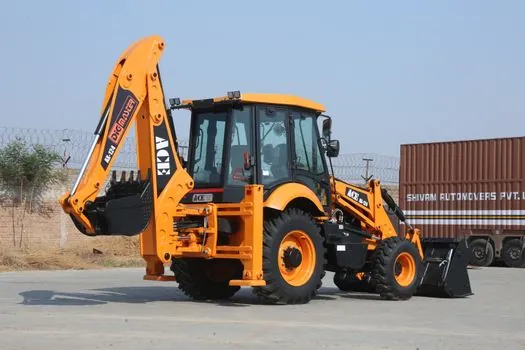
Economy or compact backhoes are centered on roughly 14 to 15 ft of standard depth.
The standard mid-class adds mass and stability for deeper utility work and material handling.
Heavy-duty center-pivot machines are built for deep excavation, pipeline work, and jobs where the backhoe performs heavy lifting all day [S2].
Match Soil, Bucket, and Force to the Trench
Depth alone does not determine excavation capacity. Residential drainage and a utility trench through compacted fill may share the same planned depth but impose different cutting, penetration, stability, and cycle-time demands [S5].
EVERSTAR’s E3CXL combines an 85 kW engine, 7,300–8,000 kg operating weight, a 1 m³ loader bucket, and 36 kN digging force, while the E4CX has a 9,500 kg operating weight, a 1.2 m³ loader bucket, and 46 kN digging force [S5].
The comparison shows differences in digging force and loader capacity, while soil resistance, material volume, access, and the amount of digging performed each day influence the appropriate backhoe size [S5].
Bucket selection should reflect trench width, material, and machine fitment. Wider buckets improve production when handling loose or easy material, but compacted ground and narrow trenches may require better penetration or a narrower cutting tool rather than maximum bucket volume [S9].
Check Clearance, Spoil, and Stability
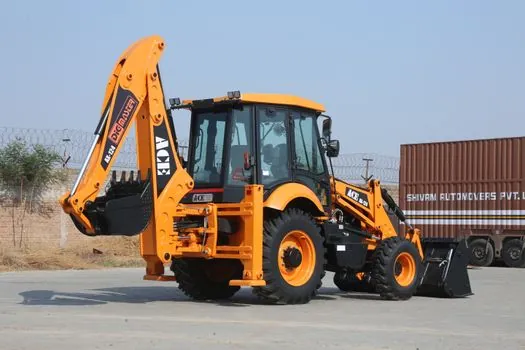
The backhoe needs room to approach, deploy stabilizers, swing the loaded bucket, and leave the excavation. A backhoe loader combines a rear excavating arm with a front loader on one wheeled chassis, while a tractor backhoe is an attachment and depends on the complete tractor-and-attachment combination [S3][S4].
Plan where spoil will go before selecting the machine. Plan where the tractor, stabilizers, and removed soil can fit before excavation begins [S3]. The E4CX has a larger loader bucket and a 9,500 kg operating weight compared with the E3CXL’s 7,300–8,000 kg operating weight, and it is intended for compacted ground and higher-volume loading [S5].
For the backhoe loader selection, evaluate width, height, transport length, turning radius, stabilizer footprint, and rear swing clearance against the actual work area. A deeper machine is unsuitable if it cannot safely reach the trench face or deploy its working envelope [S2][S3][S5].
Plan Grade, Utilities, and Trench Safety
Check buried utilities and project requirements before excavation, and plan the trench for the required depth, grade, and working space [S3].
Do not rely on the rated dig-depth figure to solve grade control. Maximum depth and flat-bottom depth are different measurements, and a trench can still be too deep if the machine cannot reach the bottom without sacrificing stability [S3].
Plan trench dimensions, utilities, spoil placement, equipment access, and safe measurement procedures before the machine arrives. Confirm that the selected backhoe can meet the required excavation depth and width while maintaining the planned grade, then verify the operator's site-specific training and trench-safety controls.
Use a Three-Part Selection Check
First, write the required depth at the deepest point, trench width, and grade tolerance. Second, confirm that a candidate backhoe has sufficient practical digging depth, reach, bucket fit, and digging force for the soil, not merely a larger published maximum [S1][S3][S5].
Third, test the complete work cycle: dig, lift, swing, load spoil, reposition, and backfill. Compare bucket capacity and force with soil resistance and daily spoil volume, then verify stabilizers, loader clearance, turning space, and access [S4][S5][S9].
The practical rule is straightforward: choose the smallest class that can safely and repeatedly achieve the required trench geometry. A 14 ft machine is a rational starting point for many utility trenches, while deeper trenches, compacted ground, or high spoil volumes justify a larger or extended-dipper configuration [S1][S2][S8].
For a tracked machine with no front-loading requirement, compare the skid-steer loader and excavator classes before finalizing the backhoe, because the backhoe's main advantage is combining excavation with front loading and road-style mobility [S4].