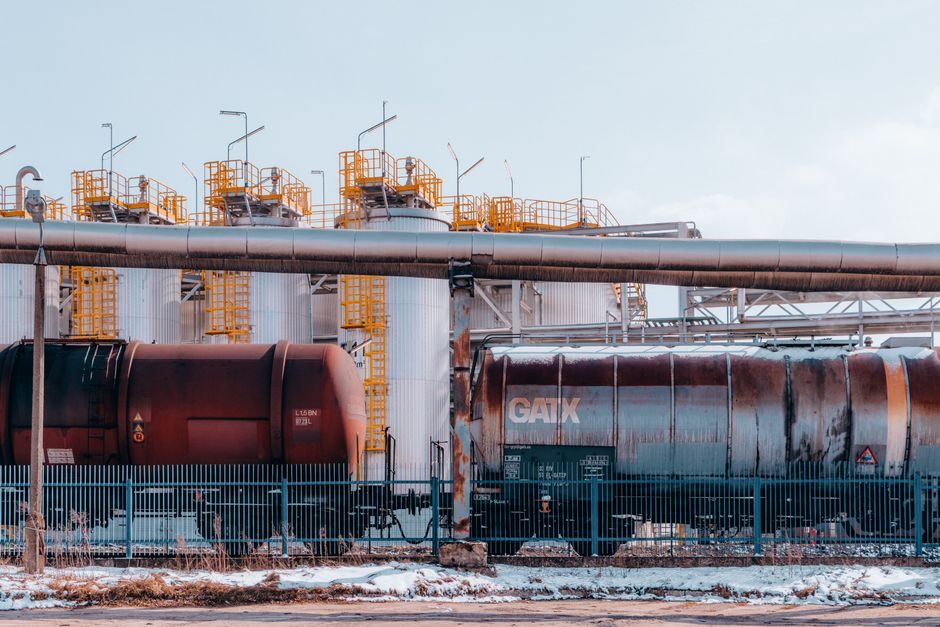
An infrared point detector such as the General Monitors IR400 delivers a 4-20 mA signal proportional to 0-100% LEL hydrocarbon concentration, with ATEX/IECEx/FM/CSA hazardous-area approvals and SIL 3 rating on the certified configuration [S1].
Across industrial OEM catalogues, infrared (NDIR) is one of four dominant gas-sensing technologies — semiconductor, electrochemical, catalytic bead, and infrared — with infrared widely used for hydrocarbons, CO2, refrigerants, and anesthetic gases where poison-resistant, fail-safe operation matters [S2][S5].
Match the Sensing Principle to the Target Gas
Infrared absorption (NDIR) works only on gases with a permanent dipole moment or characteristic IR absorption band — methane, propane, CO2, refrigerants (HFCs, halocarbons), anesthetic agents — and gives a non-consuming optical measurement with no catalytic-poisoning failure mode [S1][S6]. Catalytic-bead and semiconductor sensors dominate for low-cost combustible detection but degrade in silicone, lead, or sulfur atmospheres; electrochemical cells are standard for toxic ppm-level oxygen, CO, H2S, and NH3 [S5][S9]. For refrigerant-leak monitoring in supermarkets and chillers, a fixed halocarbon IR detector such as the Murco MGS-series replaces aspirated IR systems at a lower installed cost [S6]. In medical mainstream modules, NDIR plus sidestream paramagnetic/IR benches measure CO2, N2O, and five halogenated agents (halothane, enflurane, isoflurane, sevoflurane, desflurane) with real-time waveform output [S4].
Four Criteria That Decide the Variant
Range and resolution drive the optical bench. Hydrocarbon LEL detectors typically span 0-100% LEL with 1% LEL resolution and 4-20 mA + HART or Modbus output for predictive-maintenance data [S1]. Toxic/refrigerant ppm-point detectors use 0-2000 ppm full scale with lower-detection limits in single-digit ppm. The same optical law — Beer-Lambert absorption at a gas-specific wavelength (e.g. ~3.3 µm for C-H stretch, ~4.26 µm for CO2) — sets a hard lower bound on cell length, so a claimed 0-100 ppm methane range at a 5 cm bench should be cross-checked against NETD-equivalent noise figures [S3]. ATEX/IECEx zone, IP65/IP66/IP67 housing, and SIL 2 or SIL 3 rating are mandatory for any hydrocarbon IR detector mounted in Zone 1 or Zone 2 [S1].
Comparison: IR vs Catalytic vs Electrochemical vs Semiconductor
Selection usually starts by ruling out what will fail in service. Catalytic-bead sensors are poisoned by silicone vapors, hydrogen sulfide, and halogenated compounds, while IR detectors ignore those poisons entirely [S1][S5]. Electrochemical cells offer ppm-level CO, H2S, O2, NH3 detection at low cost but have 1-3 year life and limited cold-weather performance. Semiconductor sensors are cheap and rugged for residential/light-commercial combustible leak alarms, not for ppm-resolution industrial duty. In published DirectIndustry data, semiconductor and "dynamic" technologies together account for the bulk of 165 listed industrial IR-gas-detector SKUs, with infrared reserved for flammable-gas (9 SKUs), methane (11), CO2 (11), and refrigerant-specific duty [S2]. This is the criteria split a buyer should apply: IR for hydrocarbon/CO2/refrigerant/anesthetic duty where poison resistance or fail-safe optics are required; electrochemical for ppm toxic gas with short replacement cycles; catalytic bead for low-cost %LEL where poison atmospheres are absent.
Who IR Detectors Are For — and Who Should Pick Another Tech
Spec an IR detector when the target gas has a strong IR fingerprint and the duty is continuous-area hydrocarbon, CO2, refrigerant, or anesthetic monitoring with a 4-20 mA/HART/Modbus interface to a fixed gas detector loop or SCADA [S1][S6]. Offshore platforms, LNG terminals, ethylene plants, and refrigerant plant rooms are the canonical applications. Skip IR for hydrogen (no dipole moment, no IR absorption in the standard bands) and for low-ppm ammonia, chlorine, or HCl where an electrochemical or semiconductor cell is the only practical option [S2][S5]. The infrared thermometer page covers the related optical-pyrometer family, but it is not interchangeable: thermometry measures blackbody radiation, gas detection measures selective absorption.
Output, Certification, and Maintenance Hooks

Modern IR point detectors expose three parallel channels: 4-20 mA analog (proportional to 0-100% LEL or 0-ppm range), Modbus RTU, and HART (used for predictive-maintenance telemetry such as optical-window contamination and source-lamp ageing) [S1]. Explosion-proof housings and ATEX/IECEx/FM/CSA triple-certification are the industry norm for Zone 1 hydrocarbon service, with SIL 2 or SIL 3 capability on the certified configuration [S1]. Routine maintenance is dominated by optical-window cleaning and gas-bump testing on a 30-90 day cycle; calibration interval is typically 6-12 months for hydrocarbon IR, longer than the 3-month cycle common on catalytic beads. Reference cells, dual-wavelength designs, and heated optics are used to suppress false alarms from condensation, fog, and direct sunlight.
Sensor Performance and Selection Gates
The detector-level figure of merit equivalent to NETD in thermal imagers is signal-to-noise at the absorption-line wavelength; a 4-20 mA step of 1% LEL on a 0-100% LEL hydrocarbon scale corresponds to roughly 4 µA resolution and a 4-20 mA loop-noise floor of typically <0.1% FS [S3]. Response time T90 for fixed hydrocarbon IR detectors is normally 10-30 s, slower than the <5 s of a catalytic bead but acceptable for area monitoring. Power is 24 V DC nominal, with 4-wire (separate power and signal) preferred for long cable runs and 3-wire loop-powered for compact installations. Always check the cross-sensitivity table: a generic hydrocarbon IR calibrated on methane will under-read on propane and over-read on ethane unless the response curve is factory-set for the target gas [S1][S2]. Buyers can use the combustible gas detector and multi-gas detector reference pages to compare IR against catalytic and electrochemical variants on the same criteria.
Shortlist Logic and Trackable Signals
The cleanest selection path is a four-step gate: (1) confirm the target gas has an IR absorption band, (2) match the 0-100% LEL or 0-ppm range to the hazard scenario, (3) lock the hazardous-area certification (ATEX/IECEx/FM/CSA, Zone 1 or 2, IP rating), (4) choose the output stack (4-20 mA + HART, or Modbus, or both) to match the existing gas detector loop. A standalone IR point detector is the right pick for fixed hydrocarbon/CO2/refrigerant duty; a multi-gas instrument with one IR plus three electrochemical channels is the right pick for confined-space entry or refinery turnarounds. For process engineers mapping catalytic-bead alternatives and suppliers, the catalytic gas detector suppliers 2026 map lays out the parallel catalytic-bead shortlist. Two trackable signals: published NETD and T90 specs on refrigerant IR detectors, and the spread of HART+Modbus dual-output configurations on new Zone 1 IR point detectors [S1][S3][S6].