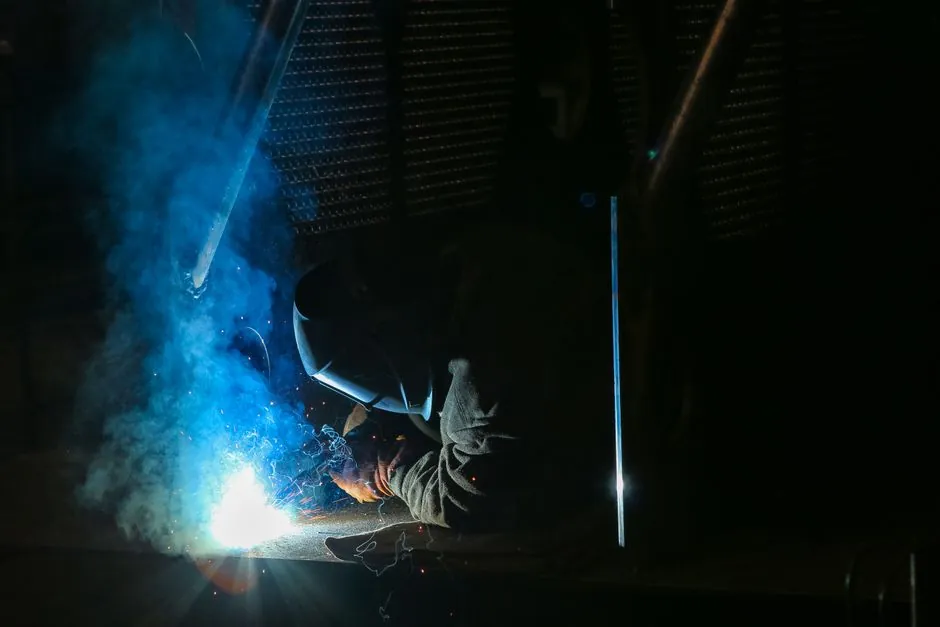
The scale matters: the American Welding Society projected a need for 82,500 new welders each year, with a cumulative deficit of 330,000 unfilled positions by 2028 [S3].
Where Lead-Time Delay Begins in Pressure Equipment
Pressure-equipment delivery is a sequence, not a single fabrication event. A delay in welding personnel can therefore appear later as delayed nozzles, attachment welds, structural supports or repair work, even when steel procurement and design are complete. [S1]
For data-center equipment, Sintel identifies Class A welder scarcity and raw-material disruption as two separate bottlenecks. Late structural components, containment systems, power-distribution platforms and equipment enclosures cause the construction schedule to move backward [S1].
Skilled-labor gaps can create a schedule penalty through several routes: fewer available crews, longer queues for qualified personnel, overtime premiums, and additional time for inspection disposition or rework. Missing deadlines and lost productivity are direct consequences when fabrication capacity cannot be expanded quickly [S5].
Certification and Documentation Capacity
[S1]
Automation can improve repeatability in heat distribution, travel speed and torch angle, while also reducing operator-dependent errors such as positioning mistakes, incorrect settings and fatigue-related variation [S1][S2]. That does not transfer every code-compliant pressure weld from a qualified person to a robot.
Programmed welding systems require explicit control of welding speed, voltage, current and wire-feed rate. System design must also match the workpiece size and shape, welding process, required speed and target accuracy [S2]. A bag of coded welders cannot replace that process qualification work.
Manual Labor Versus Automated Fabrication
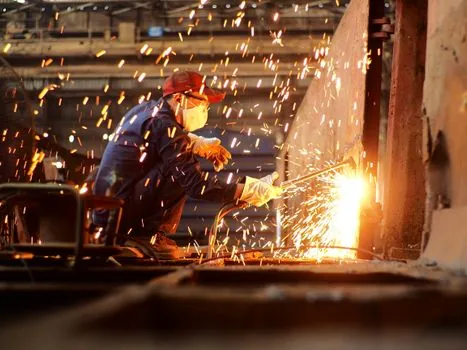
The practical comparison is straightforward: manual welding offers flexibility for one-off or complex geometry, while automation offers repeatability for standardized production. Neither option removes the need to verify the completed weld and its supporting records. [S2]
For pressure equipment, the decision criterion is not automation versus no automation. It is which weld volume is stable enough to automate, how much rework the system removes, and whether the saved fabrication hours fall on the project’s critical path.
Rework, Quality and the Hidden Schedule Multiplier
[S1]
Automated MIG welding has been linked to improved efficiency because every reduction in rework shortens lead time and raises productivity [S6]. Older equipment, however, may not provide the accuracy or precision of newer systems, which can affect weld quality [S2]. Automation therefore requires equipment-condition checks, parameter control and application-specific qualification rather than an assumption that robot output is automatically acceptable.
Pressure-vessel purchasers should ask fabricators for weld-by-weld schedule data, including released weld count, first-pass acceptance, rework hours, NDE hold time and the number of qualified welders assigned to each critical component. Those metrics convert a vague “welder shortage” explanation into a measurable schedule risk.
Which Buyers Face the Greatest Exposure
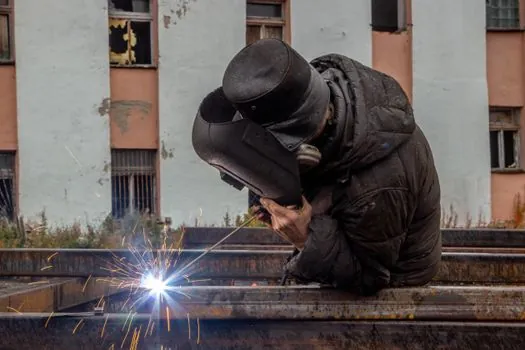
Buyers face the greatest exposure when pressure equipment has a long fabrication queue, extensive coded welding, customized geometry and no practical route to split work into parallel packages. Repeat vessels with stable geometry are better candidates for automation than one-off equipment whose drawings continue to change. [S2]
Sintel’s approach illustrates that division of labor: cobots handle repetitive, geometrically uniform production, while certified welders remain assigned to intricate and bespoke fabrication [S1].
Buyers should not use this division of labor for one-off, highly variable pressure components without validating fit-up, access, part tolerances and inspection requirements. Process choice still depends on the governing design and welding requirements.
Procurement Actions That Protect the Delivery Date
Protecting the delivery date requires a dated capacity check, not a general labor-market warning. Procurement can request a fabrication schedule showing when each weld package starts, which procedure and welder qualification cover it, which inspections are scheduled, and how many float days remain before shipment. [S1]
Three controls provide practical value: reserve qualified-welder capacity before the fabrication slot, reserve NDE and documentation resources against the same milestone, and identify a repeatable production run that can be moved to automation. Sintel states that cobot-assisted training can reduce the time required to train operators, but that claim must be separated from pressure-code qualification time for each joint [S1].
Order-of-operation discipline also matters. A shortage of Class A welders and an interrupted steel supply chain can delay the same project for different reasons [S1]. Procurement should therefore distinguish labor delay from material delay rather than applying one blanket schedule premium.
Signals Buyers Can Track After Order Release
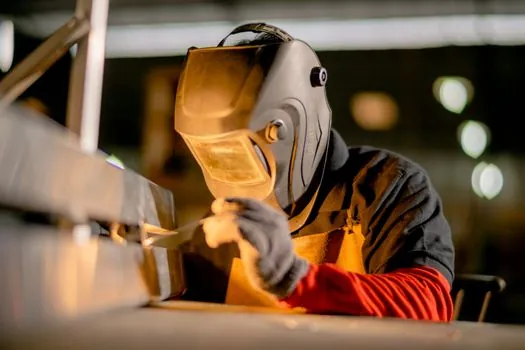
The first trackable signal is the fabrication start date for the longest-lead weld package, including confirmation that the assigned welders hold the required qualifications. The second is whether automation is reserved for a defined production run, rather than left as an untested contingency after a delay has already occurred [S1][S6].
For a deeper view of parallel procurement across critical project equipment, see How Data Center Developers Bank Long-Lead Gear Across Campuses. Buyers should also watch overtime and travel premiums attached to critical weld packages, because those costs can signal schedule pressure before a shipment date slips [S3].