
Schaeffler estimates that actuators account for about 50% of a humanoid robot's bill of materials.
A humanoid may contain dozens of actuators, with each joint integrating a motor, gearbox or screw, bearings, sensors and control electronics, so every architecture decision multiplies across the entire machine [S3].
Actuators dominate humanoid robot material cost
Schaeffler estimates that actuators represent about 50% of a typical humanoid’s bill of materials, while Hyundai Mobis has placed material cost attributable to actuators at roughly 60% [S1].
The component count explains why actuator supply matters more than a conventional electronics shortage. One Optimus-class robot is described as carrying 28 structural actuators, 14 to 16 planetary roller screws in the legs and arms, about 14 harmonic reducers in rotary joints, approximately 20 coreless motors in each dexterous hand, and more than 40 servo motors requiring rare-earth magnets [S1].
Global humanoid shipments reached 13,318 units in 2025, while Leaderdrive sold 425,158 harmonic reducers during 2025, an increase of 72% year on year [S1]. The gap between component volume and robot volume shows why actuator makers can develop specialized capacity before the market reaches mass-production scale.
One joint spans five distinct supply markets
A humanoid joint is a stack of five product groups: a frameless torque motor, a precision reducer or screw, one or two encoders, a torque or force sensor, and bearings [S1]. This structure exposes a robot program to several qualification cycles rather than one component delivery, especially when the joint supplier cannot guarantee motor, sensor and mechanical accuracy as an integrated system.
Precision transmission is among the most contested sections. Harmonic reducers, planetary roller screws and rotary joint modules each require different machining capability, tolerances and process controls [S1].
Reported capacity commitments demonstrate the scale of supplier response. Sanhua Intelligent Controls is associated with a 3.8 billion yuan robotics R&D and production campus in Hangzhou and tracked capacity of around 500,000 actuator sets per year, while Tuopu Group is investing 5 billion yuan in a dedicated robot electric-drive base [S1]. Xinjian Transmission has committed 2.6 billion yuan toward an annual objective of 1 million roller screws, and Yangjie Technology acquired Beite Technology for 2.218 billion yuan in cash in September 2024 [S1].
Component technology determines the bottleneck
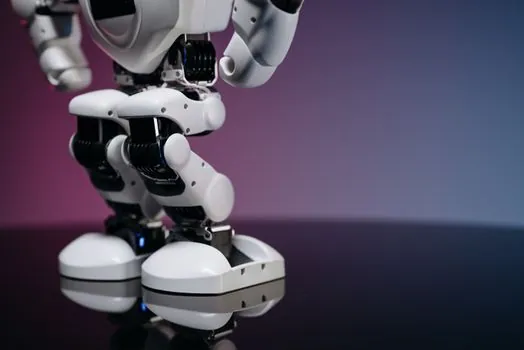
Rotary joints typically use reducers to trade motor speed for torque, while linear actuators use planetary roller screws to convert rotation into controlled linear movement. The technology choice changes the supplier base, tolerance requirements and failure mode, so a capacity estimate for a gearbox does not establish capacity for a roller-screw joint [S1].
Harmonic reducers and planetary roller screws are not interchangeable capacity pools. Harmonic reducer production depends on precision gearing and associated manufacturing processes, while roller screws require specialized grinding, thread geometry and axial-load performance. The reported 14 to 16 roller screws used in an Optimus-class machine therefore require a different qualification path from its approximately 14 harmonic reducers [S1].
Compliance also separates actuator architectures. A Series Elastic Actuator places a physical spring between the motor and load to provide compliance directly in the actuator [S4]. That approach addresses repeated impact and back-drivability differently from a rigid, self-locking transmission, but it also changes force control, packaging and the required sensor chain.
Fatigue, back-drivability and thermal limits
A humanoid robot takes roughly 5,000 steps per hour, with each step sending a shock of 2–3 times body weight through the leg actuators. Each step produces shock loads of 2 to 3 times body weight through the leg actuators, making fatigue life and load absorption central selection criteria rather than secondary specifications [S4].
“Critically, because this impact happens faster than any sensor loop can react (sub-millisecond), the actuator must be mechanically capable of ‘giving way’ (back-drivability) to absorb the energy,” states Robbie Dickson, chief engineer and founder of Firgelli Automations [S4].
These load conditions make reliability difficult to scale from laboratory hardware to fleet service. A joint must deliver force, position and speed while also surviving repeated impacts, back-driving events and thermal cycles. Qualification must therefore cover the complete motor, reducer or screw, bearing, sensor and electronic package, rather than treating procurement of each subcomponent as proof of an actuator’s endurance [S3].
Supply concentration adds geopolitical and qualification risk
McKinsey estimates that China holds approximately 90% of global permanent-magnet processing capacity, 40% of precision-bearing capacity, 35% of motor capacity and 30% of power-electronics capacity relevant to robotics supply chains [S3]. This concentration overlaps with humanoid demand for rare-earth magnets, servo motors, bearings, gear reducers and joint electronics, creating exposure that extends beyond a single joint supplier [S1].
The underlying constraint is a circular investment problem: low production volumes discourage suppliers from building dedicated tooling, while high component costs prevent robot manufacturers from generating enough demand to support that tooling [S3]. Customized designs, qualification requirements and low-volume production reinforce the bottleneck, while a platform carrying 28 structural actuators magnifies the cost of any delayed component [S1].
Export restrictions, qualification lead times and single-source production are therefore more consequential for humanoids than for software products. The 2 to 3 times body-weight shock load and sub-millisecond impact window also leave little tolerance for a joint module that is mechanically sound but insufficiently back-drivable [S4].
Which humanoid builders face the greatest exposure
Programs with large actuator counts, several transmission types and limited commonality face the greatest exposure. The 28 structural actuators, 14 to 16 roller screws, approximately 14 harmonic reducers and more than 40 servo motors cited for an Optimus-class platform create multiple paths through which one qualified component can limit an entire robot [S1].
Lower exposure comes from reusing qualified joints, narrowing the mechanical architecture and securing multiple production sources, but the research does not provide a universal actuation-to-cost ratio for comparison. A platform with about 80 actuator variants can also fragment demand and prevent a supplier from moving a single product into volume [S3].
The main users of high-performance actuators are industrial, logistics and service robots that require repeated locomotion, manipulation and safe human interaction. They are not a fit for buyers that only need a single articulated arm, where a complete humanoid supply chain adds unnecessary motor, sensor and battery volume.
Track component output, not robot announcements
The clearest supply signals are component shipments and dedicated capital spending: 425,158 harmonic reducers sold in 2025, 500,000 actuator sets of annual capacity associated with one Chinese supplier, and more than 1 billion yuan of planned Chinese spending across reported actuator and roller-screw projects [S1]. These indicators can be checked against humanoid shipments of 13,318 units in 2025 and changes in the number of actuators used per platform [S1].
For procurement teams, the practical exposure test is coverage of the full joint stack: motor, reducer or screw, bearings, encoder, force or torque sensing and electronics. Capacity announcements for one of those categories do not remove the need to qualify the integrated actuator, while the 40% to 60% material-cost share makes joint yield, lead time and field reliability commercial variables as well as engineering variables [S3].