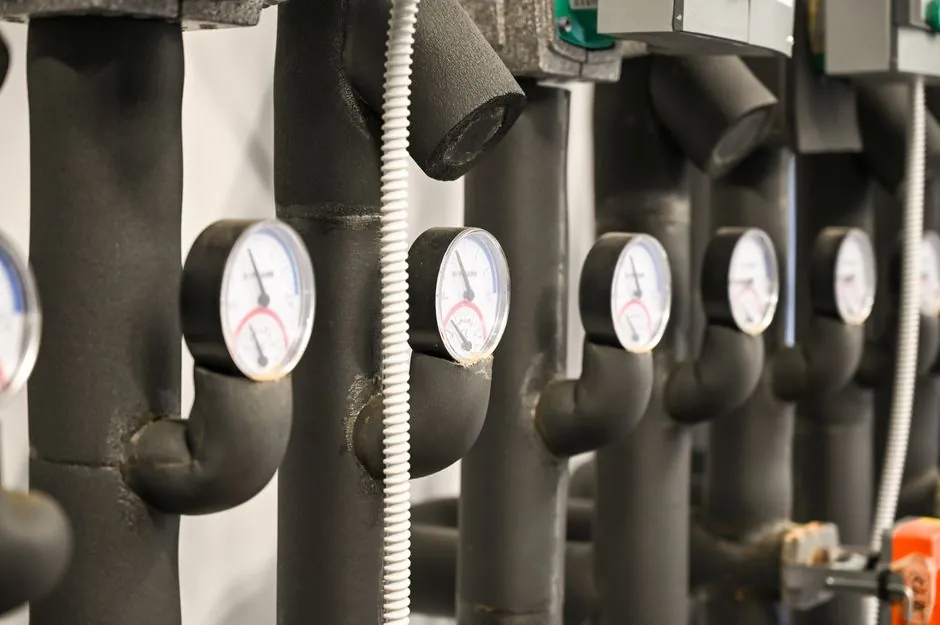
On a 2026-10-10 spec sheet, HVAC-grade differential pressure transmitters are specified at roughly ±0.5% F.S. with Pa-level ranges, while process-grade smart DP transmitters are specified at 0.065% of span or better across much wider turndown ratios [S2][S4].
The two classes share a 4-20 mA output and a similar form factor, but they diverge sharply on reference accuracy, temperature compensation, communication protocols, and unit price. Choosing the wrong class wastes money on overspec or, worse, underspecs a safety loop [S1][S2].
Accuracy Bands, Reference Conditions, and What the Datasheet Really Means
Process-grade smart pressure transmitters offer reference accuracy of 0.065% of the set span or better, a figure Fuji Electric attributes to on-board linearization, temperature compensation, and digital trim [S2]. HVAC-grade dedicated transmitters for VAV and duct static typically spec ±0.5% F.S. on low Pa ranges, which is the right ceiling for damper modulation but loose for any flow calculation [S4].
Accuracy in the field is rarely the datasheet number. When a low-DP transmitter is paired with a pitot tube in a 36-inch supply duct at 500 FPM, the velocity pressure is only about 0.015 inH2O, and a small zero error at the low end squares into a much larger flow error [S1]. HVAC contractors quote an overall system accuracy of roughly ±3% to ±5% of reading for these arrangements, versus sub-1% achievable with a calibrated process-grade unit on a primary element sized for the operating window [S1][S2].
Price, Total Installed Cost, and What You Actually Pay for
Entry-level low differential pressure transmitters for duct static, filter DP, and VAV control cluster in the $150 to $600 per-point range, with sub-$150 units common in volume OEM builds for air-handler skids [S3]. Process-grade smart DP transmitters with HART or Foundation Fieldbus, full stainless wetted parts, and 100:1 or greater turndown typically list at $1,200 to $4,500 per point before accessories [S2].
The price gap reflects more than sensor cost. Process units ship with temperature compensation over a published operating range, configurable damping, on-demand re-ranging via handheld, and diagnostics that flag impulse-line plugging or sensor degradation [S2]. HVAC units usually accept a fixed span at order time, output a noisy 4-20 mA or 0-10 V signal, and rely on the BAS controller to filter and linearize, which pushes complexity downstream rather than removing it [S2][S4].
Criteria-Based Comparison: HVAC-Grade vs Process-Grade DP
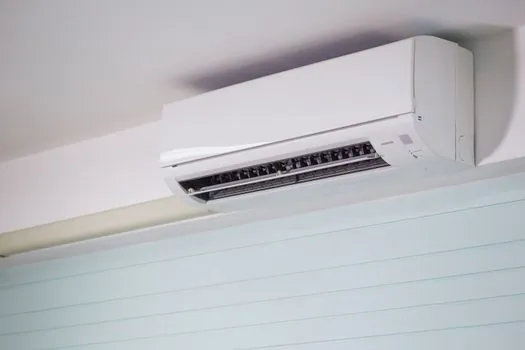
Reference accuracy: HVAC-grade ±0.5% F.S. on Pa ranges; process-grade 0.065% of span or better, with linearization [S2][S4]. On a 0 to 100 inH2O span the HVAC unit is roughly ±0.5 inH2O, while the process unit is roughly ±0.065 inH2O at the calibrated span.
Turndown and re-ranging: HVAC units are typically fixed-range; process units offer wide turndown, on-demand re-ranging, and digital trim via HART, Modbus, or PROFIBUS [S2].
Environmental tolerance: HVAC transmitters target 0 to 50 °C ambient with moderate humidity; process transmitters carry wider compensated ranges, often −40 to +85 °C, and are specified for humid, vibrating, and corrosive service [S2][S4].
Unit cost: HVAC-grade $150 to $600; process-grade $1,200 to $4,500 per point, a 3x to 8x multiplier that the BAS designer has to justify against the loop's criticality [S2][S3].
Where HVAC-Grade Wins and Where It Fails
HVAC-grade DP transmitters are the right tool for duct static pressure control at 5 to 50 Pa, VAV box tracking, filter loading alarms, and cleanroom pressure cascades in the 100 to 1,000 Pa band, where a dedicated Pa-level sensor at ±0.5% F.S. gives the BAS enough resolution to modulate fans and dampers without overshoot [S3][S4]. They also fit isolation-room pressure control, plenum-to-sub-floor monitoring in data centers, and hot/cold aisle containment, all of which are essentially single-variable, slow loops with no custody-transfer consequence [S3].
HVAC-grade fails the moment a DP signal feeds a flow calculation, a heat balance, or a safety interlock. ASHRAE Standard 111-10 lists the pitot tube traverse as the preferred method of measuring duct volumetric flow, but the method only holds up when the transmitter's zero and thermal drift stay inside the calculation's error budget, which a $200 HVAC unit rarely does on a 0 to 2,000 FPM range [S1]. It also fails in dust-laden or wet streams, where standard HVAC sensors suffer humidity damage, connector corrosion, and vibration-induced zero drift within months [S4].
Where Process-Grade Is the Only Honest Answer
Process-grade smart DP transmitters are mandatory for custody-transfer flow on orifice or averaging pitot runs, where reference accuracy of 0.065% of span is the difference between a paid and a refused invoice [S2]. They are equally required for steam, hydrocarbon, and chemical service where the wetted materials, process temperature, and NACE-classified environments rule out HVAC packaging.
Engineers also reach for process-grade units on critical filter DP loops, such as engine test cell fuel filters at 2.5 bar differential with ATEX approval, where a missed clog alarm can take an engine out [S3]. A related decision matrix for transducer signal chains, including load cells to indicators, is laid out in Load Cell to Indicator: Signal Path and Spec Essentials, which uses the same accuracy-versus-cost tradeoff logic at the millivolt level.
Integration, Protocols, and the BAS Question
HVAC-grade units default to 4-20 mA with optional 0-10 V, and newer models add BACnet MS/TP or Modbus for direct BAS landing without a gateway [S4]. Process-grade units default to 4-20 mA plus HART, with FOUNDATION Fieldbus and PROFIBUS PA available on most major lines, and the HART layer carries the diagnostic variables the asset-management system wants [S2].
If the spec already calls for HART-readable devices, the cost delta between HVAC-grade with a Modbus output and process-grade with HART narrows once you price the gateway, the extra I/O, and the commissioning labor. Engineers running into analogous signal-chain decisions on high-speed digital buses can compare bandwidth budgets in Oscilloscope bandwidth needed for a 100 MHz clock signal, which treats measurement fidelity the same way a process DP loop treats span and turndown.
Specification Rules That Keep the Project Off the Rework List
Specify reference accuracy on the calibrated span, not on the URL, and require the manufacturer to publish a turndown vs accuracy curve so the working point is verifiable [S2]. Pair the DP cell with the primary element's calculated differential pressure at minimum, normal, and maximum flow, and reject any cell whose zero stability is larger than 1% of the minimum expected DP, because the square-law flow error blows that up fast [S1].
For HVAC loops on VAV boxes and cleanroom cascades, accept ±0.5% F.S. on a Pa-level range and skip the smart transmitter; for any flow, any safety interlock, or any loop feeding an energy sub-meter, demand 0.075% or better with HART diagnostics and a published five-year stability spec [S2][S4].
Component reference pages worth checking: differential pressure transmitter, marine hvac, and process calibration.