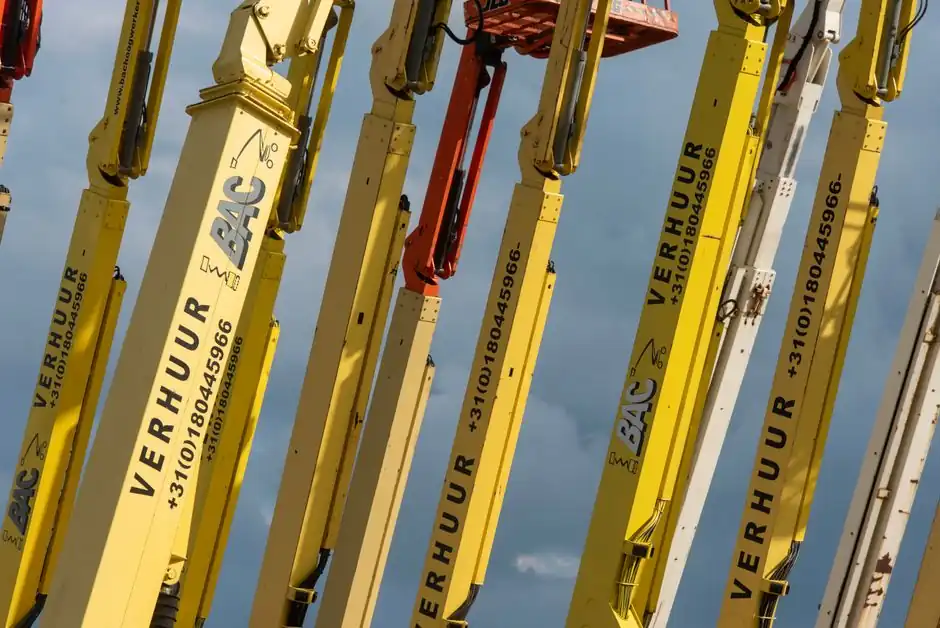
The hydraulic cylinder market reached $20.02 billion in 2025 and is on track for $21.11 billion in 2026, a 5.4% CAGR through 2030 [S4]. Global estimates vary by methodology: one tracker puts 2026 at $18.11 billion heading to $27.19 billion by 2034 [S2], another at $17.6 billion in 2026 toward $24.7 billion by 2033 [S7], and a fourth at $16.4 billion in 2026 toward $23.7 billion by 2033 [S9]. The spread reflects different scope definitions (mobile only vs all cylinders, OEM vs aftermarket) rather than contradiction.
Top-five concentration is real but moderate. Caterpillar held over 8% global share in 2024, with Bosch Rexroth, Parker Hannifin, Norrhydro, and Eaton rounding out the leadership group; together the top five held about 30% of 2024 revenue [S3]. Other trackers name a different top tier: Liebherr, Wipro Infrastructure Engineering, Eaton, KYB, Caterpillar, Parker-Hannifin, SMC, Bosch Rexroth, Ligon Hydraulics, and HYDAC [S5]. That 72–78% of the market is covered by the manufacturers these firms explicitly profile [S5], which leaves roughly a quarter of the market in mid-tier and regional suppliers not broken out in published rankings.
Where the Volume Actually Sits: Asia Pacific and North America
Asia Pacific is the largest and fastest-growing region for hydraulic cylinders, holding over 40% of 2024 global share on the back of Chinese and Indian manufacturing bases [S5]. One forecast pegs Asia Pacific as both the largest and fastest-growing region with no rival in sight [S4]. North America generated around $4.1 billion in 2024, roughly a quarter of the global market [S1], with U.S. and Canadian infrastructure, construction, and agricultural mechanization as the main end-market pulls. Europe remains a strong second tier, with industrial automation, agricultural equipment, and energy-efficient machinery cited as demand pillars [S3].
Specifying engineers should treat regional share as a sourcing signal, not a quality signal. Asian and European production has closed most of the precision and sealing-technology gap with North American suppliers, but lead times, aftermarket support density, and conformance documentation (ASME B30, ISO 6020, custom OEM prints) still favor regional supply chains for most OEM builds. The hydraulic cylinder supply base is genuinely global now, which is why top-five share is only about 30% [S3], the rest is regional and application-specific.
Function and Specification Split: Single-Acting vs Double-Acting, Tie-Rod vs Welded
Double-acting cylinders dominate new industrial and mobile equipment designs because they deliver force in both extension and retraction strokes, while single-acting units remain common in simpler lifts, dump trucks, and press applications where gravity or a return spring handles retraction [S4]. The specification split is roughly four-way: telescopic, tie-rod, mill-type, and welded cylinders, each tied to a duty profile [S4][S7].
Bore size is the second decision gate. Standard industry segmentation cuts at less than 50 mm, 50–150 mm, and greater than 150 mm [S4][S5], which maps almost directly onto application: small bore for agricultural and light mobile implements, mid bore for material handling and standard construction equipment, large bore for mining, heavy mobile, and offshore/marine. Engineers pairing a hydraulic pump to a cylinder should keep bore and rod diameter in the 50–150 mm band for the bulk of general industrial duty, stepping above 150 mm only where load and stroke geometry demand it.
Mobile vs Industrial Equipment: Who Buys What
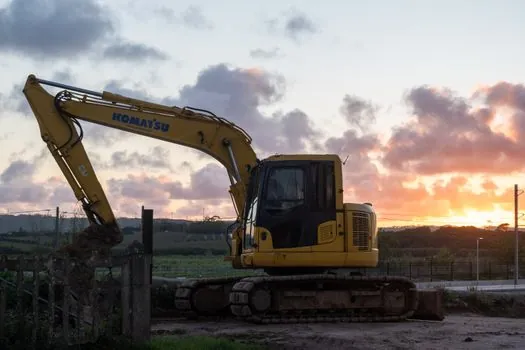
Mobile equipment, construction, agriculture, mining, and material handling, accounts for the majority of hydraulic cylinder demand by unit volume, and the bulk of OEM-direct cylinder sales from the top-five manufacturers [S4]. Industrial equipment (factory automation, presses, machine tools, injection molding) is smaller in units but higher in margin and customization, which is where Parker, Bosch Rexroth, and HYDAC tend to lead [S3][S5].
A practical split for the buyer: if you are a heavy-equipment OEM, your hydraulic actuator decision is driven by mounting interface, pressure rating (typically 250–350 bar working pressure for mobile duty), and seal package life, with brand weight secondary to local service density. If you are an industrial OEM specifying factory-floor cylinders, brand weight and documented fatigue life (ISO 6020-2 test data) matter more than price per unit. The 30% top-five share figure [S3] reflects that mobile equipment is more fragmented by regional OEM relationships, while industrial duty is more consolidated around a handful of global names.
Smart Hydraulics and Digital-Twin Integration
Manufacturers are increasingly integrating digital-twin technology, allowing operators to simulate stress and load cycles on high-value cylinders before deployment, reducing downtime and maintenance cost [S5]. This is a real shift in how the top-tier suppliers differentiate, moving from pure mechanical specs (pressure, bore, stroke) to bundled sensor and condition-monitoring packages on the hydraulic valve and cylinder assemblies.
IoT-enabled position and load sensing on hydraulic cylinders is now table stakes for new premium mobile equipment from Caterpillar, Liebherr, and Komatsu, but the underlying hydraulic system architecture, pump, valve, actuator, reservoir, still follows the same pressure-flow rules it has for decades. For specifying engineers, this means smart-cylinder features should be evaluated as optional add-ons, not as a replacement for the basic pressure, flow, and sealing engineering that defines cylinder life.
Tariffs, Raw-Material Costs, and Lead Times
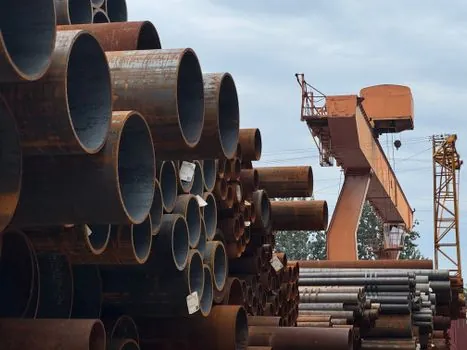
Tariffs are influencing the hydraulic cylinder market by raising costs of imported steel tubes, precision rods, seals, and machining components. North America and Europe are most affected due to reliance on imported raw materials and subcomponents, while Asia-Pacific suppliers face reduced export competitiveness. These tariffs increase production costs and extend lead times for OEMs, but they are also driving localization of cylinder production [S4].
For buyers, the practical impact in 2026 is longer lead times on imported tie-rod and mill-type cylinders, and a modest 5–15% cost uplift on North American builds using imported rod stock and seal kits. Sourcing teams that dual-source between a domestic mill-type supplier and an Asian welded-cylinder supplier are best positioned to ride out the volatility, since neither tariff exposure nor freight cost is going to normalize in the near term.
Selection Criteria: How to Pick a Manufacturer
Three criteria separate the credible hydraulic cylinder manufacturers from the rest: documented conformance to ISO 6020 (industrial) or OEM-specific prints (mobile), regional service and rebuild capability, and a seal package rated for the actual duty fluid and temperature range. A 4-criteria comparison for the main options: [S4]
Top-five global OEMs (Caterpillar, Bosch Rexroth, Parker Hannifin, Eaton, plus regional leaders like Liebherr, KYB, Norrhydro): strongest R&D, widest smart-hydraulics integration, best global service networks, premium pricing, longest lead times on custom units [S3][S5]. Mid-tier regional suppliers: competitive on price, faster lead times, narrower bore and pressure range, limited IoT and digital-twin support. Specialist mobile-equipment makers: deep application knowledge for construction, mining, agriculture, often supply direct to OEMs, weaker on industrial factory-floor duty. In-house rebuild shops and distributors: handle aftermarket and custom short-run builds, useful for legacy equipment, not for new OEM platforms.
Limits of the Public Data

Published market shares are estimates from analyst firms using different methodologies, and the top-five lists do not perfectly overlap across trackers [S3][S5]. No public source breaks out share by cylinder type (tie-rod vs welded vs telescopic), by end-user industry, or by pressure class. North American share figures around $4.1 billion in 2024 [S1] sit comfortably inside the global $13.4–$20.0 billion range, but the gap between estimates is too wide to treat any single number as definitive. Engineers should use these figures for market-shape context, not for supplier selection decisions.
Track two signals through 2026 to refine the picture: quarterly earnings from Parker Hannifin, Eaton, and Caterpillar's machinery segment, which together cover the bulk of the publicly visible hydraulic-cylinder revenue; and the next round of tariff and localization announcements, which will determine whether the 30% top-five share [S3] consolidates or fragments further.
See also our earlier report, Best Marine Signal Repeater: 2026 Spec Map for Boats and Ships.