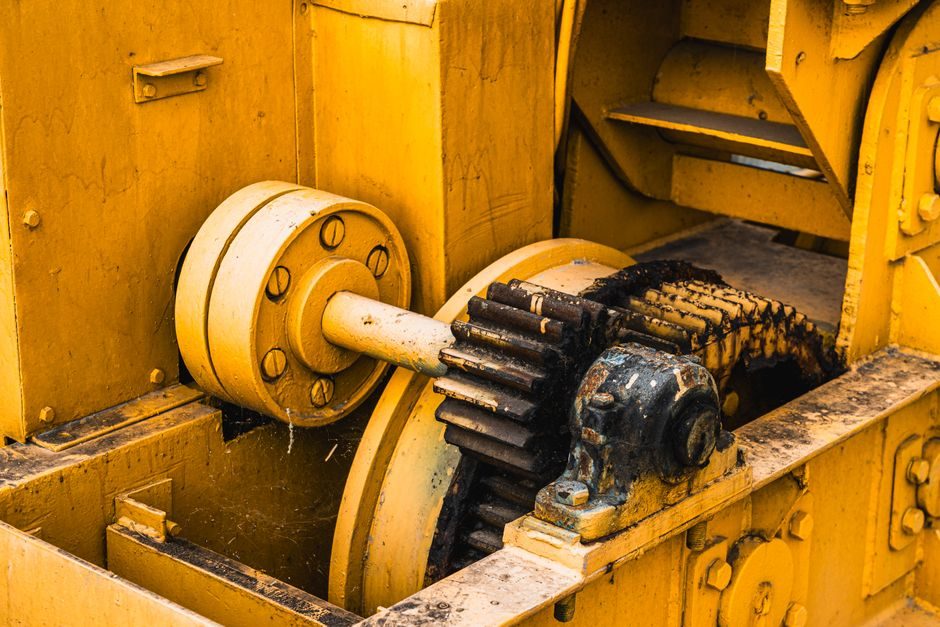
Hydraulic press selection is governed by four hard constraints — required tonnage, frame geometry, stroke length, and duty cycle — before a buyer should ever look at price or brand [S3].
Press Master, a North American hydraulic press manufacturer operating from a 200,000 sq ft facility in Harrison, NJ, lists ten standard frame configurations on its 2026 catalog page, ranging from a 20-ton hydraulic broach press to 350-ton H-frame presses and 250-ton straightening presses [S3]. Mainland China suppliers on made-in-china.com cluster around small-tonnage four-column hydraulic presses (a 10-ton four-column unit is featured as a representative product) for the export catalog [S1].
Frame Geometry: H-Frame vs C-Frame vs 4-Post
H-frame hydraulic presses carry the highest published tonnage ratings in the 2026 Press Master catalog, with the HFP H-frame press rated to 350 tons and the HFBP H-frame/broach press offered to 250 tons in extra-wide configurations [S3]. The H-frame's four-column throat gives uniform bed support across the full bolster width, which is why straightening presses and broach presses both use the H topology.
C-frame presses trade bed rigidity for side access — Press Master's CFP line tops out at 200 tons and leaves one horizontal side open for loading long shafts or trim dies [S3]. 4-post presses (4PP) are built for die tryout and forming where ram-to-bolster parallelism matters more than raw tonnage; Press Master lists a 50-ton 4-post press as its baseline 4PP model [S3]. For buyers comparing H-frame versus C-frame shop press geometry, the decision axis is bed support versus side access — not tonnage alone.
Tonnage Sizing: Rule-of-Thumb and Common Failure Modes
Press Master's April 14, 2026 article "Signs Your Hydraulic Press Is Undersized for the Job" ties press selection to three observable symptoms: inability to reach rated pressure, slow ram under load, and a relief valve that opens before the forming stroke completes [S3]. Off-center loading — the subject of the June 4, 2026 Press Master post — is flagged as the silent killer of adequately-tonned presses, because the published tonnage assumes centered load distribution across the bolster.
Practical sizing on a hydraulic forging press starts from the projected area of the workpiece multiplied by the flow stress of the material at forming temperature, then divided by the ram's effective area [S5]. A 3000 kN hydraulic press is a common capacity for medium forging work, and kccnc.com lists servo-guided hydraulic press machines designed for stretch-forming large autobody panels at the upper end of the H-frame spectrum [S5]. Buyers should treat published tonnage as a centered-load ceiling, not a guaranteed working load, and de-rate by 20-30 percent when side loads or off-center punch geometries are present.
Hydraulic Cylinder, Actuator and Power Pack Sizing
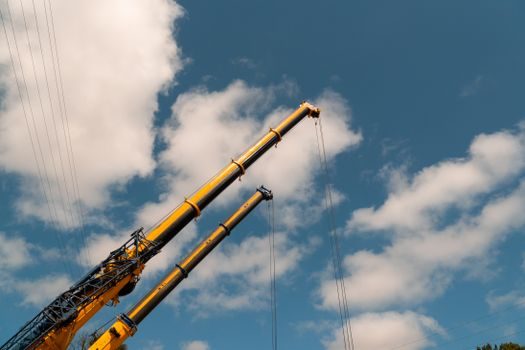
The hydraulic cylinder is the component that converts pump flow and pressure into ram force, and its bore and rod diameter set both the tonnage ceiling and the ram speed at any given working pressure. The hydraulic actuator on a press is normally a double-acting cylinder with a regenerative circuit on the return stroke to keep cycle times in the 5-15 second range typical of metal-stamping duty. [S1]
Servo-driven hydraulic presses, such as the H-frame servo guide stamping press on kccnc.com, replace the fixed-displacement pump with a servo-controlled variable pump and a servo motor, cutting energy use by 30-60 percent on partial-stroke duty compared to a standard asynchronous-motor hydraulic power pack [S5]. The hydraulic motor on the pump is sized to deliver peak flow at the maximum ram speed specified; undersizing the motor shows up as slow extension under load, the same symptom as an undersized cylinder.
Control Architecture, Safety Standards and Compliance
Press Master's February 2, 2026 article "Hydraulic Press Safety Under CSA Z142" sets the North American compliance baseline for hydraulic press guarding, two-hand control, and light-curtain integration [S3]. CSA Z142 is the Canadian standard governing power press operation, and any press sold into Canadian shops must meet its guarding and stop-performance requirements; the equivalent US reference is OSHA 29 CFR 1910.217 for mechanical power presses, which is widely used as a reference baseline even on hydraulic equipment.
For presses fitted with electronic limit switches, PLC-based cycle counters, and pressure transducers, the control panel must be rated for the surrounding area — NEC 500 / NFPA 70 zone classification matters the moment a press sits within a flammable-finish spray booth or a die-lubricant mist zone. Buyers should request the press's CE declaration (EN 693 for hydraulic presses) and the control panel's UL 508A panel-builder certification before accepting a unit on the shop floor.
Selection Checklist: Who a Hydraulic Press Is For
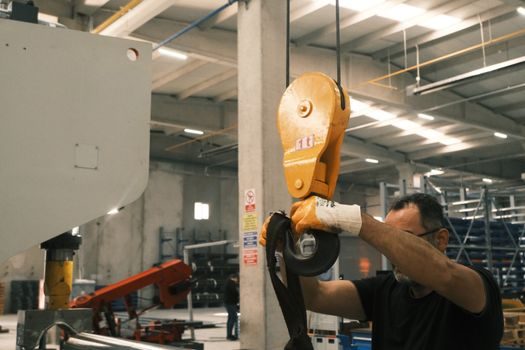
A hydraulic press is the right tool when the job needs full-rated tonnage at any point in the stroke, variable stroke length, or dwell-under-pressure for compaction and molding duty [S3]. It is the wrong tool when the job is high-speed blanking above 60 strokes per minute, where a mechanical press keeps cycle time and energy cost lower.
For stamping and forming shops weighing a hydraulic press against a mechanical press, the key question is duty cycle and stroke profile: hydraulic wins on long dwell, partial stroke, and tool tryout; mechanical wins on continuous high-speed blanking of thin coil stock [S3]. Buyers in maintenance, repair, and overhaul shops should look for a C-frame or small H-frame in the 50-200 ton range with a movable bolster and a roll-in table option, such as Press Master's RTP 250-51 roll-in table hydraulic press [S3].
Verification Before Purchase: What to Inspect
Three inspections separate a good press buy from a costly one: (1) cylinder drift test — the July 6, 2026 Press Master article "Cylinder Drift: When the Ram Won't Stay Put" details the procedure, where a ram loaded to rated tonnage must hold position for at least five minutes without measurable drift; (2) relief-valve setting verification at the gauge block, recorded on the test certificate; (3) noise and temperature survey under no-load cycling for 30 minutes, with hydraulic reservoir temperature not exceeding the oil supplier's rated maximum (typically 60-70 °C for ISO VG 32 or VG 46 mineral hydraulic oil) [S3].
For buyers sourcing from a mainland China supplier via the made-in-china.com Jiangsu/Wuxi hydraulic press product page, the most common documentation gaps are CE EN 693 test reports, type-test certificates for the hydraulic cylinder, and FAT (Factory Acceptance Test) videos at full tonnage [S1]. A pre-shipment third-party inspection that includes a cylinder drift test, a relief-valve crack test, and a full-pressure hold for 10 minutes costs roughly 0.5-1.5 percent of press value and is the cheapest insurance on a six-figure machine.