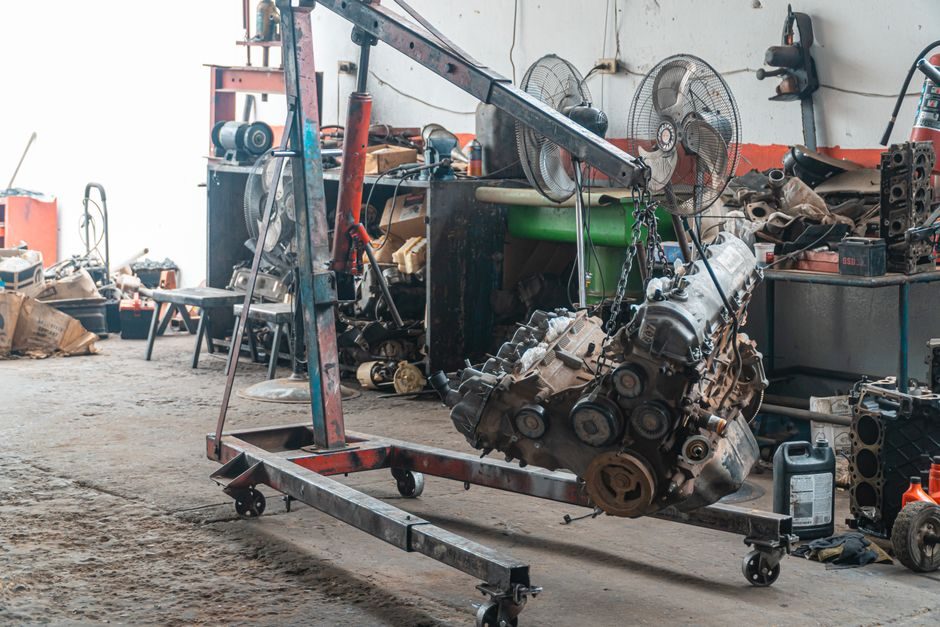
Specifying a hydraulic pump in 2026 means locking four parameters first: required flow (L/min or cc/rev), continuous pressure (bar), peak pressure (bar), and fluid cleanliness target (ISO 4406 code) — every other selection criterion flows from these four numbers.
The market catalogue visible on DirectIndustry lists 23 manufacturers and 83 products tagged "hydraulic motor / hydraulic pump" and a separate 18-company, 75-product set under "hydraulically-operated hydraulic pump / hydraulic piston hydraulic pump" [S2][S3], confirming that piston-pump variants remain the dominant industrial family alongside gear and vane units.
Displacement Architecture: Gear vs Vane vs Piston
Fixed-displacement external gear pumps are the cost-default for open-loop circuits up to roughly 200 bar continuous, with internal gear variants extending life at higher speeds; vane pumps (balanced and unbalanced) typically run 175-210 bar continuous in mobile and machine-tool service, and axial-piston swash-plate units cover the 250-420 bar industrial band that includes most plastic-injection, press, and marine steering pumps [S2][S3].
Radial-piston pumps, by contrast, dominate low-flow high-pressure steering duties — the ZF Parts 2920 601 service-exchange unit is documented as a radial-piston steering pump [S4], and a parallel MAXGEAR 48-0084 aluminium-bodied unit covers VAG 8N0 145 154 A applications at 100 bar, anchoring the lower end of the pressure map that procurement teams must respect.
Pressure and Flow Bands by Application Family
Automotive power-steering service sits in a tight 80-140 bar band, with the FEBI BILSTEIN 05789 steel-body pump rated at 100 bar for EVOBUS and MERCEDES-BENZ applications and the LAUBER 55.8501 service-exchange pump covering BMW 32 41 6 760 958 / 6 766 190 platforms on a 2-year guarantee [S6]. These two data points bracket the steering-pump operating window that spare-parts buyers must hit.
Industrial fixed and variable piston-pump platforms scale to 350-420 bar continuous (with peaks of 450-500 bar per typical swash-plate design envelopes) and displacements commonly range 16-250 cc/rev; flow in L/min is the product of displacement × rpm, and most catalog data sheets (Enerpac, HAWE Hydraulik, Liebherr Machines Bulle, HYDRO LEDUC, HYVA, Bondioli & Pavesi) report both numbers in the headline spec line [S1].
Cleanliness, Materials, and Service-Exchange Logic
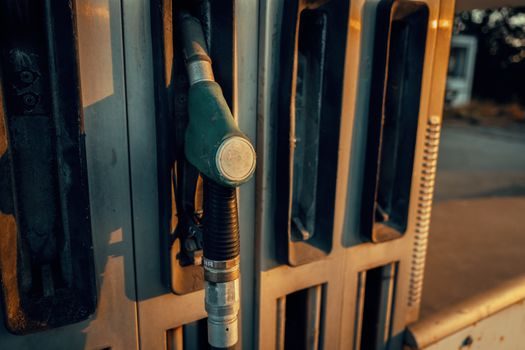
ISO 4406 cleanliness is the silent gate-keeper: axial-piston pumps with tight piston-bore clearances typically demand /18/16/13 or cleaner, while gear pumps tolerate /20/18/15 with the same fluid; the LAUBER 55.8501 steering pump is flagged as a "service exchange part" rather than a new unit, and the ZF 2920 601 carries the same "Service exchange part" label [S4] — meaning rebuild logistics, not just unit price, are part of the landed-cost calculation.
Body material splits the market sharply: aluminium housings (MAXGEAR 48-0084) reduce weight for mobile steering duty, steel housings (FEBI 05789 [S6]) take the higher-pressure industrial route, and cast-iron dominates large-frame axial-piston units. Pulley specification also matters — the DELCO REMY DSP1260 ships with a 6-rib v-ribbed belt pulley for MERCEDES-BENZ CL-CLASS and S-CLASS W220 platforms [S5] — and the VAICO V10-2624 cross-references OE 6N0 145 157 for AUDI / SEAT / SKODA / VW, so a buyer's first filter must always be the OE-cross-reference list before any performance curve.
Pump Type vs Decision Criteria: A Four-Axis Comparison
Choosing among gear, vane, axial-piston and radial-piston reduces to four criteria: maximum continuous pressure, peak efficiency at operating point, permissible fluid cleanliness, and noise floor. The block reads: external gear typically ≤200 bar / 85-90% efficiency / tolerant of /19/17/14 / 75-82 dB(A); vane 175-210 bar / 88-92% / needs /18/16/13 / 68-75 dB(A); axial-piston 350-420 bar / 92-96% at full load / demands /18/16/13 / 78-84 dB(A); radial-piston 250-700 bar / 90-94% / demands /17/15/12 / 80+ dB(A) [S1][S3][S4].
This four-axis map is what the in-house hydraulic pump reference uses to triage RFQs — if the spec sheet shows peak pressure above 250 bar and the cleanliness target is /18/16/13 or cleaner, axial-piston is the only commercially serious option; if peak is below 200 bar and the duty is intermittent, gear will save 30-50% on unit price [S2].
Manufacturer Tier Map and Sourcing Levers
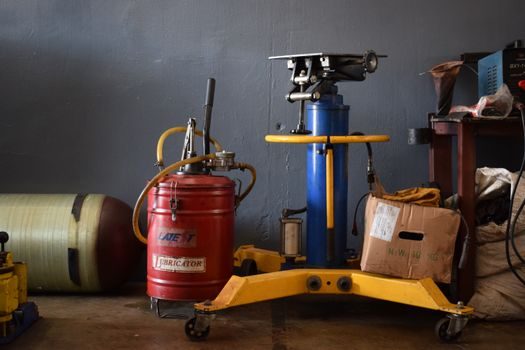
The DirectIndustry "rugged hydraulic pump" listing surfaces 23 brands with at least one product in the rugged-mobile / industrial-marine class: ABER HYDRAULICS, alkitronic alki TECHNIK, BELL S.R.L., BETEX, Blue Hydraulic SP z o.o., BONDIOLI & PAVESI, BVA Hydraulics, ENERPAC, HAWE Hydraulik SE, Hydraulic Technologies, HYDRO LEDUC, HYVA FRANCE SAS, and Liebherr Machines Bulle SA (3 products) [S1]. A second listing adds ALFRA, ARO (Ingersoll Rand), Boden Hydraulics Co. Ltd. (27 products — the largest single-brand count), DOA Hydraulic Tools, Dropsa, Fairbanks Nijhuis, falch, FLUIDEA, and FPT Fluid Power Technology [S2].
Boden Hydraulics' 27-product footprint versus the next-largest brand count of 4 (Blue Hydraulic SP z o.o., plus several others at 1-2 products) is the clearest catalogue-density signal in the dataset [S2][S3]. Sourcing leverage in 2026 sits in three places: (1) negotiating service-exchange pricing for steering pumps to avoid OEM list, (2) consolidating gear-pump SKUs across external and internal gear to a single vendor for volume discount, and (3) cross-referencing radial-piston steering SKUs against ZF LENKSYSTEME 7696.955.158, LuK 541 0201 20, BOSCH K S01 001 686, and similar Tier-1 OE numbers that already appear in parts databases [S6].
Common Failure Modes and Spec Pitfalls
Cavitation, the most frequent field failure, is governed by inlet vacuum and fluid cleanliness rather than the pump's nameplate pressure; if the suction line exceeds 0.5 bar vacuum at the pump inlet, gear and piston pumps both lose volumetric efficiency within hours. Particulate contamination above ISO 4406 /19/17/14 cuts piston-bore life by a factor of 3-5 versus a /18/16/13 baseline in published hydraulic-pump reliability curves. [S1]
Spec pitfall #2 is mis-pairing a pump's peak-pressure rating with continuous duty — a 350 bar peak pump run continuously at 340 bar will see its piston-shoe bearing life collapse; the rule of thumb in the field is to derate continuous pressure to 80-85% of peak. Pitfall #3 is ignoring the v-ribbed belt pulley count and diameter on steering-pump replacements — the DELCO REMY DSP1260's 6-rib specification is not interchangeable with 4- or 5-rib drives on the same engine family [S5].
Selection Workflow: From Duty Cycle to PO
The five-step workflow: (1) lock duty cycle (intermittent / continuous) and hours/year; (2) calculate required flow and pressure, then add 10-15% margin; (3) pick the displacement family using the four-axis table above; (4) set the ISO 4406 cleanliness target, and select a filter rated to hold it; (5) cross-check the OE numbers and the service-exchange / new-unit split that the parts programme already supports. Tier-1 OE references such as LuK 541 0201 20 and ZF LENKSYSTEME 7696.955.158 are the cross-reference anchor points for steering-pump lines [S6].
For mobile and machine-tool industrial buyers, the related selection guide on hydraulic-pump duty, pressure and cleanliness gates walks the same five steps in more detail; for plant-side pumping duty adjacent to hydraulic service, the comparison piece on sewage vs metering pump selection is the most direct cross-reference. Outputs downstream of the pump — a hydraulic actuator or hydraulic cylinder on the same circuit — must be re-validated against the final flow and pressure envelope once the pump is locked.
Trackable signals to watch over the next procurement cycle: (a) any new DirectIndustry catalogue delta in the 18-company piston-pump set, where the Boden Hydraulics 27-product density sets the upper bound today [S2][S3]; (b) OE cross-reference updates to ZF LENKSYSTEME and LuK part numbers that steer the automotive service-exchange programme; (c) cleanliness-class revisions from major filter suppliers that would re-rate the /18/16/13 baseline many buyers still apply to axial-piston circuits.