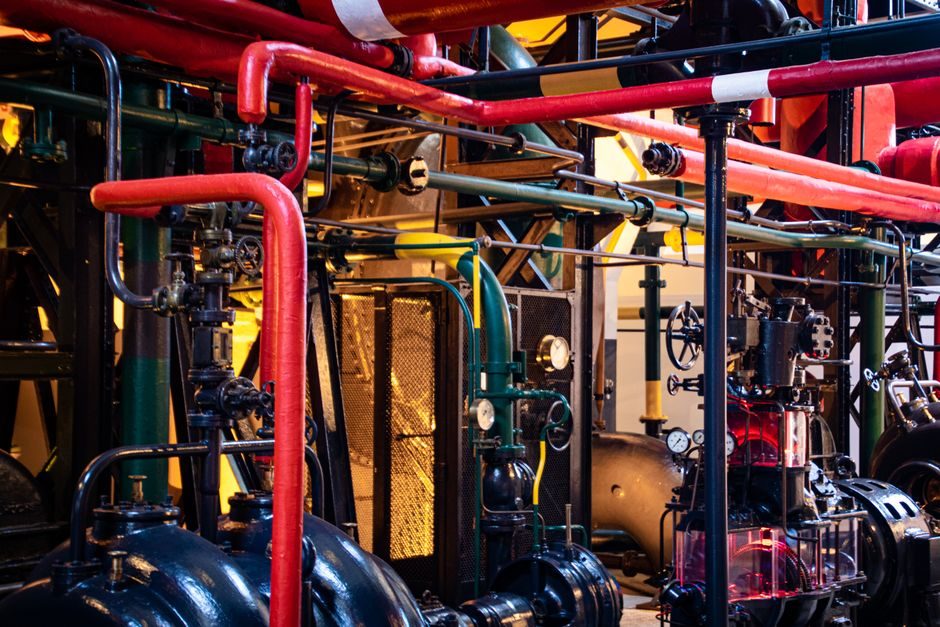
A submersible sewage pump rated 3 hp (2.2 kW) delivers roughly 22 m of head at full load and is built to pass solids of a stated free-passage diameter, whereas a JM-series diaphragm metering pump doses NaOCl, HCl or polymer at 0–100 % stroke-length adjustment against pressures that commonly reach 10 bar — the two devices are not interchangeable [S5][S6].
For procurement, the choice reduces to four numbers: flow (m³/h vs L/h), head (m vs bar), solids handling (mm free passage vs none), and dosing accuracy (typically ±1–2 % for a metering pump versus not specified for a sewage pump) [S4][S6].
Operating Principle and Hydraulic Class
Submersible sewage pumps such as the WQ, WQX and WQD ranges from Taizhou Zunhualong are single-stage end-suction units with a vortex or channel impeller, designed to run fully immersed in the sump and discharge through a flexible hose or rigid riser. Indian OEM Point Pumps lists sewage lines — PS, PSS, PMT and PMI — that share the same wet-end architecture and are commonly supplied as 1-phase or 3-phase units for drainage, dewatering and high-discharge applications [S2].
By contrast, a JM-series diaphragm chemical-dosing pump is a positive-displacement diaphragm pump with a reciprocating PTFE-faced diaphragm driven by an eccentric cam; stroke length and stroke frequency are the two independent variables, and the gearbox is sized so the output curve stays linear from 10 % to 100 % of nominal capacity [S6]. This displacement principle — not a velocity head — is what makes the metering pump suitable for closed-loop pH or chlorine control, where a centrifugal pump would simply dead-head or over-deliver as system pressure drifts.
Flow, Head and Pressure Windows
Submersible sewage units are quoted in the tens of m³/h at 5–30 m of head, with a 3 hp (2.2 kW) two-pole motor and a 22 m rated head being a common published datapoint for a 3-phase contractor-grade unit [S5]. Xylem Flygt dewatering and borewell lines listed by MENA Engineering Equipment span the same envelope, with cutter and grinder variants for sewage containing wipes or fibrous solids [S3].
Diaphragm metering pumps in the JM family are sold at 65–85 USD FOB per set with a 2-piece MOQ, factory capacity of 1000 sets/month, and a 1-set inner-carton / 4-sets outer-carton pack-out — price points consistent with flows in the 0–500 L/h window and discharge pressures up to about 10 bar, depending on the gear ratio and diaphragm diameter [S6]. For higher pressures (40–200 bar) the same selection logic shifts to a plunger or hydraulic-pump dosing head; for viscous polymers above ~5000 cP, a peristaltic metering pump is the usual substitute [S4].
Solids Handling, Materials and Corrosion Envelope
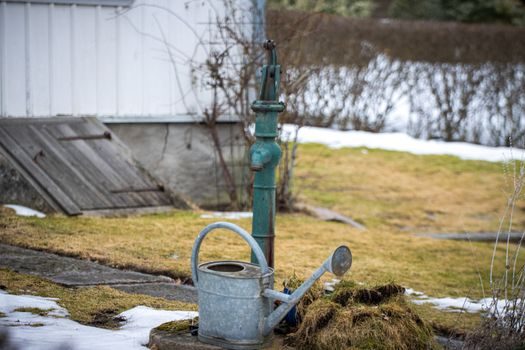
Sewage pump specifications always quote a free-passage figure — typically 10–80 mm depending on impeller type (vortex > channel > grinder) — because a domestic wastewater stream routinely carries wipes, hair, rag and small stones. A 3 hp submersible sewage pump of the type catalogued by ATO is built around a cast-iron body with a ductile-iron impeller, mechanical seal in SiC/SiC, and an IP68 wet-end rated for continuous submergence [S5].
HZYWELL's published product tree lists magnetic-drive centrifugal, vertical, diaphragm, peristaltic, electroplating filter and flow-meter lines alongside the metering line, which signals the same chemical-process supply chain [S4]. Specifying a cast-iron sewage pump on 32 % HCl is a failure in waiting; specifying a PVDF metering pump on raw sewage will clog in hours.
Selection Criteria: A Side-by-Side Spec Matrix
The selection question reduces to four decision criteria, and the right answer is a function of which one is non-negotiable on the project. [S1]
- Application stream: raw sewage, stormwater, dewatering → sewage pump (channel / vortex / cutter impeller, 10–80 mm free passage). Reagent dosing, pH/Cl adjustment, polymer feed → metering pump (diaphragm, ±1–2 % repeatability, PTFE/PVDF liquid end) [S1][S3][S4].
- Flow and head: 5–500 m³/h at 5–30 m head for sewage [S5]; 0.1–500 L/h at 3–10 bar (up to 200 bar on hydraulic diaphragm) for metering [S4][S6].
- Solids and viscosity: sewage handles fibrous solids and slurries up to ~3 % TS; metering handles clean liquids below ~500 cP (peristaltic up to ~10 000 cP) [S3][S4].
- Control interface: sewage pumps run on DOL or VFD across a 50/60 Hz mains supply; metering pumps accept 4–20 mA, pulse, or 0–10 V setpoints and can be slaved to a residual chlorine or pH transmitter [S4][S6].
Failure Modes and Misapplication Patterns
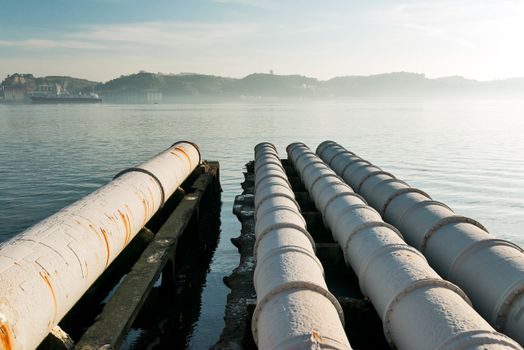
Three failure modes show up repeatedly in the field. First, using a centrifugal pump as a chemical feeder: as system pressure rises the flow decays non-linearly, and there is no stroke-length trim to compensate — pH excursion follows within minutes. Second, running a dry-installed sewage pump with a starved suction: vortex impellers tolerate air pockets briefly, but the mechanical seal (SiC/SiC faces on a 3 hp ATO-class unit) is rated for flooded operation only [S5].
Third, undersizing the solids passage on a sewage pump by specifying a channel impeller where a vortex or grinder is needed — wipes from a commercial kitchen or hospital laundry will lock a 10 mm channel impeller in a single duty cycle. On the metering side, gas-locking of a diaphragm head on sodium hypochlorite feed is the single most common service call; the cure is a degassing valve on the discharge head, not a larger pump [S4][S6].
Standards, Sourcing and the 2026 Supply Map
Sewage pump lines from UK specialist Pump Technology cover environmental, utility and industrial wastewater duties, with sub-lines for stormwater, borewell and dewatering; Xylem's Flygt brand is the de-facto reference for submersible sewage in the EMEA channel, distributed in the Middle East and Africa by MENA Engineering Equipment [S1][S3]. Chinese OEM supply is concentrated in the WQ/WQX/WQD and QX/QY submersible families from manufacturers such as Taizhou Zunhualong (founded 1999) and Shanghai Guanfeng, with HZYWELL also offering a multi-family catalogue that bundles metering, magnetic, vertical, peristaltic and electroplating-filter lines for water-treatment skid builders [S2][S4].
Indian supply from Point Pumps covers PS/PSS single-phase and 3-phase drainage and sewage units in cast iron and stainless (PMT/PMI series), which gives EPCs in South Asia and the Middle East a second-source option to the Chinese and European lines. For dosing skids, the Made-in-China JM-series diaphragm metering pump at 65–85 USD/set FOB with 1000 sets/month capacity is the price-setting tier in this segment, and the same OEM tier feeds water-treatment skid integrators in Southeast Asia and Latin America [S6]. Standards most often cited at the spec stage are ISO 5199 for pump testing, ISO 9906 for hydraulic performance acceptance, and IEC 60079-0/60079-1 for any unit installed in a classified hazardous area — these are project requirements rather than manufacturer claims, and should be invoked by the EPC, not by the supplier brochure [S1][S3].
Track the next two signals before re-quoting: (1) whether IEC 60079-0 hazardous-area submersible sewage units from Xylem Flygt are released with a 2026 factory-fresh datasheet, since MENA's 2026 channel update suggests a refresh window; (2) the JM-series price-per-set band, which held in the 65–85 USD FOB window through 2025–2026 and is the most reliable indicator of margin pressure in the Chinese dosing-pump segment [S1][S3][S6]. The wider 2026 desalination and water-treatment supply chain, including RO membranes and high-pressure pump sourcing, is covered in a related desalination supply-chain reference.