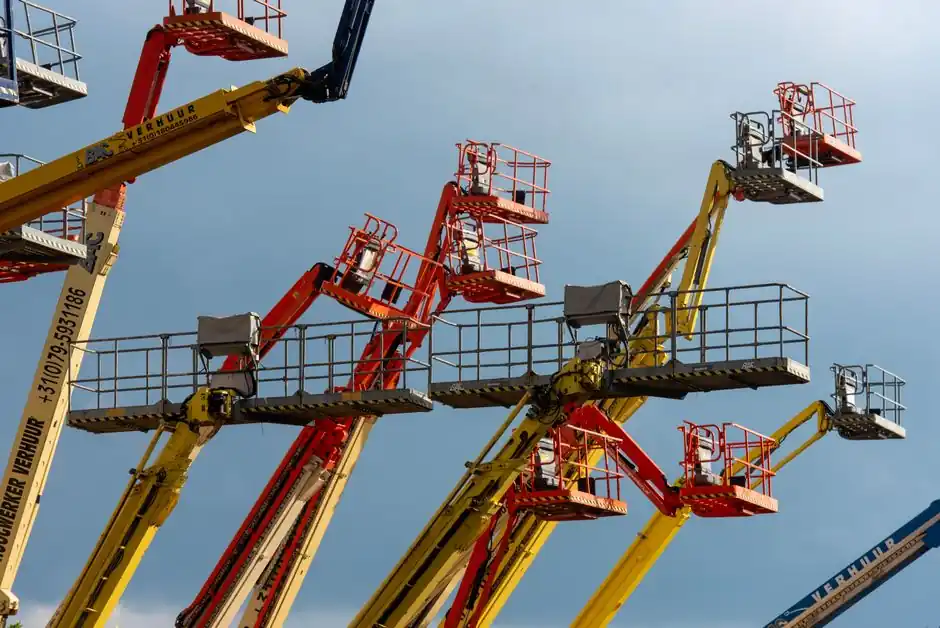
The selection question for a hydraulic pump reduces to four engineering decisions: required pressure (bar), required flow (L/min), duty cycle (continuous vs intermittent), and the cost ceiling for the drive package. Each decision narrows the architecture choice between gear, vane, and piston designs [S1].
Pressure rating is the first discriminator: gear and vane pumps cover the 100 to 180 bar range common in mobile and machine-tool service, while axial piston pumps dominate the 250 to 450 bar window used in injection moulding, presses, and heavy construction machinery. Flow needs of 0.4 to 45 L/min are served by compact axial piston units such as the SCAM-Marine HP 05 (5 pistons, 55 bar) through HP 07 (7 pistons, 60 bar) and Stanley SM-series pumps delivering 15 to 45 L/min at 8.2 to 11.3 kg [S2].
Pressure, Flow, and Displacement as the Primary Filter
Displacement in cc/rev sets theoretical flow at a given shaft speed, and rated pressure in MPa sets the continuous-load ceiling; peak pressure is typically 1.25 to 1.5 times rated and must be matched against the system's relief-valve setting [S1].
Speed range, expressed in rpm, gates both flow and noise: gear pumps tolerate 500 to 3000 rpm, vane pumps 600 to 1800 rpm for noise-sensitive duties, and axial piston units 600 to 3600 rpm depending on swash-plate design [S1].
Volumetric efficiency in the 92 to 98% range and mechanical efficiency in the 90 to 95% range are typical for modern piston units at rated speed and pressure, which translates to 8 to 15% heat rejection that the reservoir and cooler must absorb [S1].
Architecture Comparison: Gear, Vane, and Piston
Gear pumps are the lowest-cost option and the most compact per L/min, with external-gear units typically rated 100 to 210 bar and internal-gear units 170 to 250 bar; they tolerate contaminated fluid better than piston designs and are the default for mobile and agricultural machinery [S1].
Vane pumps (fixed or variable) run quieter than gear pumps at the same flow, hold 1 to 3 bar pressure ripple versus 5 to 10 bar for gears, and are common in machine tools, plastic injection moulding clamps, and low-noise indoor equipment, typically rated 70 to 175 bar [S1].
Axial piston pumps carry the high-pressure duty: bent-axis designs reach 350 to 450 bar continuous and 480 bar peak, swash-plate designs 250 to 350 bar, with 92 to 98% volumetric efficiency and full power-flow control when swash is servoed [S1].
Fixed vs Variable Displacement Decision
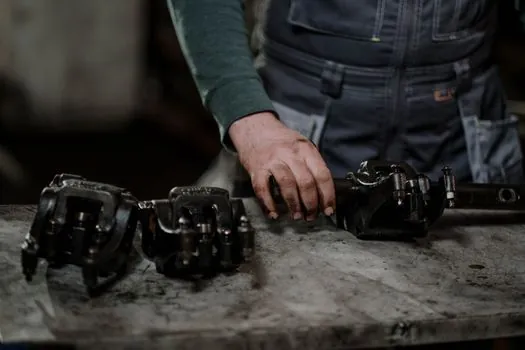
Fixed-displacement pumps deliver constant flow proportional to shaft speed and are paired with pressure-compensated or load-sensing valves for flow control; they suit steady-state loads, simple circuits, and tight budgets, and represent the bulk of low-power units under 7.5 kW [S1].
Variable-displacement piston pumps (pressure-compensated, load-sensing, or electronic) save 20 to 40% energy on cyclic loads by trimming flow to demand, and are standard in injection moulding, modern presses, and energy-rated heavy machinery, at a 2 to 4x cost premium over fixed units [S1].
Electric-motor pairing matters as much as the pump itself: an axial piston pump rated 28 cc/rev at 1450 rpm delivers 40.6 L/min theoretically, but a 1440 rpm motor with 4-pole 50 Hz supply is the typical industrial match, with 4-pole 60 Hz units at 1720 rpm for North American panels [S1].
Application Matching by Industry
Excavators, loaders, and crawler cranes are piston-pump territory: main pumps on a 20 to 30 ton excavator run 250 to 350 bar with displacements of 80 to 125 cc/rev, and swing or pilot circuits use smaller gear or piston units at 200 to 250 bar [S1][S4].
Industrial automation (CNC, stamping, clamping) favours variable vane or low-noise piston pumps at 100 to 175 bar, with servo-valve or proportional-valve downstream for accurate flow control, and tank sizing of 3 to 5x pump flow per minute to absorb heat [S1].
Marine steering and deck gear sit in a separate bracket: reversible steering pumps for boats up to 70 ft deliver 0.4 to 0.65 L/min at low pressure, while deck-wash and bilge pumps run 120 to 500 L/min at 6 bar and prioritise aluminium or stainless housings for salt-spray resistance [S2].
System Integration: Motors, Valves, Reservoir, Filtration
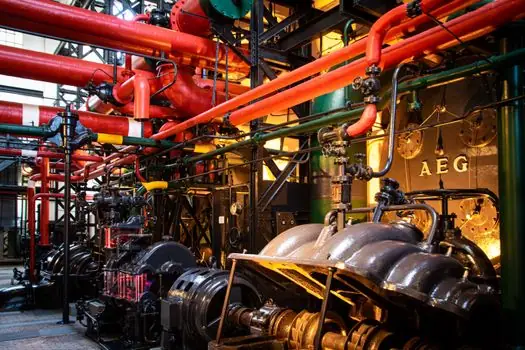
Compatibility with the hydraulic valve stack is a hard constraint: directional, pressure, and flow control valves must share the same pressure class and flow capacity, with line sizes matched to keep pressure drop under 5 bar at full flow [S1].
Reservoir sizing should be 2 to 3x pump flow per minute for fixed systems and 3 to 5x for variable systems, with a suction strainer of 100 to 250 micron and a return-line filter of 10 to 25 micron to hold ISO 4406 cleanliness codes in the 18/16/13 to 20/18/15 band [S1].
Coupling alignment within 0.05 mm and shaft loading limits of 10 to 15 Nm radial force are typical for direct-drive piston pumps, with bell-housings and flexible couplings between motor and pump flange sized to the IEC frame (71, 80, 90, 100, 112, 132) [S1].
Maintenance Footprint and Lifecycle Cost
Gear pumps are typically replaced as a unit at 4000 to 6000 hours, vane pumps at 6000 to 10000 hours with vane replacement, and piston pumps at 10000 to 20000 hours with swash-plate and cylinder-block service, assuming clean fluid and rated conditions [S1].
Online supply ranges are wide: a Komatsu PC800 / PC850-8 main pump lists at 6000 to 10000 USD per piece, a Rexroth A10VSO variable piston at 999 to 1099 USD per piece, and GFT-series travel-motor speed reducers at 300 to 1200 USD per piece on open wholesale catalogues as of 2025 [S4].
When the Mainstream Pick Is Wrong
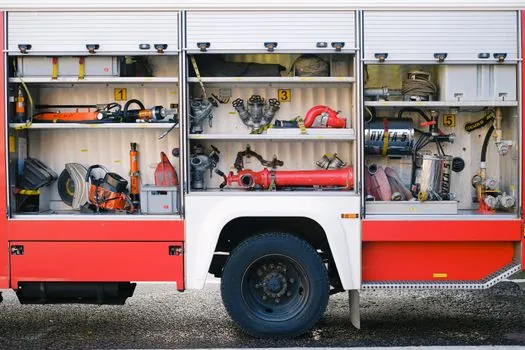
A variable piston pump is the wrong choice for a steady 24/7 load with no flow turndown: the servo control adds cost and a failure mode that a fixed gear or vane pump avoids, and the efficiency gain vanishes on a constant-load cycle [S1].
A gear pump is the wrong choice above 200 bar continuous or in a noise-sensitive indoor installation, where ripple and sound pressure will force a redesign toward vane or piston units [S1].
An axial piston pump is the wrong choice on contaminated or unfiltered supply, or where the operator cannot hold ISO 4406 cleanliness, because piston slippage and wear accelerate fast under particle ingress [S1].
Selection Shortlist Logic
Step 1: fix maximum working pressure and continuous flow from the cylinder/actuator sizing on the hydraulic cylinder side, plus 10 to 20% margin for transients. [S1]
Step 2: pick the lowest-cost architecture that meets pressure and noise: gear for under 180 bar and budget-driven mobile duty, vane for under 175 bar and noise-sensitive indoor duty, piston for 250 bar and above or variable-flow duty.
Step 3: decide fixed vs variable based on load variability: fixed for steady state, variable for cyclic loads with 20 to 40% energy-saving payback, electronic load-sensing for closed-loop precision [S1].
Step 4: verify integration with the hydraulic actuator and motor drive, confirm reservoir and filtration match ISO 4406, and lock the supplier against lead-time and lifecycle-cost data. For a 2026 view of mobile-hydraulic supply pressure, the Pneumatic Actuator Supply Shortage 2026: Lead-Time, Risk, and Spec Response piece tracks parallel lead-time and spec-drift signals worth reading before signing the PO. For related duty matching on the dewatering and process side, Sludge Pump Selection: Spec Map for 2026 Wastewater and Dredging Builds lines up adjacent pump-selection logic.