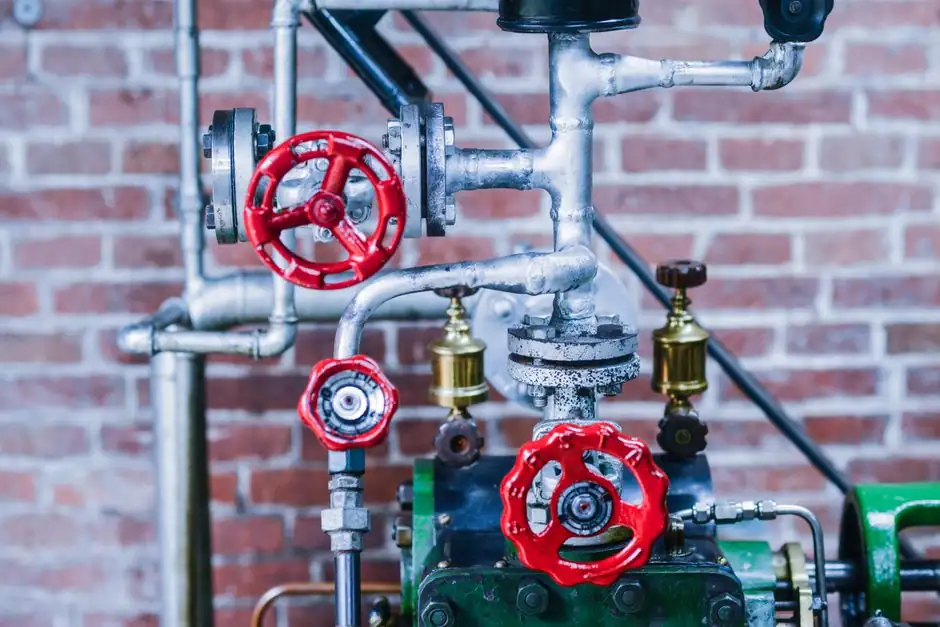
A hydraulic pump is a positive-displacement or centrifugal device that converts mechanical torque from an electric motor, diesel engine, or PTO shaft into hydraulic flow and pressure [S3]. Sizing is the disciplined pairing of that flow-pressure output to a load's force, speed, and duty cycle; selection is the matching of the pump family to the operating environment.
For fixed industrial circuits and mobile machines alike, the same two equations drive the decision: required flow Q (L/min) = cylinder area × rod-side correction × cycle speed, and required pressure P (bar) = load force / actuator area + line pressure loss. A hydraulic pump is then selected whose nominal displacement and peak rating cover Q and P with a 10-25% margin.
What a hydraulic pump actually has to do
The pump's job is to move a fixed volume of oil per revolution (its displacement, in cc/rev or in³/rev) and to do so against a system back-pressure without cavitation or excessive wear [S1]. Flow Q = V_d × n × η_v / 1000, where V_d is displacement, n is shaft speed (rpm), and η_v is volumetric efficiency, typically 0.92-0.98 for a healthy piston pump and 0.85-0.95 for a gear pump.
Two families dominate industrial service: fixed-displacement pumps (gear, vane, axial-piston in fixed swash) and variable-displacement pumps (swash-plate piston, radial piston with eccentric ring). Fixed units are cheaper and simpler for constant-load circuits; variable units save energy on circuits where the load varies across the stroke, because the pump can destroke when no flow is demanded.
The four practical pump families and where each fits
Gear pumps, both external and internal, are the lowest-cost option, with V_d typically 1-200 cc/rev and continuous pressure ratings of 160-250 bar; they suit simple machine tools, lubrication skids, and transfer circuits where the fluid is clean and the duty is steady. External gear units are noisier (typical sound level 75-85 dBA at full flow) but tolerate viscous fluids better than vane pumps. [S1]
Vane pumps (balanced and unbalanced) deliver quieter operation and moderate efficiency, with V_d commonly 6-130 cc/rev and pressure ratings of 175-210 bar for cartridge-style hydraulic-vane pumps; they are widely specified for plastic injection moulding machines, NC presses, and medium-duty machine tools where noise at the operator station is a concern.
Axial-piston pumps in swash-plate or bent-axis form are the workhorses of high-pressure hydraulics: continuous pressure 280-350 bar, peak 400-420 bar, V_d 10-500 cc/rev, volumetric efficiency 0.96-0.99, and overall efficiency 0.88-0.92 at best efficiency point. A single hydraulic actuator downstream, such as a press cylinder or a steering ram, can demand 200-400 L/min at 300 bar, and only a piston pump delivers that combination with acceptable life.
Radial-piston pumps sit in a niche of very high pressure (up to 700 bar) and low flow, used in die-casting clamps, hydraulic presses, and some mining roof supports. They are mechanically simpler than axial-piston units but bulkier per kilowatt and have higher inertia.
Sizing procedure: from load demand to pump model code

Step 1, define the load. For a linear hydraulic cylinder, find the bore area A = π × D²/4, the rod-side area A_r = π × (D² - d²)/4, and the extension speed v; required flow is Q_ext = A × v and Q_ret = A_r × v. For a hydraulic motor, Q = V_m × n / η_v where V_m is motor displacement and n is target speed. Real circuits usually run 2-4 actuators sequentially, so the pump is sized for the highest single demand, not the sum. [S3]
Step 2, add line losses. Allow 5-15 bar for each 10 m of 1/2" line at 100 L/min, plus 2-5 bar per control valve and 3-10 bar across the return-line filter. A typical allowance of 10-20% on top of the load pressure covers hose, fitting, and valve ΔP. Worst-case dynamic pressure at the actuator should still be at least 10% above the cracking pressure of the relief valve to avoid chatter.
Step 3, derate the pump. Continuous pressure rating assumes a 10-30 minute cycle and ISO VG 32-46 mineral oil at 40-50°C. For a continuous-duty press running 24 h, derate to 60-70% of catalogue maximum pressure. For a cold-start mobile machine at -20°C with HLP 32, derate flow by 20-30% to stay above the pump's minimum speed-viscosity limit. Most axial-piston pump manufacturers publish a minimum speed of 50-100 rpm at 32 cSt and a maximum of 1800-3600 rpm depending on frame size.
Step 4, check the drive train. A pump's input power P_in = (Q × P) / (600 × η_total). A 100 cc/rev piston pump at 300 bar and 1500 rpm with η_total = 0.88 draws about 85 kW. Match that to an IE3 or IE4 electric motor with a 1.15-1.25 service factor, or to a diesel engine with adequate flywheel inertia to prevent stall under step loads.
Fluid cleanliness and contamination control
Axial-piston pumps are unforgiving on contamination: ISO 4406:2017 cleanliness code 18/16/13 or better is the typical OEM target for pumps rated above 250 bar, and 20/18/15 for gear and vane pumps below 200 bar. [S1]
Viscosity matters more than the brochure suggests. The pump's normal operating viscosity window is 16-40 cSt, with 10-100 cSt as an absolute wide-allowance. Below 10 cSt, internal leakage rises sharply and volumetric efficiency drops 3-5 percentage points; above 100 cSt, the pump can cavitate at the inlet even with adequate suction head. Heat exchangers or oil coolers sized for 25-50% of pump input power keep the reservoir in the 40-55°C band and viscosity in the sweet spot.
Selection criteria: fixed vs variable, open vs closed loop

Open-loop circuits, where the pump feeds a directional control valve and the oil returns to tank through a cooler and filter, are the default for industrial presses, machine tools, and injection moulding. They are simple, cheap, and tolerate pump flow oscillation. Closed-loop circuits, where the pump feeds a hydraulic motor and the motor's return oil feeds the pump's inlet, are used on track drives, winches, and swing gear because they offer faster response and built-in cooling; the trade-off is a charge pump, a flushing valve, and tighter filtration. [S2]
Energy savings from variable pumps are real but case-specific. A swash-plate piston pump at 280 bar with 50% load time can save 30-45% of input power versus a fixed pump with a throttling valve, but only if the load has idle periods longer than 5-10 seconds. A continuously-loaded press clamping circuit sees no benefit, and a variable pump's higher first cost (1.5-3× a comparable fixed pump) is never recovered.
Common failure modes and how sizing decisions drive them
Cavitation, the classic inlet-side failure, comes from undersized suction lines, a restricted filter, or a cold high-viscosity oil. The fix is engineering, not parts: keep suction velocity below 1.0-1.5 m/s, keep inlet line length under 600 mm, and verify NPSH-available exceeds NPSH-required by at least 0.5 bar. Aeration and foaming, by contrast, are usually a return-line problem, where the oil free-falls into the tank; add a baffle or submerge the return. [S2]
Overpressure trips trace back to relief-valve setting and response time. A relief valve set 5-10% above the pump's continuous rating is normal; a 25% overshoot on a cold system can blow a seal, so a fast-response (sub-20 ms) relief or a pre-fill soft-start circuit is worth the cost on high-tonnage presses. Bearing failure on axial-piston pumps shows up as a gradual loss of volumetric efficiency and a 5-10°C rise in case-drain temperature; pull and inspect the pump when the case-drain flow exceeds 3-5% of main flow at rated pressure.
Standards, sourcing, and the 2026 supply picture

Pump performance is normally rated per ISO 4391 (hydraulic fluid power, pumps and motors, performance test methods) and dimensional conformance per ISO 3019-2 (mounting flanges) for European machinery, with API 674 for positive-displacement pumps in oil-and-gas service. Filter element ratings follow ISO 4406:2017, and fluid power cleanliness targets are commonly cited at 18/16/13 for high-pressure piston pumps per NFPA/T2.9.1R1-1990 guidance carried into current OEM datasheets. [S1]
On sourcing as of mid-2026, OEM-branded replacement parts (Eaton Vickers, Rexroth, Komatsu, Kayaba, Nachi, Liebherr) dominate the wholesale repair-parts market, with aftermarket seal kits and thrust plates listed on bulk portals in the US$1.68-32.34/piece band for small parts and US$24.13-369.80/set for assembled groups [S2]. Sewage pump suppliers and manufacturers: 2026 spec-first selection map sits in an adjacent commodity-pump segment worth scanning if your circuit is a low-pressure flushing or wash-down loop, while Pneumatic actuator supplier map 2026 covers the pneumatic side of the same actuator decision if the duty cycle is light enough to consider compressed air instead. A practical first-pass is the hydraulic working-fluid reference and the hydraulic cylinder sizing page; together with this guide they close out the 80% case for new machine build or major retrofit decisions in the 100-400 bar, 10-500 L/min window where most industrial hydraulic circuits live.